
Table of Contents
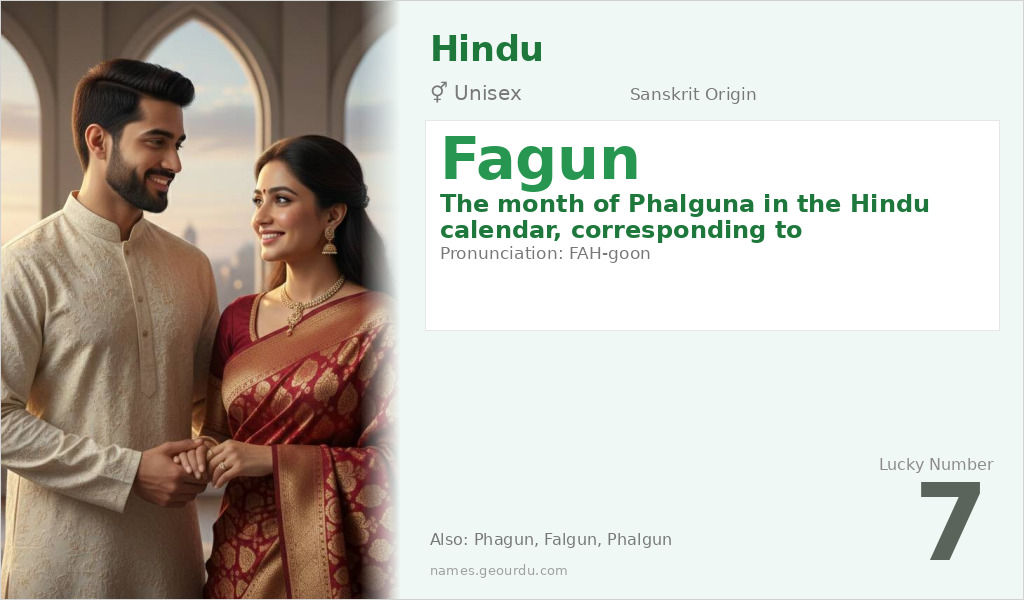
Fagun is a beautiful name deeply rooted in Hindu tradition, evoking the vibrant energy of spring. Derived from the Sanskrit word ‘Phalguna’, it specifically refers to the month in the Hindu calendar that heralds warmer weather and the festival of Holi. This name carries cultural richness and is used across South Asia, symbolizing renewal and celebration. Whether for a boy or girl, Fagun connects the bearer to seasonal cycles and festive joy.
Meaning of Fagun
Fagun originates from the Sanskrit term ‘Phalguna’ (फाल्गुन), which denotes the twelfth month in the Hindu lunar calendar, typically falling in February-March. The etymology traces back to the Sanskrit root ‘phalguna’, meaning ‘related to the Phalguna month’ or ‘born under the Phalguni constellation’, one of the nakshatras (lunar mansions) in Vedic astrology. Over time, in languages like Hindi, Bengali, and other regional dialects, ‘Phalguna’ phonetically simplified to ‘Fagun’. This name is not just a temporal marker but embodies the essence of spring—blossoming, color, and the Holi festival, making it a meaningful choice that reflects natural cycles and cultural heritage.
| 📛 Name | Fagun |
| 💎 Meaning | The month of Phalguna in the Hindu calendar, corresponding to February-March, associated with spring and the Holi festival |
| 👤 Gender | Unisex |
| 🕌 Religion | Hindu |
| 🌍 Origin | Sanskrit |
| 🗣 Pronunciation | FAH-goon |
| ✍️ Urdu | فگن |
| ✍️ Arabic | فاغون |
| 🔢 Numerology | 7 |
| ✨ Spellings | Phagun, Falgun, Phalgun, Fagoon |
Origin & Cultural Significance
Fagun has its origins in ancient Sanskrit, the classical language of Hinduism, and is closely tied to Hindu calendrical systems used across India, Nepal, and other parts of South Asia. Culturally, the Phalguna month is significant as it precedes the new year in some regional calendars and is celebrated with Holi, the festival of colors, symbolizing the victory of good over evil and the arrival of spring. Historically, names based on months or seasons are common in Hindu traditions, often given to children born during that time. As a unisex name, Fagun is used in various communities, reflecting its broad appeal and connection to natural and religious cycles.
Personality Traits
People named Fagun are often seen as lively, creative, and full of zest, mirroring the spring season associated with the name. They may possess a joyful and social demeanor, thriving in environments that celebrate diversity and expression. Their personality can be likened to the colors of Holi—vibrant, inclusive, and uplifting to those around them.
Similar Names
If you like Fagun, consider: Phalguni, Vasant, Basant, Vasanta, Holi
Famous People Named Fagun
- Fagun Thakrar — British actress known for roles in 'The Kumars at No. 42' and other TV shows
- Fagun Bhatt — Indian classical dancer and choreographer specializing in Kathak
Frequently Asked Questions About Fagun
What does Fagun mean?
Fagun means 'the month of Phalguna' in Sanskrit, referring to the Hindu lunar month in February-March that marks spring and the Holi festival.
Is Fagun a boy or girl name?
Fagun is a unisex name, used for both boys and girls in Hindu communities, though it may be more common for girls in some regions.
What is the origin of Fagun?
Fagun originates from Sanskrit, specifically from the word 'Phalguna', and is deeply embedded in Hindu culture and calendrical traditions across South Asia.