Table of Contents
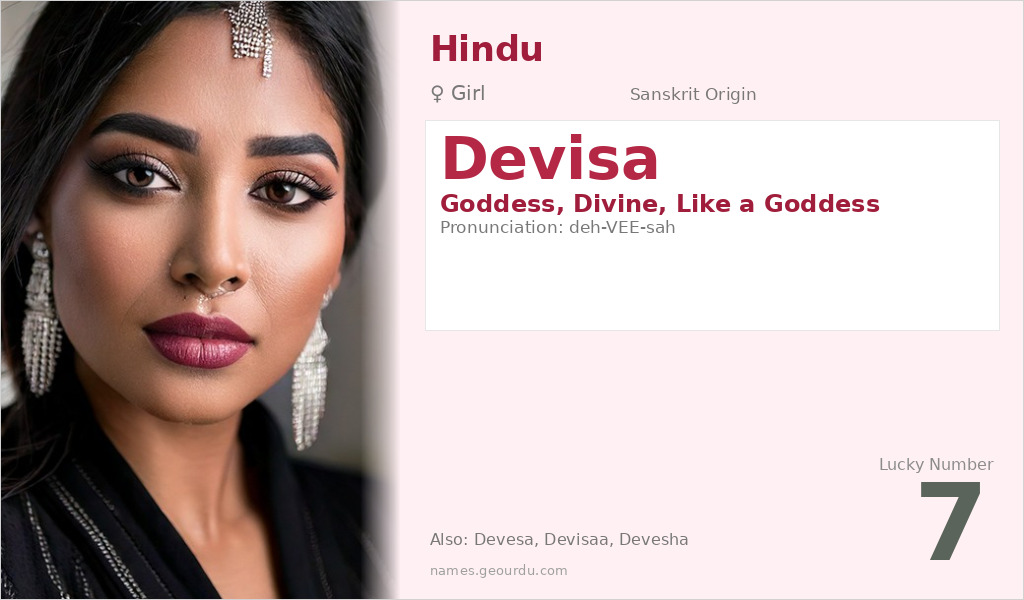
Devisa is a beautiful and meaningful name of Sanskrit origin that carries deep spiritual significance. Primarily used for girls in Hindu communities, this name evokes the divine feminine energy worshipped across Indian traditions. With its roots in ancient Sanskrit literature, Devisa continues to be a popular choice for parents seeking a name with religious and cultural resonance. The name’s elegant sound and powerful meaning make it both timeless and contemporary.
Meaning of Devisa
Devisa derives from the Sanskrit word ‘Devi’ (देवी), which means ‘goddess’ or ‘divine female principle’. The suffix ‘-sa’ adds the meaning of ‘like’ or ‘possessing the qualities of’, making the complete translation ‘like a goddess’ or ‘divine one’. In Hindu tradition, Devi represents the supreme feminine power, manifesting in various forms like Durga, Lakshmi, and Saraswati. The name appears in classical Sanskrit texts and has been adapted into modern Indian languages with consistent meaning. Unlike some names that have multiple interpretations across cultures, Devisa maintains a clear and specific meaning rooted in Sanskrit etymology.
| 📛 Name | Devisa |
| 💎 Meaning | Goddess, Divine, Like a Goddess |
| 👤 Gender | Girl |
| 🕌 Religion | Hindu |
| 🌍 Origin | Sanskrit |
| 🗣 Pronunciation | deh-VEE-sah |
| ✍️ Urdu | دیوسا |
| ✍️ Arabic | ديفيسا |
| 🔢 Numerology | 7 |
| ✨ Spellings | Devesa, Devisaa, Devesha |
Origin & Cultural Significance
Devisa originates from Sanskrit, the ancient liturgical language of Hinduism, Buddhism, and Jainism. As a classical Indo-European language, Sanskrit has influenced numerous modern South Asian languages. The name specifically comes from the combination of ‘Devi’ (goddess) and the possessive/likeness suffix. While primarily used in Hindu communities, the name’s Sanskrit roots give it pan-Indian appeal. It appears in various regional adaptations across India, maintaining its core meaning while sometimes varying in pronunciation. The name reflects the enduring importance of goddess worship in Hindu tradition and culture.
Personality Traits
Those named Devisa are often associated with qualities of grace, wisdom, and protective energy. They may exhibit strong intuitive abilities and a natural inclination toward spiritual or creative pursuits. In social settings, they tend to be nurturing and compassionate, often taking on leadership roles with a sense of responsibility. The name’s connection to divine femininity suggests someone who embodies strength, beauty, and benevolence in their character.
Similar Names
If you like Devisa, consider: Devi, Devika, Devanshi, Divya, Devina
Famous People Named Devisa
- Devisa — Fictional character in Indian mythology and literature representing divine feminine qualities
- Devisa — Occasionally used as a character name in modern Indian cinema and television dramas
Frequently Asked Questions About Devisa
What does Devisa mean?
Devisa means 'Goddess', 'Divine', or 'Like a Goddess' in Sanskrit, combining 'Devi' (goddess) with a suffix indicating likeness or possession.
Is Devisa a boy or girl name?
Devisa is exclusively a girl's name in Hindu naming tradition, derived from the feminine Sanskrit word 'Devi' meaning goddess.
What is the origin of Devisa?
Devisa originates from Sanskrit, the ancient classical language of India, and is primarily used in Hindu communities with strong cultural and religious significance.