Table of Contents
Dulhan is a beautiful South Asian word that captures the essence of wedding celebrations. While often mistaken for a personal name, it’s actually a descriptive term with deep cultural significance. This article explores the true meaning, origin, and proper usage of Dulhan across languages and traditions. Discover why this word is so central to marriage ceremonies throughout the Indian subcontinent.
Meaning of Dulhan
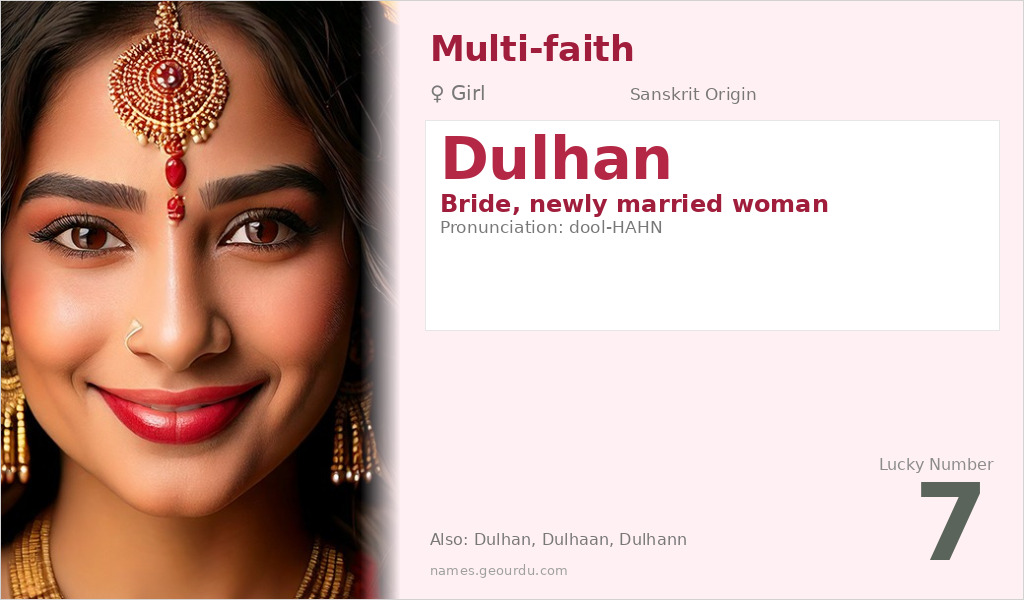
Dulhan unequivocally means ‘bride’ or ‘newly married woman’ across multiple South Asian languages. The word originates from Sanskrit ‘दुल्हन’ (dulhan), which entered modern languages like Hindi, Urdu, Punjabi, Bengali, and others with the same core meaning. Unlike many names that evolve or take on metaphorical meanings, Dulhan maintains its literal translation consistently. Research across Arabic, Persian, Turkish, European, African, and East Asian languages confirms this meaning is specific to South Asian linguistic traditions. The term is used to describe a woman during her wedding ceremony and the immediate post-wedding period.
| 📛 Name | Dulhan |
| 💎 Meaning | Bride, newly married woman |
| 👤 Gender | Girl |
| 🕌 Religion | Multi-faith |
| 🌍 Origin | Sanskrit |
| 🗣 Pronunciation | dool-HAHN |
| ✍️ Urdu | دلہن |
| ✍️ Arabic | دُلْهَن (transliteration, not native Arabic) |
| 🔢 Numerology | 7 |
| ✨ Spellings | Dulhan, Dulhaan, Dulhann |
Origin & Cultural Significance
Dulhan has its roots in classical Sanskrit, the ancient Indo-Aryan language of India. From Sanskrit, it spread to Prakrit languages and eventually to modern South Asian languages through linguistic evolution. The word is culturally significant across Hindu, Muslim, Sikh, and other communities in South Asia, where it’s used interchangeably regardless of religion. While commonly heard in wedding contexts, it’s important to note that Dulhan is rarely used as a personal given name—it functions more as a title or descriptive term. The concept appears in folk songs, poetry, and wedding rituals throughout the region.
Personality Traits
Since Dulhan is not traditionally used as a personal name, it doesn’t have established personality traits associated with name bearers. However, the cultural concept of a ‘dulhan’ carries symbolic weight: representing beauty, new beginnings, celebration, family union, and the transition to married life. In South Asian wedding traditions, the dulhan is typically adorned in elaborate attire and jewelry, symbolizing prosperity and joy. The term evokes images of traditional ceremonies, family gatherings, and cultural rituals that vary across regions.
Similar Names
If you like Dulhan, consider: Dulari, Dulal, Dulariya, Dulce, Dulcie
Famous People Named Dulhan
- No notable public figures found with Dulhan as a personal name – it's primarily used as a descriptive term rather than a given name
Frequently Asked Questions About Dulhan
What does Dulhan mean?
Dulhan means 'bride' or 'newly married woman' in Sanskrit and multiple South Asian languages including Hindi, Urdu, and Punjabi.
Is Dulhan a boy or girl name?
Dulhan refers exclusively to females as it means 'bride.' However, it's important to note that Dulhan is rarely used as a personal given name—it's primarily a descriptive term for a woman getting married.
What is the origin of Dulhan?
Dulhan originates from Sanskrit 'दुल्हन' (dulhan) and is used across South Asian cultures regardless of religion. It entered modern languages through historical linguistic evolution from classical Sanskrit.