Table of Contents
Izumi is a beautiful Japanese name that evokes images of clear, flowing water from natural springs. With its poetic meaning and gentle sound, this name has been cherished in Japan for centuries. Whether you’re drawn to its connection with nature or its cultural significance, Izumi offers a name rich with meaning and elegance. Discover why this name continues to be a popular choice for parents seeking a name with both beauty and depth.
Meaning of Izumi
Izumi comes directly from the Japanese word ‘izumi’ (泉), which means ‘spring’ or ‘fountain’ — specifically referring to a natural source of water emerging from the ground. The kanji character 泉 is composed of two parts: 白 (shiro) meaning ‘white’ and 水 (mizu) meaning ‘water’, together representing pure, clear water. This etymology reflects the Japanese appreciation for natural elements and their symbolic meanings. In Japanese culture, springs are associated with purity, renewal, and life-giving properties, making Izumi a name that carries positive connotations of clarity and natural beauty. The name has been used historically in Japan, particularly during the Heian period when nature-inspired names became popular among the aristocracy.
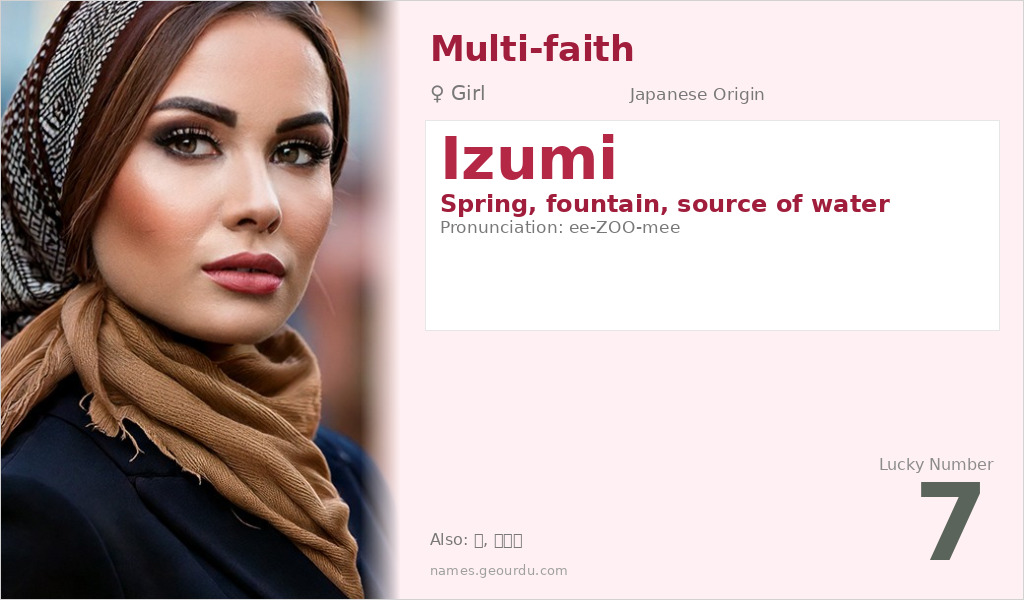
| 📛 Name | Izumi |
| 💎 Meaning | Spring, fountain, source of water |
| 👤 Gender | Girl |
| 🕌 Religion | Multi-faith |
| 🌍 Origin | Japanese |
| 🗣 Pronunciation | ee-ZOO-mee |
| ✍️ Urdu | ایزومی |
| ✍️ Arabic | إيزومي |
| 🔢 Numerology | 7 |
| ✨ Spellings | 泉, いずみ |
Origin & Cultural Significance
Izumi originates exclusively from Japan and has no connections to other linguistic or cultural traditions despite some incorrect attributions. The name has been used in Japan since at least the Heian period (794-1185), when it appeared in classical Japanese literature and poetry. One of the most famous bearers was Izumi Shikibu, a renowned 11th century poet whose work is still studied today. The name reflects Japan’s deep connection with nature and the symbolic importance of water in Japanese culture, where springs and fountains are seen as sources of purity and life. While occasionally used as a surname, Izumi is primarily a feminine given name in modern Japan and among Japanese communities worldwide.
Personality Traits
Those named Izumi are often associated with qualities of purity, calmness, and natural grace. Like the clear springs their name represents, they may exhibit a refreshing presence and thoughtful demeanor. The name suggests someone who values authenticity and has a nurturing spirit, with an appreciation for beauty in simple, natural forms. These associations stem from the name’s literal meaning and cultural context rather than astrological or numerological systems.
Similar Names
If you like Izumi, consider: Mizuki, Nagisa, Haruka, Sakura, Kiyomi
Famous People Named Izumi
- Izumi Shikibu — 11th century Japanese poet and court lady, one of Japan's greatest waka poets
- Izumi Sakai — Japanese singer-songwriter, lead vocalist of the pop group ZARD
Frequently Asked Questions About Izumi
What does Izumi mean?
Izumi means 'spring' or 'fountain' in Japanese, specifically referring to a natural water source. The name comes from the Japanese word 'izumi' (泉) which combines characters for 'white' and 'water' to represent pure, clear water.
Is Izumi a boy or girl name?
Izumi is primarily a girl's name in Japanese culture. While Japanese names can sometimes be gender-neutral, Izumi has historically been used almost exclusively for females and continues to be predominantly feminine in modern usage.
What is the origin of Izumi?
Izumi originates from Japan and is derived from the Japanese language. It has no connections to Hindu, Arabic, or other cultural traditions despite some incorrect online attributions. The name has been used in Japan for centuries, with famous historical bearers like the poet Izumi Shikibu.