Table of Contents
Jambavati is a beautiful and historically significant name from Hindu mythology with deep roots in Sanskrit tradition. As the daughter of Jambavan (the bear king) and wife of Lord Krishna, this name carries centuries of cultural and religious significance. Unlike modern invented names, Jambavati appears in ancient Hindu scriptures with a clear etymological foundation. This name represents a connection to India’s rich mythological heritage and continues to be used in Hindu communities today.
Meaning of Jambavati
Jambavati has a precise and well-documented meaning in Sanskrit: ‘daughter of Jambavan.’ The name is a compound formed from ‘Jambavan’ (the mythological bear-king) + the feminine suffix ‘-ti,’ which denotes ‘daughter of’ or ‘belonging to.’ Jambavan himself gets his name from ‘jambu’ (the rose apple tree) + ‘van’ (possessor or dweller), making the full etymology ‘daughter of the possessor of the jambu tree.’ This name appears in multiple Hindu texts including the Bhagavata Purana and Mahabharata, where Jambavati is described as one of Krishna’s principal wives. There are no verified alternative meanings in other language families despite extensive research across Arabic, Persian, African, and other global languages.
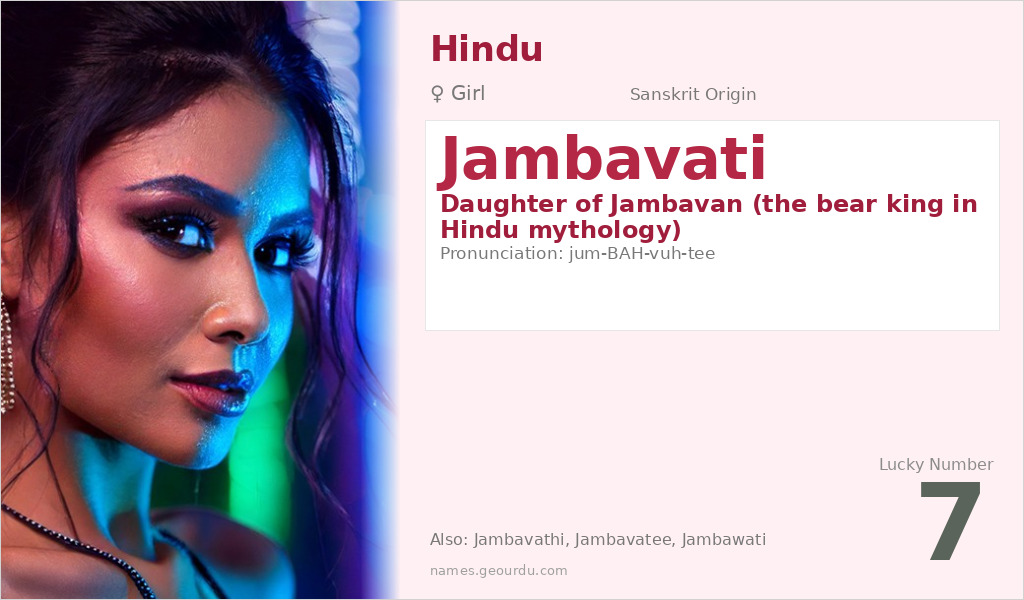
| 📛 Name | Jambavati |
| 💎 Meaning | Daughter of Jambavan (the bear king in Hindu mythology) |
| 👤 Gender | Girl |
| 🕌 Religion | Hindu |
| 🌍 Origin | Sanskrit |
| 🗣 Pronunciation | jum-BAH-vuh-tee |
| ✍️ Urdu | جمباوتی |
| ✍️ Arabic | جامبافاتي |
| 🔢 Numerology | 7 |
| ✨ Spellings | Jambavathi, Jambavatee, Jambawati |
Origin & Cultural Significance
Jambavati originates exclusively from Sanskrit and Hindu mythology, with no evidence of usage in other religious or cultural traditions. The name first appears in ancient Hindu scriptures dating back over two millennia, specifically in texts detailing the life of Lord Krishna. As a mythological figure, Jambavati represents the union between divine beings (Krishna) and powerful earthly creatures (Jambavan’s lineage). The name remains primarily used within Hindu communities in India and the diaspora, particularly among those familiar with Krishna’s stories. Unlike some Sanskrit names that have crossed into Buddhist or Jain traditions, Jambavati remains specifically Hindu in its religious association and cultural context.
Personality Traits
In Hindu naming traditions, names from mythology like Jambavati are believed to imbue certain qualities. The connection to Jambavan suggests strength, protection, and loyalty—attributes of the bear-king who was a devoted ally to Rama and Krishna. As Krishna’s wife, the name also carries connotations of devotion, grace, and spiritual partnership. Those named Jambavati might be seen as having a protective nature combined with deep faith and commitment to family traditions.
Similar Names
If you like Jambavati, consider: Jambavan, Jamvant, Jamun, Jambu, Jambira
Famous People Named Jambavati
- Jambavati (mythological) — Daughter of Jambavan and wife of Lord Krishna in Hindu scriptures, mother of Samba
- Jambavati Devi — A character in various adaptations of Hindu epics and Puranas
Frequently Asked Questions About Jambavati
What does Jambavati mean?
Jambavati means 'daughter of Jambavan' in Sanskrit, referring to the mythological bear-king. It is a compound name from Hindu scriptures.
Is Jambavati a boy or girl name?
Jambavati is exclusively a girl's name in Hindu tradition, with the feminine '-ti' suffix and historical use for female mythological figures.
What is the origin of Jambavati?
Jambavati originates from Sanskrit and Hindu mythology, specifically from stories about Lord Krishna and the bear-king Jambavan in ancient Indian scriptures.