Table of Contents
Kalaivani is a beautiful and meaningful Hindu girl’s name that carries deep cultural and spiritual significance. Derived from Sanskrit and Tamil roots, this name literally translates to ‘Goddess of Arts’ and is specifically associated with Saraswati, the Hindu deity of knowledge, music, and wisdom. Popular primarily in South Indian communities, particularly Tamil Nadu, Kalaivani represents artistic excellence and intellectual pursuit. This name has been cherished for generations by families who value education, creativity, and cultural heritage.
Meaning of Kalaivani
Kalaivani is a compound name with clear Sanskrit and Tamil etymology. The first component ‘Kalai’ comes from the Tamil word கலை (kalai), which itself derives from the Sanskrit ‘kala’ (कला), meaning art, skill, craft, or fine arts. The second component ‘Vani’ originates from Sanskrit वाणी (vāṇī), meaning speech, voice, or sound, and is one of the primary names of Goddess Saraswati. In Hindu mythology, Saraswati is the goddess of knowledge, music, arts, wisdom, and learning, often depicted with a veena (musical instrument). Thus, Kalaivani precisely means ‘Goddess of Arts’ or ‘Voice of Arts’, encapsulating the essence of creative and intellectual expression. The name reflects the high value placed on education and artistic cultivation in Hindu tradition.
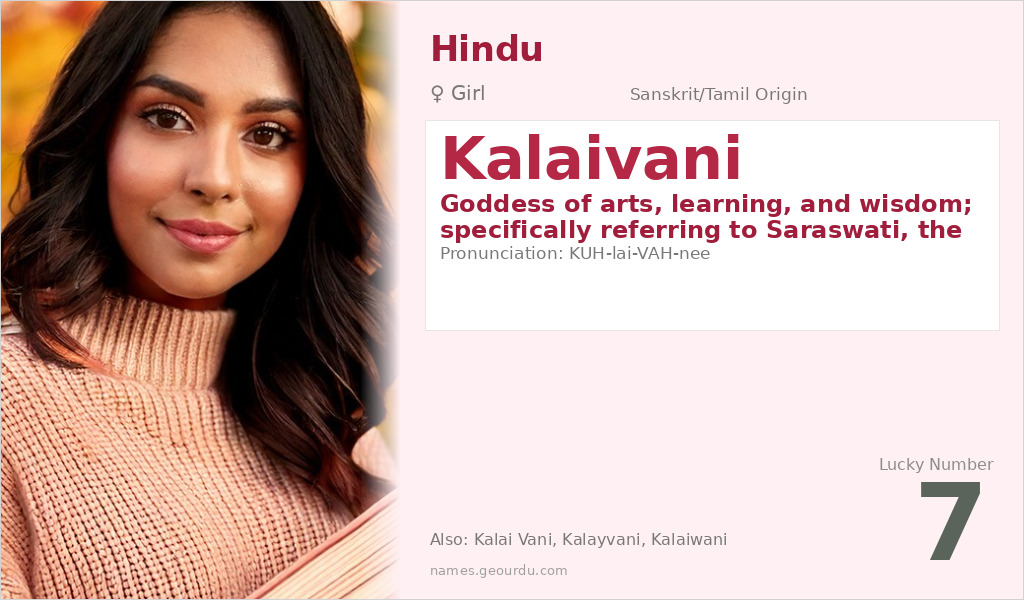
| 📛 Name | Kalaivani |
| 💎 Meaning | Goddess of arts, learning, and wisdom; specifically referring to Saraswati, the Hindu goddess of knowledge, music, arts, and wisdom |
| 👤 Gender | Girl |
| 🕌 Religion | Hindu |
| 🌍 Origin | Sanskrit/Tamil |
| 🗣 Pronunciation | KUH-lai-VAH-nee |
| ✍️ Urdu | کلائی وانی |
| ✍️ Arabic | كالايفاني |
| 🔢 Numerology | 7 |
| ✨ Spellings | Kalai Vani, Kalayvani, Kalaiwani, Kalaivany |
Origin & Cultural Significance
Kalaivani originates from South India, with strong roots in Tamil culture and Hindu tradition. While the components are Sanskrit in origin, the name as a compound is particularly popular in Tamil-speaking regions of India, Sri Lanka, and the Tamil diaspora worldwide. The name emerged from the practice of creating devotional names that honor Hindu deities, specifically Saraswati, who is revered as the patron of learning and arts. In Tamil Nadu, names combining ‘Kalai’ (arts) with divine references are common, reflecting the region’s rich artistic heritage in music, dance, literature, and temple arts. The name gained popularity during the 20th century as part of a broader revival of traditional Tamil names and continues to be chosen by parents who wish to instill values of creativity, education, and cultural pride in their daughters.
Personality Traits
The name Kalaivani suggests personality traits aligned with creativity, intellect, and expression. Those bearing this name are often perceived as artistic, articulate, and intellectually curious individuals. The association with Saraswati implies a natural inclination toward learning, music, literature, or visual arts. In social contexts, Kalaivanis may be seen as thoughtful communicators who value meaningful conversation and cultural exchange. The name carries expectations of grace, wisdom, and a balanced approach to life’s challenges.
Similar Names
If you like Kalaivani, consider: Saraswati, Vani, Kalpana, Vidya, Gayatri
Famous People Named Kalaivani
- Kalaivani Rajendran — Indian playback singer known for Tamil film songs
- Kalaivani — Indian actress who appeared in Tamil television serials
Frequently Asked Questions About Kalaivani
What does Kalaivani mean?
Kalaivani means 'Goddess of Arts' in Sanskrit/Tamil, specifically referring to Saraswati, the Hindu goddess of knowledge, music, arts, and wisdom. The name combines 'Kalai' (arts) and 'Vani' (goddess of speech/voice).
Is Kalaivani a boy or girl name?
Kalaivani is exclusively a girl's name in Hindu naming tradition. It is feminine in both grammatical structure and cultural association, being dedicated to the goddess Saraswati.
What is the origin of Kalaivani?
Kalaivani originates from South India, with roots in both Sanskrit and Tamil languages. It is particularly popular in Tamil-speaking Hindu communities and combines Sanskrit-derived elements to create a name honoring the goddess of arts and learning.