Table of Contents
Kusumbala is a beautiful Sanskrit name for girls that carries centuries of botanical and cultural heritage. Unlike generic flower names, Kusumbala specifically refers to the safflower plant, valued in ancient India for its vibrant dye, medicinal properties, and edible seeds. This name connects modern bearers to India’s rich Ayurvedic tradition and agricultural history. Discover the precise meaning, pronunciation, and significance of this distinctive floral name.
Meaning of Kusumbala
Kusumbala derives directly from the Sanskrit word ‘kusumbha’ (कुसुम्भ), which specifically denotes safflower (Carthamus tinctorius). In classical Indian texts, kusumbha appears in multiple contexts: as a source of natural dye (giving the characteristic saffron-like color), as a medicinal plant in Ayurveda for its anti-inflammatory properties, and as an oilseed crop. The ‘-ala’ suffix creates an adjective form, making Kusumbala mean ‘pertaining to safflower’ or ‘like a safflower.’ This is distinct from generic Sanskrit flower terms like ‘pushpa’ or ‘kusuma.’ The name’s botanical specificity reflects India’s sophisticated ancient knowledge of flora, where each plant had precise names and documented uses in texts like the Atharvaveda and classical Ayurvedic compendiums.
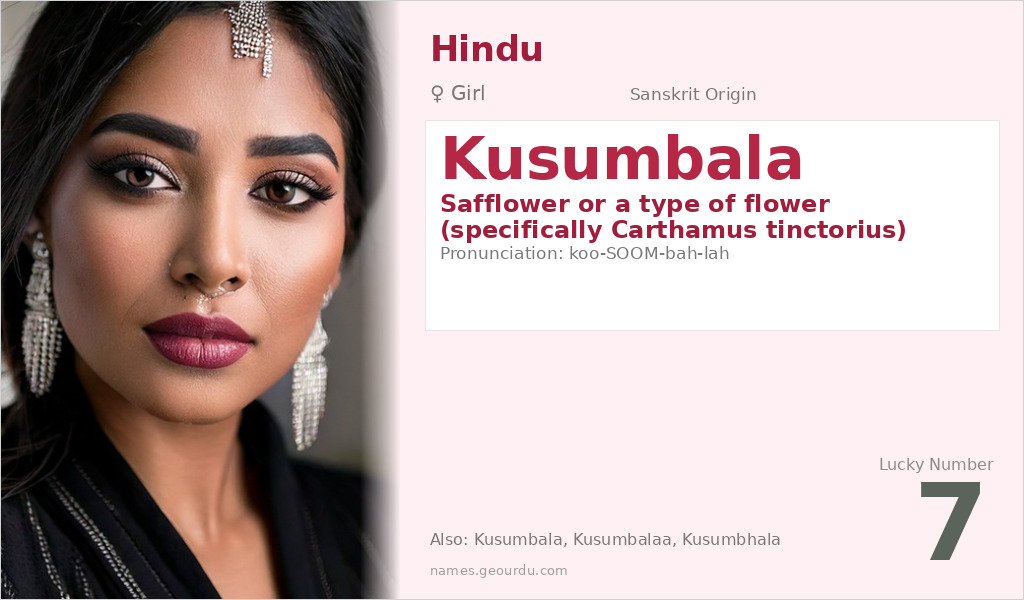
| 📛 Name | Kusumbala |
| 💎 Meaning | Safflower or a type of flower (specifically Carthamus tinctorius) |
| 👤 Gender | Girl |
| 🕌 Religion | Hindu |
| 🌍 Origin | Sanskrit |
| 🗣 Pronunciation | koo-SOOM-bah-lah |
| ✍️ Urdu | کسومبالا |
| ✍️ Arabic | كوسومبالا |
| 🔢 Numerology | 7 |
| ✨ Spellings | Kusumbala, Kusumbalaa, Kusumbhala, Kusumbala |
Origin & Cultural Significance
Kusumbala originates from classical Sanskrit, the liturgical language of Hinduism, with documented usage in ancient Indian medical and botanical texts. The safflower plant (kusumbha) has been cultivated in the Indian subcontinent for over 4,000 years, primarily for its orange-red dye used in religious ceremonies and textiles. In Hindu culture, names derived from specific plants often carry layered meanings – connecting the bearer to nature’s virtues, medicinal wisdom, and aesthetic beauty. While not among the most common Sanskrit names today, Kusumbala represents a tradition of naming that honors India’s rich botanical heritage and the practical wisdom encoded in Sanskrit terminology for natural elements.
Personality Traits
The safflower connection gives Kusumbala a personality profile combining beauty with utility. Like the plant that provides both vibrant color and nourishing oil, individuals with this name may balance artistic sensitivity with practical intelligence. In Vedic astrology and name numerology, the vibrational quality of Kusumbala suggests someone thoughtful, observant, and spiritually inclined. The name’s rarity adds a distinctive quality, potentially indicating an independent thinker who values tradition while forging their unique path.
Similar Names
If you like Kusumbala, consider: Kusum, Kusumita, Kusumlata, Pushpa, Sumana
Famous People Named Kusumbala
- No widely known contemporary public figures with this name found in records
- The name appears in some regional Indian communities, particularly in states like Maharashtra, Gujarat, and Karnataka where Sanskrit-derived names are common
Frequently Asked Questions About Kusumbala
What does Kusumbala mean?
Kusumbala specifically means 'safflower' or 'pertaining to safflower' in Sanskrit, referring to the Carthamus tinctorius plant valued in ancient India for dye, medicine, and oil.
Is Kusumbala a boy or girl name?
Kusumbala is exclusively a feminine name in Hindu naming traditions, following the pattern of many Sanskrit floral names ending in '-a' or '-ala' being feminine.
What is the origin of Kusumbala?
Kusumbala originates from classical Sanskrit, specifically from the word 'kusumbha' meaning safflower, with documented usage in ancient Indian medical and botanical texts dating back millennia.