Table of Contents
Manikarnika is a beautiful Sanskrit name with deep cultural and spiritual significance in Hindu tradition. Most famously associated with Rani Lakshmibai of Jhansi, this name carries the poetic meaning ‘jewel of the ear’ and connects to one of India’s holiest pilgrimage sites. As both a personal name and a sacred geographical location, Manikarnika represents strength, tradition, and spiritual importance in Indian culture.
Meaning of Manikarnika
Manikarnika is a classical Sanskrit compound name with transparent etymology. It combines ‘mani’ (मणि), meaning jewel, gem, or precious stone, with ‘karnika’ (कर्णिका), meaning earring or pertaining to the ear. The literal translation is ‘jewel of the ear’ or ‘earring containing a jewel,’ suggesting something precious and ornamental. This name appears in ancient Hindu texts referring to the sacred Manikarnika Ghat in Varanasi, where according to legend, Lord Shiva’s earring (manikarnika) fell while he was performing the tandava dance. The name’s Sanskrit roots are well-documented in classical literature and religious scriptures, making its meaning unambiguous and historically verified.
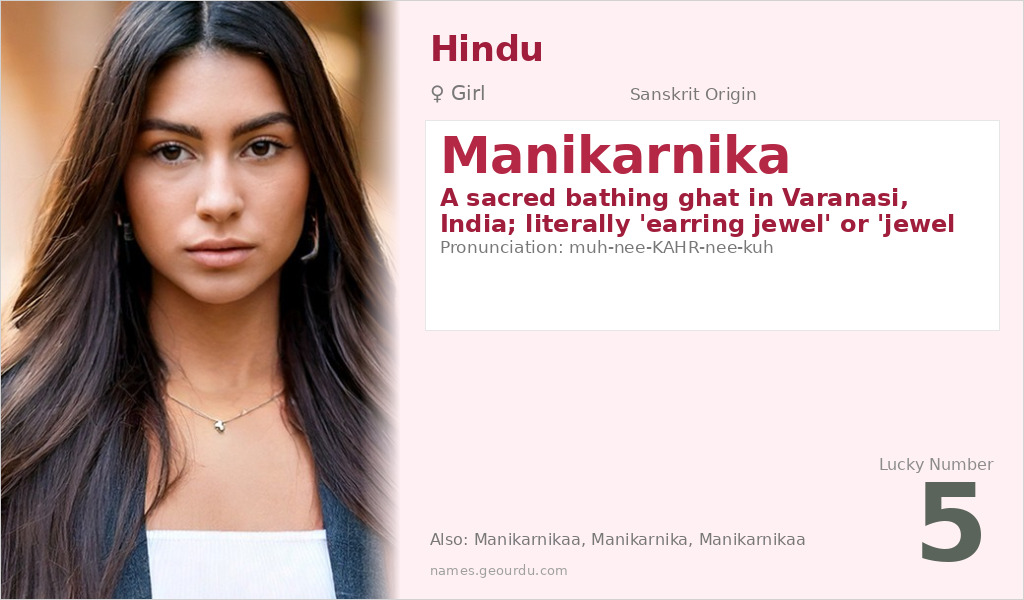
| 📛 Name | Manikarnika |
| 💎 Meaning | A sacred bathing ghat in Varanasi, India; literally 'earring jewel' or 'jewel of the ear' |
| 👤 Gender | Girl |
| 🕌 Religion | Hindu |
| 🌍 Origin | Sanskrit |
| 🗣 Pronunciation | muh-nee-KAHR-nee-kuh |
| ✍️ Urdu | منیکرنیکا |
| ✍️ Arabic | مانيكارنيكا |
| 🔢 Numerology | 5 |
| ✨ Spellings | Manikarnikaa, Manikarnika, Manikarnikaa |
Origin & Cultural Significance
Manikarnika originates from classical Sanskrit, the ancient liturgical language of Hinduism. Its primary cultural significance comes from Hindu mythology and geography rather than as a common personal name. The most famous reference is the Manikarnika Ghat in Varanasi, considered one of the oldest and most sacred cremation grounds in Hinduism, mentioned in the Garuda Purana and other scriptures. As a personal name, it gained prominence through Rani Lakshmibai (born Manikarnika Tambe), the 19th-century queen of Jhansi who became a symbol of Indian resistance against British rule. While not among the most common Hindu names today, it carries historical weight and spiritual connotations.
Personality Traits
Those named Manikarnika are often perceived as having strong spiritual connections and deep-rooted traditional values. The name’s association with sacred sites and historical figures suggests qualities of resilience, leadership, and cultural pride. Individuals with this name may exhibit determination and a sense of purpose, reflecting the legacy of Rani Lakshmibai’s courage and the spiritual significance of the sacred ghat that shares this name.
Similar Names
If you like Manikarnika, consider: Manik, Manika, Karnika, Manimala, Manjari
Famous People Named Manikarnika
- Manikarnika Tambe (Rani Lakshmibai) — Queen of Jhansi, Indian freedom fighter during the 1857 Rebellion, born as Manikarnika and later married to become Rani Lakshmibai
- Manikarnika Ghat — The famous cremation ghat in Varanasi, Uttar Pradesh, India, mentioned in Hindu scriptures as a sacred site for achieving moksha
Frequently Asked Questions About Manikarnika
What does Manikarnika mean?
Manikarnika means 'jewel of the ear' or 'earring containing a jewel' in Sanskrit. It's also the name of a sacred cremation ghat in Varanasi, India.
Is Manikarnika a boy or girl name?
Manikarnika is exclusively a girl's name in Hindu tradition, most famously borne by Rani Lakshmibai of Jhansi.
What is the origin of Manikarnika?
Manikarnika originates from Sanskrit, the classical language of Hinduism. It has both geographical significance (as a sacred ghat in Varanasi) and historical significance (as Rani Lakshmibai's birth name).