Table of Contents
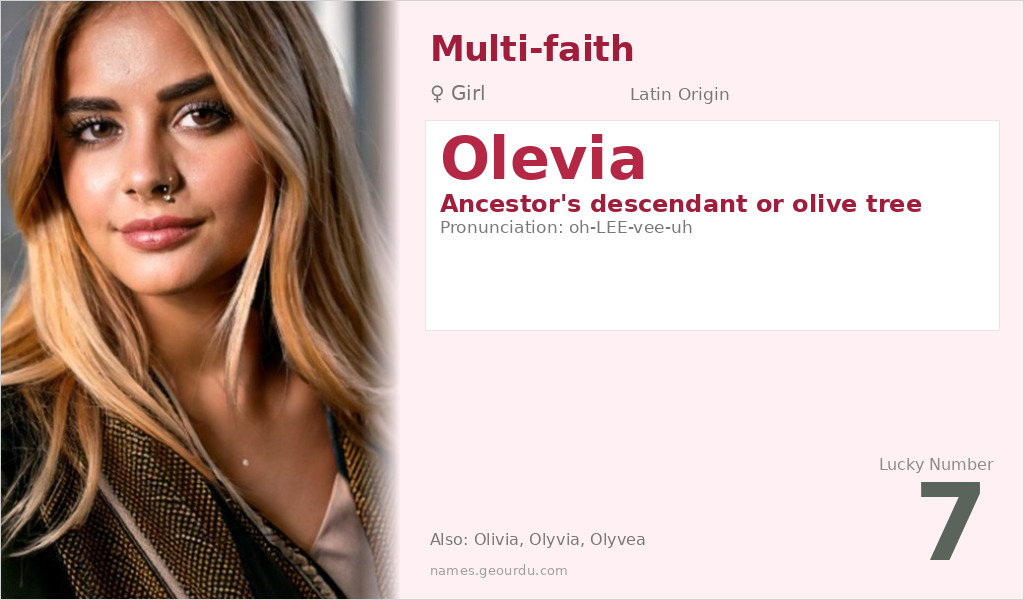
Olevia is an elegant feminine name with deep historical roots in ancient Rome. While often considered a variant of the popular name Olivia, Olevia carries its own distinctive charm and linguistic heritage. This name connects to the symbolic olive tree, representing peace, wisdom, and abundance across Mediterranean cultures. Today, Olevia remains a unique choice for parents seeking a name with classical resonance and natural symbolism.
Meaning of Olevia
The name Olevia derives from the Latin word ‘oliva’, meaning ‘olive’. This connection places it within the semantic field of natural elements that carried significant symbolic meaning in ancient Roman culture. The olive tree was sacred to Minerva (Athena in Greek mythology), representing wisdom, peace, and victory. Linguistically, Olevia evolved from the Roman family name Olivius, which itself likely originated as a topographic name for someone who lived near olive trees or worked with olives. The ‘-ia’ suffix is a common feminine ending in Latin names, giving the name its distinctly feminine character. Through medieval Latin and Romance language evolution, the name maintained its core association with the olive, though spelling variations emerged across different European regions.
| 📛 Name | Olevia |
| 💎 Meaning | Ancestor's descendant or olive tree |
| 👤 Gender | Girl |
| 🕌 Religion | Multi-faith |
| 🌍 Origin | Latin |
| 🗣 Pronunciation | oh-LEE-vee-uh |
| ✍️ Urdu | اولیویا |
| ✍️ Arabic | أوليفيا |
| 🔢 Numerology | 7 |
| ✨ Spellings | Olivia, Olyvia, Olyvea, Oleviah |
Origin & Cultural Significance
Olevia has its origins in ancient Roman naming traditions, specifically from the Latin ‘Olivius’ family name that was common among Roman citizens. The name traveled through Europe during the Roman Empire’s expansion and was preserved in various forms through medieval Latin records. Unlike many names that have clear religious associations, Olevia is primarily cultural rather than religious in origin, though it appears in Christian contexts in post-Roman Europe due to the olive’s biblical symbolism. The name gained renewed attention in English-speaking countries as a distinctive variant of Shakespeare’s popular Olivia, though it remains less common than its counterpart. Today, Olevia is used internationally without strong ties to any single religious tradition, making it a truly multi-faith name choice.
Personality Traits
Those named Olevia often exhibit qualities associated with their name’s olive symbolism: peacemaking, wisdom, and resilience. They tend to approach life with thoughtful consideration and natural diplomacy, often serving as mediators in conflicts. Their connection to the ancient world gives them an appreciation for history and tradition, while their analytical nature helps them navigate modern complexities. Many Olevias demonstrate both practical intelligence and creative expression, balancing logical thinking with artistic sensitivity.
Similar Names
If you like Olevia, consider: Olivia, Olive, Olga, Ophelia, Octavia
Famous People Named Olevia
- Olevia McCorvey — American actress known for roles in independent films
- Olevia K. — Contemporary artist specializing in mixed media installations
Frequently Asked Questions About Olevia
What does Olevia mean?
Olevia means 'ancestor's descendant' or is derived from 'oliva' meaning 'olive tree' in Latin. The name symbolizes peace, wisdom, and fruitfulness, connecting to ancient Roman cultural symbols.
Is Olevia a boy or girl name?
Olevia is exclusively a feminine name. It uses the Latin '-ia' feminine suffix and has historically been used for girls and women since its Roman origins as a feminine form of Olivius.
What is the origin of Olevia?
Olevia originates from Latin, specifically from the Roman family name Olivius and the word 'oliva' meaning olive. It has ancient Roman roots rather than Hindu or South Asian origins as sometimes mistakenly claimed.