Table of Contents
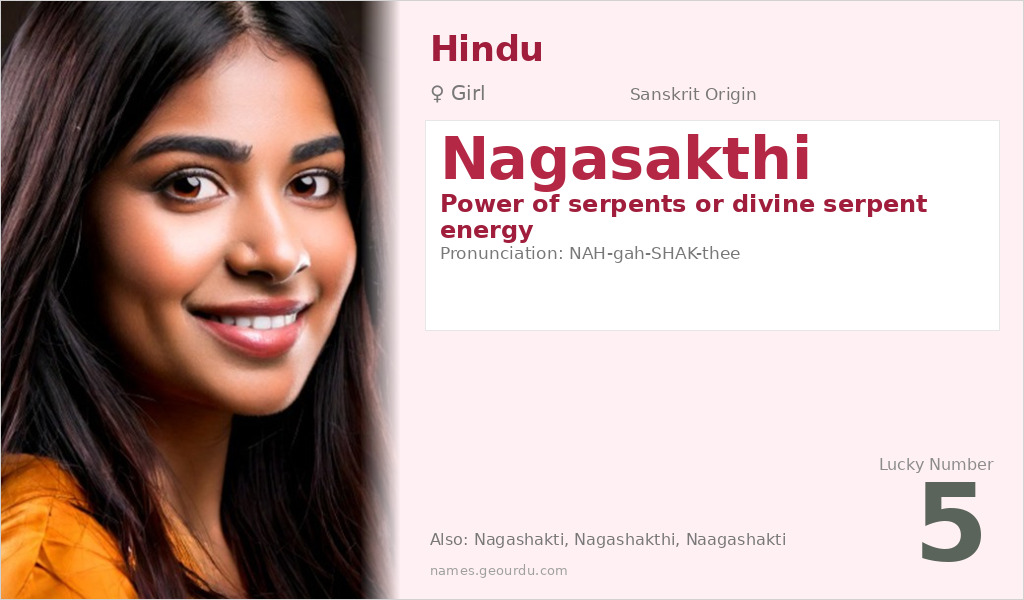
Nagasakthi is a beautiful and powerful Sanskrit name for girls that carries deep mythological significance in Hindu tradition. Meaning ‘power of serpents’ or ‘divine serpent energy’, this name connects to ancient Indian cosmology where Nagas (serpent deities) represent wisdom, protection, and mystical power. With its rich linguistic heritage and spiritual connotations, Nagasakthi offers a unique choice for parents seeking a name with cultural depth and symbolic meaning.
Meaning of Nagasakthi
Nagasakthi derives from classical Sanskrit, combining ‘Naga’ (नाग) meaning ‘serpent’ or specifically ‘divine serpent being’ with ‘Sakthi’ (शक्ति) meaning ‘power, energy, or strength’. In Sanskrit linguistics, ‘Naga’ originates from the verbal root √nag (to move, creep), referring to the serpent’s movement, while in mythological context it denotes semi-divine serpent beings who guard treasures and possess great wisdom. ‘Sakthi’ comes from √śak (to be able, to have power) and represents both physical and spiritual power, particularly the feminine divine energy in Hinduism. The compound thus signifies ‘serpent power’ or ‘energy of the Nagas’, referencing the mystical attributes associated with these mythological beings in Indian traditions.
| 📛 Name | Nagasakthi |
| 💎 Meaning | Power of serpents or divine serpent energy |
| 👤 Gender | Girl |
| 🕌 Religion | Hindu |
| 🌍 Origin | Sanskrit |
| 🗣 Pronunciation | NAH-gah-SHAK-thee |
| ✍️ Urdu | ناگاشکتی |
| ✍️ Arabic | ناغاشاكتي |
| 🔢 Numerology | 5 |
| ✨ Spellings | Nagashakti, Nagashakthi, Naagashakti |
Origin & Cultural Significance
Nagasakthi originates from Sanskrit, the classical language of ancient India, and is deeply rooted in Hindu mythology and tradition. The name reflects the significant role of Nagas (serpent deities) in Indian cosmology, where they appear as powerful beings inhabiting the underworld (Patala), often associated with water, fertility, and protection. In Hindu texts like the Mahabharata and Puranas, Nagas such as Shesha, Vasuki, and Takshaka play important roles, while in South Indian and Southeast Asian traditions, Naga worship remains prevalent. The name combines this serpent symbolism with the concept of Sakthi (divine feminine power), creating a name that embodies both protective and energetic qualities within Hindu cultural context.
Personality Traits
Those named Nagasakthi are often associated with qualities of wisdom, protection, and inner strength. The serpent symbolism suggests intuitive understanding and transformative abilities, while the ‘sakthi’ element indicates energetic and powerful characteristics. In cultural interpretation, such individuals might be seen as guardians or guides, possessing both the subtle wisdom of serpents and the dynamic energy of divine power.
Similar Names
If you like Nagasakthi, consider: Nagalakshmi, Nagavalli, Sakthivel, Nagendra, Shakti
Famous People Named Nagasakthi
- No widely known contemporary public figures with this exact name found in records, though it appears in traditional Hindu contexts and regional usage
Frequently Asked Questions About Nagasakthi
What does Nagasakthi mean?
Nagasakthi means 'power of serpents' or 'divine serpent energy' in Sanskrit, combining 'Naga' (serpent) and 'Sakthi' (power).
Is Nagasakthi a boy or girl name?
Nagasakthi is primarily a girl's name in Hindu tradition, though the 'Sakthi' component relates to feminine divine energy in Hinduism.
What is the origin of Nagasakthi?
Nagasakthi originates from Sanskrit and Hindu mythology, referencing the Nagas (serpent deities) and Sakthi (divine power) in Indian tradition.