
Table of Contents
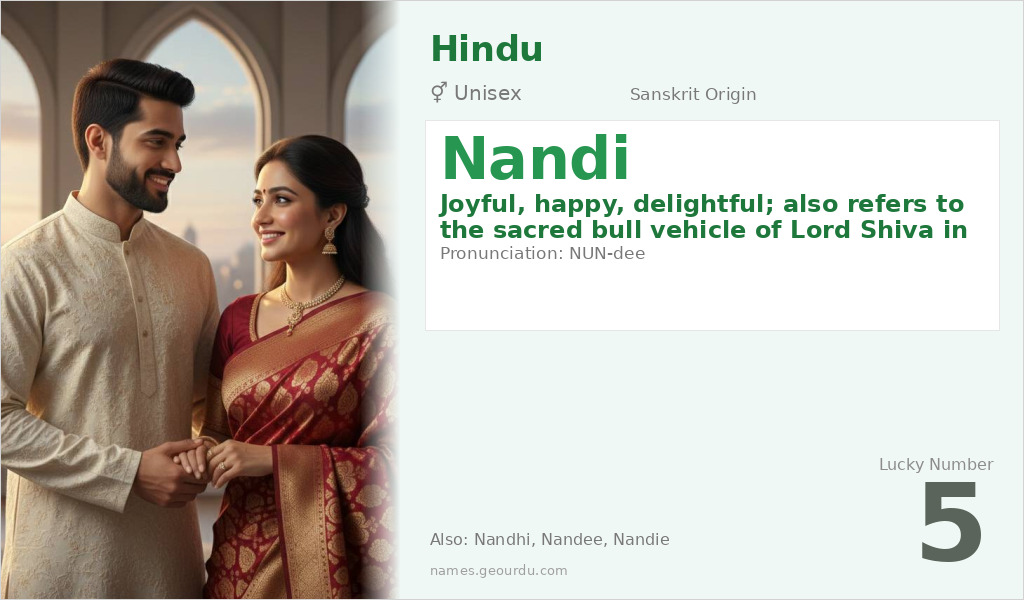
Nandi is a beautiful name with deep roots in ancient Sanskrit language and Hindu mythology. Meaning ‘joyful’ or ‘happy,’ this name carries both linguistic elegance and profound religious significance. While often recognized as the name of Lord Shiva’s sacred bull, Nandi has evolved into a meaningful choice for children across cultures. Discover the rich history and contemporary appeal of this timeless name.
Meaning of Nandi
The name Nandi derives from the Sanskrit word ‘नन्दि’ (nandi), which comes from the verbal root ‘nand’ meaning ‘to rejoice, to be happy, to delight.’ In classical Sanskrit texts, ‘nandi’ appears as a common noun denoting joy, happiness, and pleasure. This etymological foundation gives the name its primary meaning of ‘joyful one’ or ‘delightful.’ The name gained additional layers of meaning through Hindu mythology, where Nandi is the devoted bull vehicle and gatekeeper of Lord Shiva. This mythological association adds connotations of loyalty, strength, and divine protection to the name’s significance.
| 📛 Name | Nandi |
| 💎 Meaning | Joyful, happy, delightful; also refers to the sacred bull vehicle of Lord Shiva in Hinduism |
| 👤 Gender | Unisex |
| 🕌 Religion | Hindu |
| 🌍 Origin | Sanskrit |
| 🗣 Pronunciation | NUN-dee |
| ✍️ Urdu | نندی |
| ✍️ Arabic | ناندي |
| 🔢 Numerology | 5 |
| ✨ Spellings | Nandhi, Nandee, Nandie |
Origin & Cultural Significance
Nandi originates from ancient Sanskrit, one of the oldest languages in the Indo-European family. The name appears in early Hindu scriptures including the Puranas and epics like the Mahabharata. Its most famous mythological bearer, Shiva’s bull Nandi, is revered in temples throughout India and Southeast Asia, often depicted in sculpture facing Shiva’s sanctum. While the name has strong Hindu roots, it has been adopted in various cultures, particularly in South Africa where it appears among Zulu and Xhosa communities with different etymological origins. The name’s cross-cultural appeal demonstrates how ancient names can transcend their original contexts.
Personality Traits
People named Nandi often embody the joyful essence of their name’s meaning. They tend to approach life with optimism and enthusiasm, bringing positive energy to their relationships and endeavors. Their connection to the mythological Nandi suggests qualities of steadfast loyalty, protective instincts, and spiritual depth. These individuals typically balance their adventurous spirit with a strong sense of tradition and devotion to their values.
Similar Names
If you like Nandi, consider: Nandini, Nandan, Anandi, Nandita, Nandakumar
Famous People Named Nandi
- Nandi Bushell — British musician and drummer known for viral drumming videos
- Nandi Nyembe — South African actress known for her role in 'Generations'
Frequently Asked Questions About Nandi
What does Nandi mean?
Nandi means 'joyful,' 'happy,' or 'delightful' in Sanskrit. It also refers to the sacred bull who serves as Lord Shiva's vehicle in Hindu mythology.
Is Nandi a boy or girl name?
Nandi is historically a unisex name. While traditionally more common for boys in Hindu contexts due to the mythological association, it has been used for girls in modern times, particularly in Western countries.
What is the origin of Nandi?
Nandi originates from Sanskrit, one of the oldest languages of India. The name appears in ancient Hindu scriptures and mythology, with its most famous bearer being Shiva's bull Nandi in Hindu tradition.