Table of Contents
Patmanjari is a beautiful and melodious name with deep roots in Indian classical music and Sanskrit poetry. More than just a name, it represents a specific raga in Hindustani classical tradition that evokes the freshness of morning and the beauty of spring. This name carries the elegant symbolism of the lotus flower, representing purity, beauty, and spiritual awakening in Hindu philosophy. Choosing Patmanjari connects a child to India’s rich musical heritage and poetic traditions.
Meaning of Patmanjari
Patmanjari derives from two Sanskrit words: ‘padma’ meaning lotus, and ‘anjari’ meaning one who holds or possesses. The lotus holds profound significance in Hindu and Buddhist traditions, symbolizing purity, divine beauty, and spiritual enlightenment—growing pristine from muddy waters. In musical context, Patmanjari refers to a specific morning raga that belongs to the Kafi thaat (musical framework) in Hindustani classical music. This raga is traditionally associated with the spring season and romantic themes, creating a mood of freshness and blossoming beauty. The name thus beautifully combines botanical symbolism with artistic expression, representing someone who embodies the grace and purity of the lotus while being connected to musical harmony.
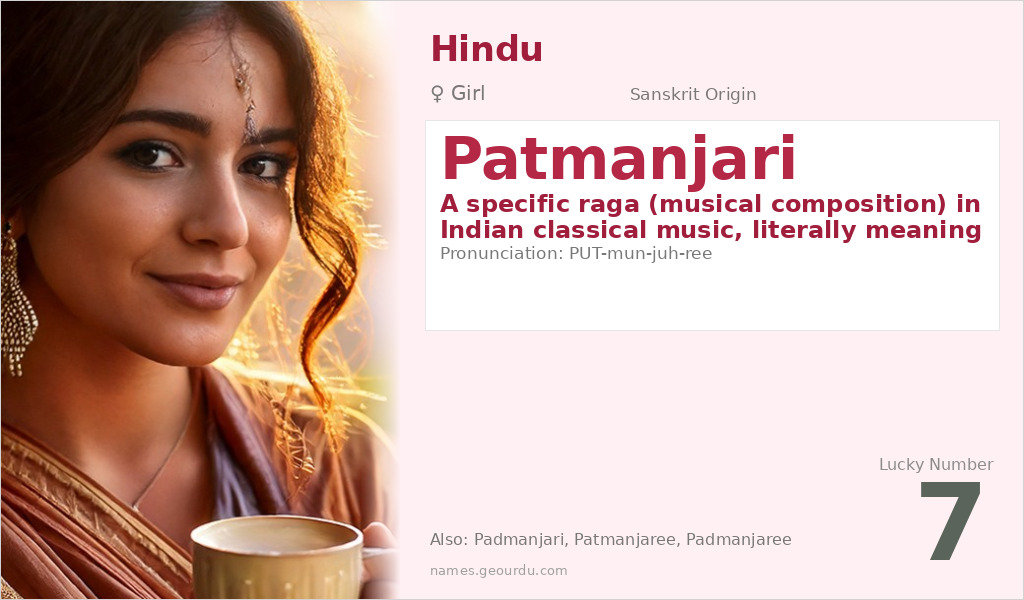
| 📛 Name | Patmanjari |
| 💎 Meaning | A specific raga (musical composition) in Indian classical music, literally meaning 'one who holds the lotus' |
| 👤 Gender | Girl |
| 🕌 Religion | Hindu |
| 🌍 Origin | Sanskrit |
| 🗣 Pronunciation | PUT-mun-juh-ree |
| ✍️ Urdu | پدمنجری |
| ✍️ Arabic | بادماجاري |
| 🔢 Numerology | 7 |
| ✨ Spellings | Padmanjari, Patmanjaree, Padmanjaree |
Origin & Cultural Significance
Patmanjari originates from ancient Sanskrit, the classical language of India that has influenced numerous South Asian languages. As a musical term, it appears in traditional Indian music texts dating back centuries, where specific ragas were named after natural phenomena, emotions, or poetic imagery. The name reflects the deep connection between language, music, and spirituality in Indian culture, where names often carry multiple layers of meaning. While primarily used as a girl’s name in Hindu communities, its musical association makes it culturally significant beyond just personal nomenclature. The raga Patmanjari continues to be performed by classical musicians today, preserving this cultural heritage across generations.
Personality Traits
Those named Patmanjari are often seen as graceful, artistic, and spiritually inclined individuals. The lotus symbolism suggests someone who maintains inner purity and beauty regardless of external circumstances, showing resilience and depth of character. With its musical origins, the name may indicate a natural sensitivity to rhythm, harmony, and creative expression. Such individuals might excel in artistic pursuits, have an appreciation for beauty in all forms, and approach life with both practicality and spiritual awareness.
Similar Names
If you like Patmanjari, consider: Padmavati, Padmalaya, Padmasri, Manjari, Kunjari
Famous People Named Patmanjari
- Patmanjari (raga) — A classical musical composition in Hindustani music tradition
- Various Indian classical musicians who have performed the Patmanjari raga in recordings and concerts
Frequently Asked Questions About Patmanjari
What does Patmanjari mean?
Patmanjari means 'one who holds the lotus' in Sanskrit. It specifically refers to a morning raga in Indian classical music tradition.
Is Patmanjari a boy or girl name?
Patmanjari is traditionally used as a girl's name in Hindu naming traditions, though its musical association is gender-neutral in artistic contexts.
What is the origin of Patmanjari?
Patmanjari originates from Sanskrit, the classical language of India. It combines 'padma' (lotus) and 'anjari' (one who holds), and specifically refers to a raga in Hindustani classical music.