Table of Contents
Pal is a name with rich multicultural roots that spans continents and languages. While often assumed to be simple, it carries profound meanings of protection, friendship, and strength across different cultures. From Sanskrit guardians to Persian companions, this name has traveled through history with significant cultural weight. Understanding its true origins reveals why it remains a meaningful choice across various traditions.
Meaning of Pal
The name Pal has several well-documented meanings depending on its linguistic origin. In Sanskrit and Hindi, it derives from the verb ‘pālana’ (पालन) meaning ‘to protect, guard, or nourish,’ making it mean ‘protector’ or ‘guardian.’ This is the most common meaning in South Asian contexts. In Persian, Pal (پال) means ‘friend’ or ‘companion,’ reflecting social bonds. In Turkish, it signifies ‘strong’ or ‘mighty.’ The name also appears in European contexts as a variant of Paul (from Latin ‘Paulus’ meaning ‘small’ or ‘humble’), particularly in Hungarian (Pál) and Scandinavian languages (Pål). These diverse meanings share themes of strength, protection, and relationship.
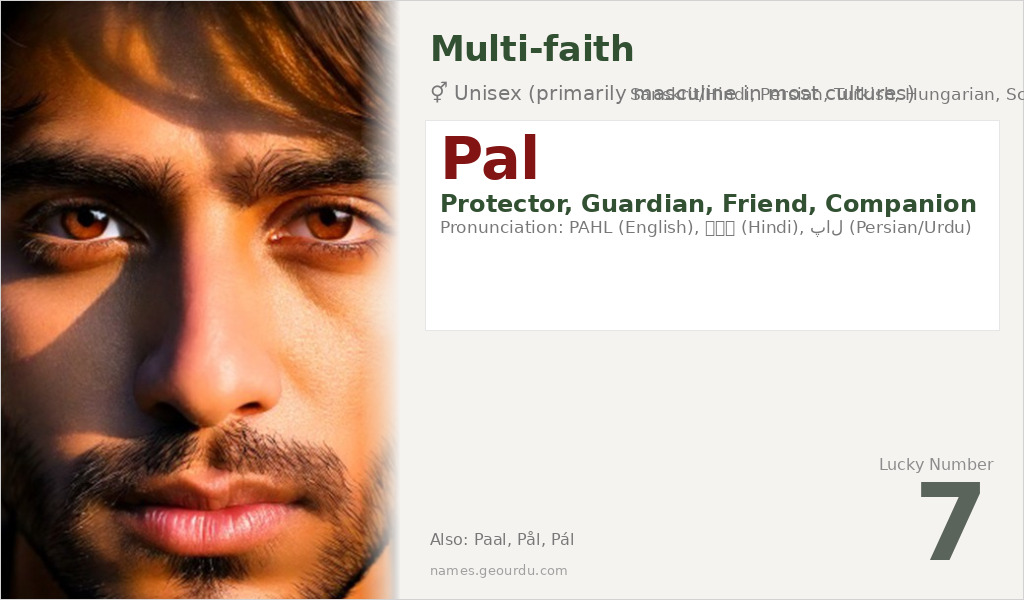
| 📛 Name | Pal |
| 💎 Meaning | Protector, Guardian, Friend, Companion |
| 👤 Gender | Unisex (primarily masculine in most cultures) |
| 🕌 Religion | Multi-faith |
| 🌍 Origin | Sanskrit/Hindi, Persian, Turkish, Hungarian, Scandinavian |
| 🗣 Pronunciation | PAHL (English), पाल (Hindi), پال (Persian/Urdu) |
| ✍️ Urdu | پال |
| ✍️ Arabic | بال (transliteration) |
| 🔢 Numerology | 7 |
| ✨ Spellings | Paal, Pål, Pál, Paol |
Origin & Cultural Significance
Pal originates from multiple independent linguistic traditions. Its Sanskrit/Hindi version has ancient roots in the Indian subcontinent, where it appears in historical texts and continues in modern usage across Hindu, Sikh, and Muslim communities. The Persian version entered South Asia through cultural exchange and is used in Urdu-speaking regions. The Turkish version reflects Central Asian influences, while the European versions came through Christianization and the spread of the name Paul. This multi-origin story explains why Pal appears in diverse cultural contexts from India to Hungary, often with similar protective connotations despite different linguistic paths.
Personality Traits
People named Pal often embody the protective and loyal qualities suggested by their name’s meanings. Whether as guardians in the Sanskrit sense or friends in the Persian tradition, they tend to be reliable and supportive individuals. Their strength—whether physical, emotional, or moral—often becomes a defining characteristic, helping them navigate challenges while protecting those they care about. This name carries an expectation of steadfastness that many who bear it naturally fulfill.
Similar Names
If you like Pal, consider: Palan, Palak, Pallav, Palash, Pavel
Famous People Named Pal
- Pal Benko — Hungarian-American chess grandmaster
- Pal Schmitt — former President of Hungary
- Pål Sverre Valheim Hagen — Norwegian actor
Frequently Asked Questions About Pal
What does Pal mean?
Pal has multiple meanings: 'protector' or 'guardian' in Sanskrit/Hindi, 'friend' or 'companion' in Persian, and 'strong' or 'mighty' in Turkish. It's also a variant of Paul in European languages.
Is Pal a boy or girl name?
Pal is primarily masculine in most cultures (Sanskrit, Persian, Turkish, Hungarian), though it can be used as unisex in some modern contexts. It is not traditionally a feminine name.
What is the origin of Pal?
Pal has multiple origins: Sanskrit/Hindi (meaning protector), Persian (meaning friend), Turkish (meaning strong), and European languages as a variant of Paul. It's truly multicultural.