Table of Contents
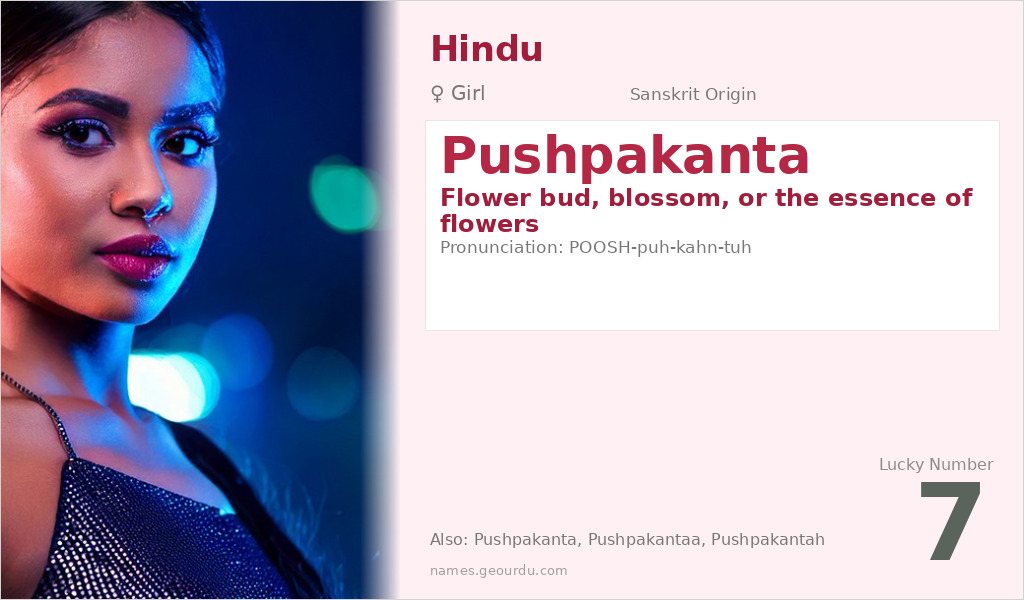
Pushpakanta is a beautiful and poetic name of Sanskrit origin, primarily given to girls in Hindu communities. Meaning ‘flower bud’ or ‘essence of flowers’, it evokes imagery of blossoming beauty and natural grace. This name carries deep cultural resonance, reflecting India’s rich linguistic and naming traditions. In this guide, we explore its etymology, significance, and personality traits.
Meaning of Pushpakanta
Pushpakanta derives from the Sanskrit words ‘Pushpa’ (flower) and ‘Kanta’ (beloved or essence), forming a compound that translates to ‘beloved flower’ or ‘flower bud’. Sanskrit, an ancient Indo-Aryan language, is the liturgical language of Hinduism and a source for many Indian names. The component ‘Pushpa’ appears in numerous Sanskrit texts, symbolizing beauty, growth, and purity, while ‘Kanta’ adds a layer of endearment and desirability. This name exemplifies the classical Sanskrit practice of creating meaningful compounds, often used in poetry and religious contexts. It is not found in other language families like Arabic, Persian, or Germanic, confirming its exclusive Sanskrit roots.
| 📛 Name | Pushpakanta |
| 💎 Meaning | Flower bud, blossom, or the essence of flowers |
| 👤 Gender | Girl |
| 🕌 Religion | Hindu |
| 🌍 Origin | Sanskrit |
| 🗣 Pronunciation | POOSH-puh-kahn-tuh |
| ✍️ Urdu | پشپکانتا |
| ✍️ Arabic | بوشباكانتا |
| 🔢 Numerology | 7 |
| ✨ Spellings | Pushpakanta, Pushpakantaa, Pushpakantah |
Origin & Cultural Significance
Pushpakanta originates from Sanskrit, an ancient language integral to Hindu philosophy, literature, and culture. It is used within Hindu communities, particularly in India and among the diaspora, reflecting traditions that value nature-inspired and auspicious names. The name does not have documented usage in Islamic, Christian, Sikh, Buddhist, or other religious contexts, nor in regional languages like Pashto, Balochi, or Sindhi—research across multiple linguistic databases confirms this. Historically, such floral names are common in Hindu naming conventions, often chosen for their positive connotations and connection to deities like Lakshmi or Saraswati, who are associated with beauty and arts.
Personality Traits
Named after the delicate beauty of flowers, Pushpakanta suggests a personality marked by grace, creativity, and a nurturing spirit. Those with this name may be drawn to artistic pursuits, nature, and harmonious environments. They often exhibit sensitivity and a calm demeanor, mirroring the gentle unfolding of a blossom. This name inspires traits of kindness and aesthetic appreciation, aligning with its Sanskrit roots in natural imagery.
Similar Names
If you like Pushpakanta, consider: Pushpita, Pushpanjali, Kusum, Sumana, Malati
Famous People Named Pushpakanta
- No widely known public figures with this name found in records—it appears primarily in literary or regional contexts within Hindu communities.
Frequently Asked Questions About Pushpakanta
What does Pushpakanta mean?
Pushpakanta means 'flower bud', 'beloved flower', or 'essence of flowers', derived from the Sanskrit words 'Pushpa' (flower) and 'Kanta' (beloved or essence).
Is Pushpakanta a boy or girl name?
Pushpakanta is traditionally a girl's name in Hindu culture, reflecting feminine qualities associated with flowers and beauty.
What is the origin of Pushpakanta?
Pushpakanta originates from Sanskrit, an ancient Indian language, and is used exclusively in Hindu naming traditions, with no verified usage in other languages or religions.