
Table of Contents
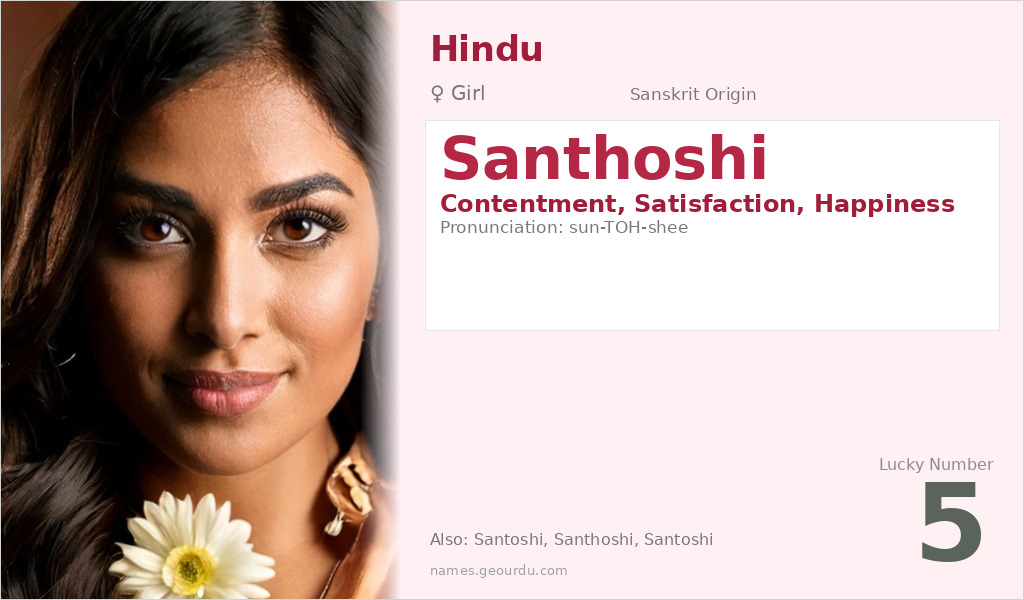
Santhoshi is a beautiful Sanskrit name for girls that carries profound spiritual significance in Hindu culture. Meaning ‘contentment’ or ‘one who brings happiness’, this name embodies one of the key virtues in Indian philosophy. Popular across India and among Hindu communities worldwide, Santhoshi represents the ideal of finding satisfaction in life’s journey. The name gained additional popularity through cultural references in Indian cinema and religious traditions.
Meaning of Santhoshi
Santhoshi originates from the Sanskrit word ‘Santosh’ (संतोष), which literally translates to contentment, satisfaction, or happiness. The name is formed by adding the feminine suffix ‘-i’ to create a specifically feminine form meaning ‘she who brings contentment’. In Sanskrit etymology, ‘Santosh’ combines ‘sam-‘ (meaning complete or perfect) with ‘tush’ (meaning to be satisfied or pleased), creating the concept of complete satisfaction. This name is deeply significant in Hindu philosophy where Santosh is considered one of the Niyamas (observances) in Yoga philosophy and a key virtue in spiritual practice. The concept emphasizes finding happiness within rather than seeking it externally, making this name carry profound philosophical weight beyond just a pleasant meaning.
| 📛 Name | Santhoshi |
| 💎 Meaning | Contentment, Satisfaction, Happiness |
| 👤 Gender | Girl |
| 🕌 Religion | Hindu |
| 🌍 Origin | Sanskrit |
| 🗣 Pronunciation | sun-TOH-shee |
| ✍️ Urdu | سنتوشی |
| ✍️ Arabic | سانتوشي |
| 🔢 Numerology | 5 |
| ✨ Spellings | Santoshi, Santhoshi, Santoshi, Santhoshi |
Origin & Cultural Significance
Santhoshi has its roots in ancient Sanskrit language and Hindu religious traditions. The name gained particular prominence through the worship of Santoshi Mata, a Hindu goddess of satisfaction and contentment who emerged in the 20th century. While the goddess’s worship became popular in the 1960s and 1970s, the name itself has much older linguistic origins in classical Sanskrit texts. The name is predominantly used in India, especially in Tamil Nadu, Andhra Pradesh, Telangana, and Karnataka, though it has spread to Hindu communities worldwide. Its popularity was significantly boosted by Indian cinema, particularly through films featuring characters named Santhoshi and the widespread worship of Santoshi Mata following the 1975 film ‘Jai Santoshi Maa’.
Personality Traits
Those named Santhoshi are often characterized by their balanced temperament and ability to find joy in simple things. They typically possess a calming presence that helps soothe tense situations and bring people together. Their philosophical outlook allows them to maintain perspective during challenges, and they often serve as emotional anchors for their families and communities. The name’s meaning naturally influences their approach to life, making them seekers of harmony rather than conflict.
Similar Names
If you like Santhoshi, consider: Santosh, Santoshi, Sukhi, Anand, Harsha, Nandini, Priya, Mudita
Famous People Named Santhoshi
- Santhoshi — Indian actress known for Tamil and Telugu films in the 1990s
- Santhoshi — Character from the popular Hindi film 'Satyam Shivam Sundaram' played by actress Zeenat Aman
Frequently Asked Questions About Santhoshi
What does Santhoshi mean?
Santhoshi means 'contentment', 'satisfaction', or 'happiness' in Sanskrit. It specifically refers to the state of being completely satisfied and happy, derived from the Sanskrit root 'Santosh' with the feminine suffix '-i'.
Is Santhoshi a boy or girl name?
Santhoshi is exclusively a girl's name. The '-i' suffix in Sanskrit typically indicates feminine gender, and the name is only used for females in Hindu naming traditions across all regions where it's popular.
What is the origin of Santhoshi?
Santhoshi originates from Sanskrit, the ancient classical language of India. It comes from the word 'Santosh' meaning contentment, with the feminine suffix '-i' added. The name is deeply rooted in Hindu philosophy and gained cultural prominence through the worship of Santoshi Mata, a goddess of satisfaction.





