Table of Contents
Siladitya is a distinguished Sanskrit name with deep historical roots in Indian culture. Meaning ‘sun of stone’, this name combines elements representing strength and brilliance. Most famously borne by Emperor Harsha Siladitya in the 7th century, this name carries regal connotations and cultural significance. Today, it remains a meaningful choice for parents seeking a name with historical depth and linguistic beauty.
Meaning of Siladitya
Siladitya derives from classical Sanskrit, formed by combining ‘Shila’ (stone, rock) and ‘Aditya’ (sun, solar deity). The name literally translates to ‘stone sun’ or ‘sun of stone’, creating a powerful metaphorical image. In Hindu tradition, Aditya refers specifically to the sun god and the solar deities, sons of the goddess Aditi. The ‘shila’ component adds qualities of solidity, permanence, and foundation. This compound construction follows traditional Sanskrit naming patterns where two meaningful elements combine to create a new, poetic meaning. The name suggests someone who possesses both the enduring strength of stone and the radiant energy of the sun.
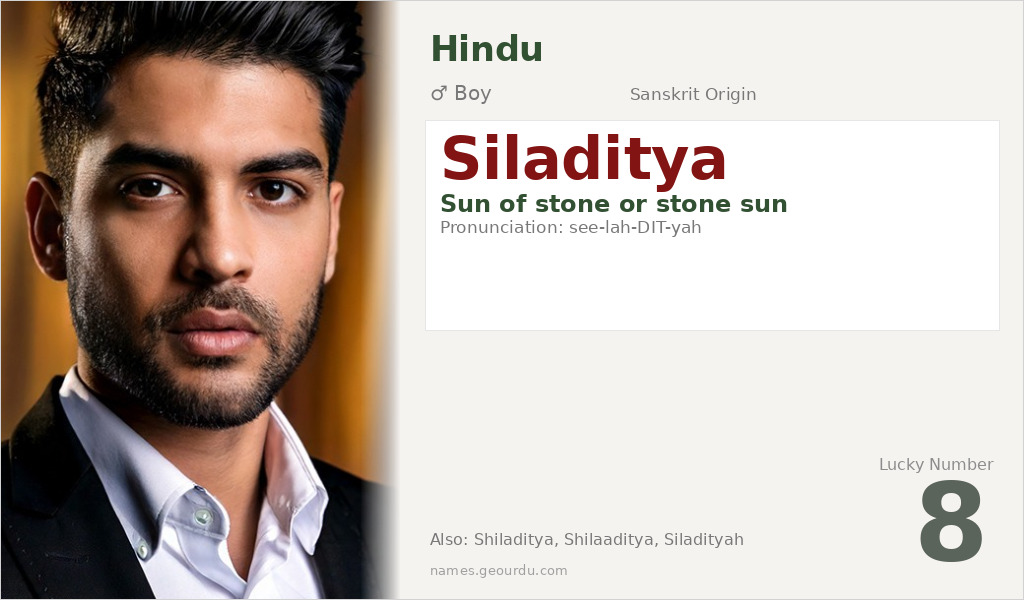
| 📛 Name | Siladitya |
| 💎 Meaning | Sun of stone or stone sun |
| 👤 Gender | Boy |
| 🕌 Religion | Hindu |
| 🌍 Origin | Sanskrit |
| 🗣 Pronunciation | see-lah-DIT-yah |
| ✍️ Urdu | سلا دیتیا |
| ✍️ Arabic | سيلاديتيا |
| 🔢 Numerology | 8 |
| ✨ Spellings | Shiladitya, Shilaaditya, Siladityah |
Origin & Cultural Significance
Siladitya originates from ancient Sanskrit, the classical language of Hindu scriptures and Indian literature. The name appears in historical records dating back to the Gupta and post-Gupta periods in India. Most notably, it was borne by Harsha Siladitya (also known as Harshavardhana), who ruled a vast kingdom in northern India during the 7th century and was a prominent patron of Buddhism and the arts. The name reflects the Sanskrit tradition of creating compound names with meaningful elements, a practice common among royal families and learned classes. While primarily associated with Hindu culture due to its Sanskrit origins and mythological references, the historical Emperor Harsha Siladitya himself was known for his religious tolerance and support of multiple faiths.
Personality Traits
Those named Siladitya are often associated with qualities of strength, resilience, and radiant energy. The ‘stone’ element suggests steadfastness, reliability, and practical wisdom, while the ‘sun’ component implies warmth, leadership, and vitality. This combination creates a personality profile of someone who is both grounded and inspiring, capable of enduring challenges while illuminating the path for others. In social contexts, they may exhibit natural authority balanced with genuine warmth and approachability.
Similar Names
If you like Siladitya, consider: Aditya, Surya, Bhanu, Ravi, Arka
Famous People Named Siladitya
- Harsha Siladitya — 7th-century Indian emperor who ruled northern India from 606 to 647 CE, known for his patronage of Buddhism and literature
- Siladitya I — 6th-century ruler of the Maitraka dynasty in Gujarat
Frequently Asked Questions About Siladitya
What does Siladitya mean?
Siladitya means 'sun of stone' or 'stone sun' in Sanskrit, combining 'Shila' (stone) and 'Aditya' (sun, solar deity).
Is Siladitya a boy or girl name?
Siladitya is historically and traditionally a masculine name, borne by several Indian kings including Emperor Harsha Siladitya in the 7th century.
What is the origin of Siladitya?
Siladitya originates from Sanskrit, the classical language of ancient India, and has historical usage dating back to the Gupta period and early medieval Indian kingdoms.