Table of Contents
Thulasi is a beautiful and spiritually significant name deeply rooted in Hindu tradition. Derived from Sanskrit, this name carries the weight of centuries of religious devotion and cultural heritage. As the name for the sacred basil plant worshipped in Hinduism, Thulasi represents purity, devotion, and divine connection. This guide explores the rich etymology, cultural significance, and modern usage of this timeless name.
Meaning of Thulasi
Thulasi originates from the Sanskrit word ‘tulasī’ (तुलसी), which specifically refers to the holy basil plant (Ocimum tenuiflorum). This is not merely a fragrant plant but a sacred botanical species revered throughout Hindu tradition. The etymology may connect to Sanskrit roots ‘tula’ meaning balance or ‘tul’ meaning to weigh, suggesting something incomparable or beyond measure. In Hindu mythology, the plant is considered an earthly manifestation of the goddess Tulasi, who is worshipped as the consort of Lord Vishnu. The name thus carries profound religious symbolism, representing devotion, purity, and spiritual protection. Across South Asia, the Thulasi plant is cultivated in household courtyards and temples for daily worship rituals.
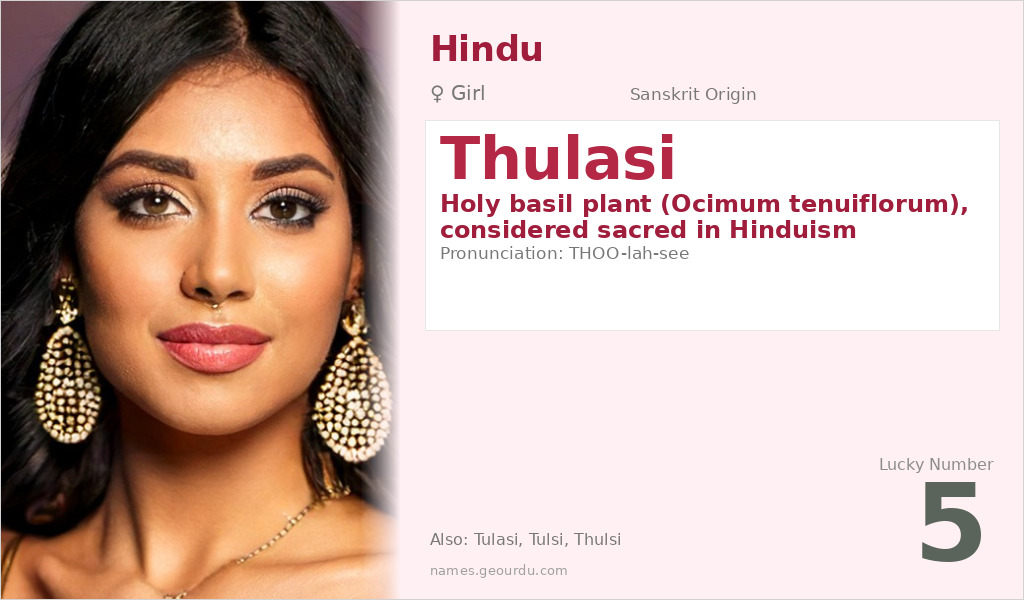
| 📛 Name | Thulasi |
| 💎 Meaning | Holy basil plant (Ocimum tenuiflorum), considered sacred in Hinduism |
| 👤 Gender | Girl |
| 🕌 Religion | Hindu |
| 🌍 Origin | Sanskrit |
| 🗣 Pronunciation | THOO-lah-see |
| ✍️ Urdu | تھلسی |
| ✍️ Arabic | تولسي |
| 🔢 Numerology | 5 |
| ✨ Spellings | Tulasi, Tulsi, Thulsi, Tulasī |
Origin & Cultural Significance
Thulasi has its origins in ancient Sanskrit literature and Hindu religious texts, where the holy basil plant is mentioned as early as the Vedas. The name gained prominence through the Puranas, particularly the Padma Purana and Skanda Purana, which detail the mythological origins of the Tulasi plant. Culturally, the name is most prevalent in India, Nepal, and Sri Lanka, and among Hindu diaspora communities worldwide. In South Indian traditions particularly, Thulasi is a common given name for girls, reflecting the plant’s association with the goddess Lakshmi and domestic worship practices. The name’s usage spans centuries, maintaining its religious significance while adapting to modern naming conventions.
Personality Traits
Those named Thulasi are often associated with qualities of the sacred plant they’re named after: nurturing, healing, and spiritually grounded. They tend to exhibit calmness and resilience, much like the hardy basil plant that thrives in various conditions. Many Thulasis are drawn to caregiving roles, community service, or spiritual pursuits, reflecting the plant’s associations with purification and devotion. Their presence often brings a sense of peace and stability to those around them.
Similar Names
If you like Thulasi, consider: Tulasi, Tulsi, Basil, Lavanya, Pushpa, Priya, Kamala, Padma
Famous People Named Thulasi
- Tulsi Gabbard — American politician and former U.S. Representative from Hawaii
- Tulsi (actress) — Indian actress known for Telugu and Tamil films
Frequently Asked Questions About Thulasi
What does Thulasi mean?
Thulasi means 'holy basil plant' (Ocimum tenuiflorum) in Sanskrit. It refers specifically to the sacred plant worshipped in Hinduism, not just any fragrant plant.
Is Thulasi a boy or girl name?
Thulasi is exclusively a girl's name in Hindu naming tradition, named after the goddess Tulasi who is female in Hindu mythology.
What is the origin of Thulasi?
Thulasi originates from Sanskrit (तुलसी) and is deeply rooted in Hindu religious tradition, particularly associated with the worship of Vishnu and Lakshmi.