Table of Contents
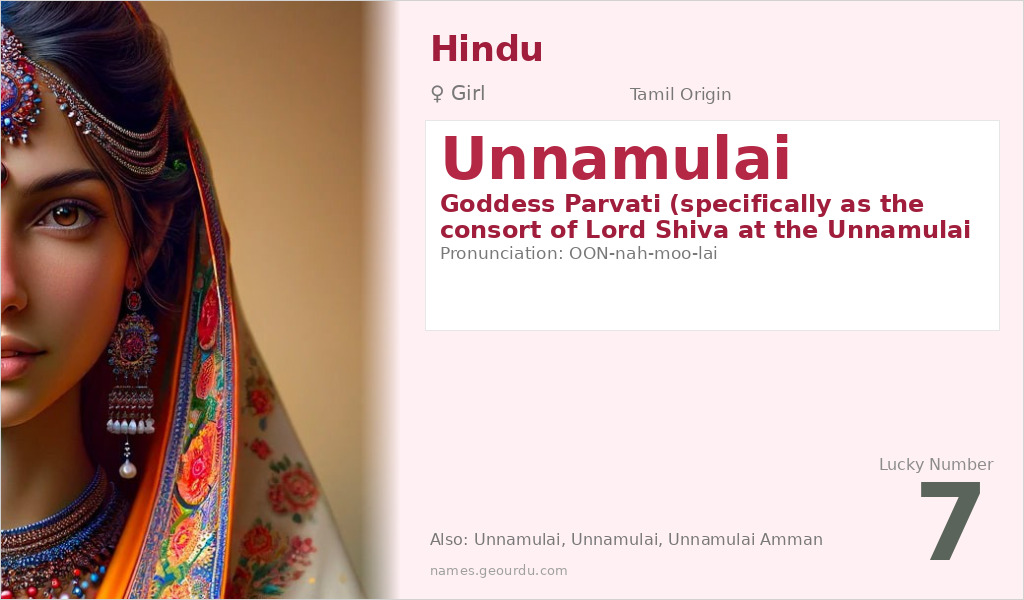
Unnamulai is a beautiful and culturally rich Tamil name for girls that carries deep spiritual significance in Hindu tradition. Specifically referring to Goddess Parvati in her form at the Unnamulai Amman Temple in Tiruvannamalai, this name embodies maternal divinity and regional devotion. With roots in classical Tamil language and South Indian temple worship, Unnamulai represents a unique aspect of Hindu goddess veneration. Parents choosing this name often seek to honor both linguistic heritage and religious tradition.
Meaning of Unnamulai
Unnamulai has a precise meaning in Tamil language and Hindu religious context: it refers specifically to Goddess Parvati as worshipped at the Unnamulai Amman Temple in Tiruvannamalai, Tamil Nadu. The name breaks down into two Tamil components: ‘unnam’ meaning ‘fat’ or ‘plump’ in classical Tamil literature, and ‘ulai’ meaning ‘to reside’ or ‘dwelling place.’ Together, they create the meaning ‘the one who resides in the plump form’ or ‘the plump goddess,’ symbolizing Parvati’s nourishing, maternal aspects. This epithet highlights the goddess’s role as the sustainer and nourisher, with the ‘plump’ reference representing abundance and fertility. Unlike generic names for Parvati, Unnamulai is geographically and culturally specific to Tamil Nadu’s religious landscape.
| 📛 Name | Unnamulai |
| 💎 Meaning | Goddess Parvati (specifically as the consort of Lord Shiva at the Unnamulai temple in Tamil Nadu) |
| 👤 Gender | Girl |
| 🕌 Religion | Hindu |
| 🌍 Origin | Tamil |
| 🗣 Pronunciation | OON-nah-moo-lai |
| ✍️ Urdu | اوننامولائی |
| ✍️ Arabic | أونامولاي |
| 🔢 Numerology | 7 |
| ✨ Spellings | Unnamulai, Unnamulai, Unnamulai Amman |
Origin & Cultural Significance
Unnamulai originates from Tamil language and culture in South India, specifically associated with the temple town of Tiruvannamalai in Tamil Nadu. The name emerges from regional Hindu devotion to Goddess Parvati, who is worshipped alongside Lord Shiva at the Arunachaleswarar Temple complex. The Unnamulai Amman shrine within this complex gives the name its specific religious context. This naming tradition reflects the common Hindu practice of using temple-based epithets for deities as personal names. While the name has ancient roots in Tamil religious poetry and temple inscriptions, it remains in use today primarily among Tamil-speaking Hindu communities, preserving a connection to specific sacred geography and regional worship practices.
Personality Traits
The personality associated with Unnamulai draws directly from its divine namesake, Goddess Parvati. Those named Unnamulai are often thought to embody maternal warmth, protective instincts, and spiritual devotion. The name suggests a person who nurtures others while maintaining inner strength and resilience. In cultural context, this name carries expectations of traditional values combined with the powerful feminine energy of the goddess it represents.
Similar Names
If you like Unnamulai, consider: Parvati, Uma, Annapurna, Meenakshi, Kamakshi
Famous People Named Unnamulai
- Unnamulai Amman — The deity worshipped at the Unnamulai Amman Temple in Tiruvannamalai, Tamil Nadu, a form of Goddess Parvati
- No notable contemporary individuals with this name found in public records
Frequently Asked Questions About Unnamulai
What does Unnamulai mean?
Unnamulai means 'Goddess Parvati' specifically in her form as worshipped at the Unnamulai Amman Temple in Tiruvannamalai, Tamil Nadu. The Tamil name combines 'unnam' (plump) and 'ulai' (residing) to mean 'the plump goddess' or 'the one who resides in plump form,' symbolizing abundance and nourishment.
Is Unnamulai a boy or girl name?
Unnamulai is exclusively a girl's name in Tamil Hindu tradition, as it refers to Goddess Parvati, a feminine deity. There are no recorded instances of this name being used for boys in its cultural context.
What is the origin of Unnamulai?
Unnamulai originates from Tamil language and culture in South India, specifically associated with the temple town of Tiruvannamalai in Tamil Nadu. It is a regional epithet for Goddess Parvati that has been used as a personal name within Tamil Hindu communities for generations.