
Table of Contents
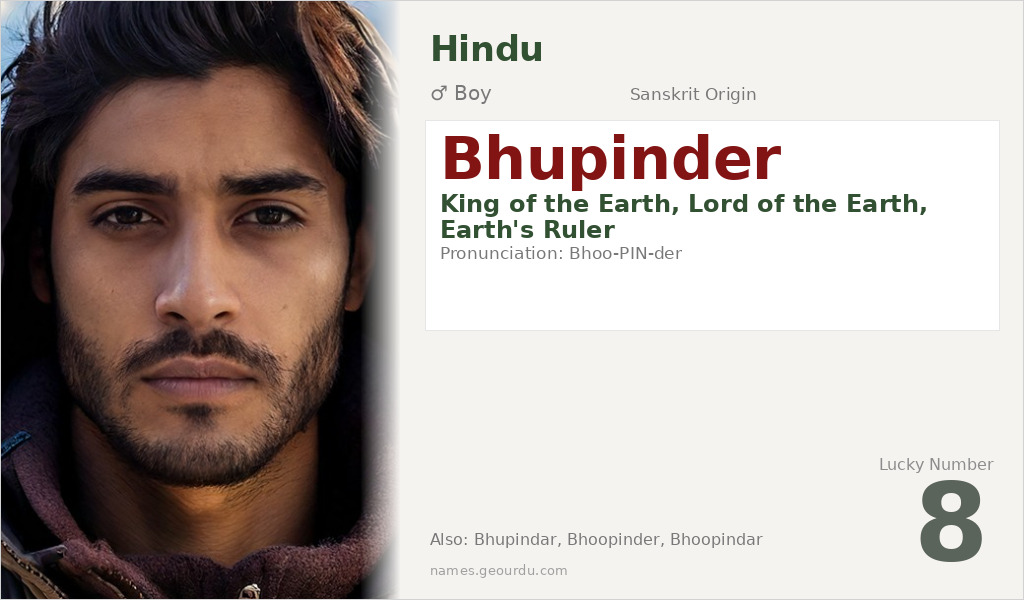
Bhupinder is a powerful Sanskrit name with deep roots in Hindu tradition and Indian royalty. Meaning ‘Lord of the Earth’ or ‘King of the Earth’, this name carries connotations of sovereignty, protection, and earthly dominion. Popular in North India, particularly among Punjabi and Hindu communities, Bhupinder has been borne by historical rulers and modern leaders alike. Its compound structure reflects classical naming traditions that emphasize noble qualities and divine connections.
Meaning of Bhupinder
Bhupinder derives from the Sanskrit language, combining ‘Bhu’ (भू), meaning ‘earth, land, or world’, with ‘Pati’ (पति), meaning ‘lord, master, or ruler’. The name literally translates to ‘Lord of the Earth’ or ‘Ruler of the Earth’, indicating sovereignty over the terrestrial realm. In Vedic and Puranic literature, similar compounds appear in references to kings and deities who govern the physical world. The ‘Pati’ element is particularly significant in Hindu tradition, denoting not just political authority but also protective responsibility and divine right. This name reflects the ancient Indian concept of kingship as a sacred duty tied to the land and its people.
| 📛 Name | Bhupinder |
| 💎 Meaning | King of the Earth, Lord of the Earth, Earth's Ruler |
| 👤 Gender | Boy |
| 🕌 Religion | Hindu |
| 🌍 Origin | Sanskrit |
| 🗣 Pronunciation | Bhoo-PIN-der |
| ✍️ Urdu | بھوپندر |
| ✍️ Arabic | بهوبندر |
| 🔢 Numerology | 8 |
| ✨ Spellings | Bhupindar, Bhoopinder, Bhoopindar, Bhupendra |
Origin & Cultural Significance
Bhupinder originates from classical Sanskrit, the liturgical language of Hinduism, and has been used in Indian subcontinent for centuries. The name appears in historical records of Rajput and Sikh royalty, particularly in the Punjab region where it became popular among ruling families. During the Mughal and British colonial periods, names with ‘Bhupati’ elements were favored by aristocratic families claiming kshatriya (warrior) lineage. In modern times, Bhupinder remains common in North India, especially among Hindu and Sikh communities, though its usage has spread to the Indian diaspora worldwide. The name’s royal associations make it particularly significant in cultures that value traditional hierarchies and earthly authority.
Personality Traits
Those named Bhupinder are often perceived as natural leaders with strong organizational abilities and practical intelligence. They tend to be grounded individuals who value stability, tradition, and responsibility toward their community. With their connection to the ‘earth’ element of their name, they frequently demonstrate patience, resilience, and a protective nature toward family and subordinates. These traits make them well-suited for roles requiring management, governance, or caretaking responsibilities.
Similar Names
If you like Bhupinder, consider: Bhupendra, Bhoopati, Bhuvanesh, Prithviraj, Dharampal
Famous People Named Bhupinder
- Bhupinder Singh — Maharaja of Patiala (1891-1938), known for his patronage of sports and music
- Bhupinder Singh Hooda — Former Chief Minister of Haryana, India
Frequently Asked Questions About Bhupinder
What does Bhupinder mean?
Bhupinder means 'Lord of the Earth' or 'King of the Earth' in Sanskrit, combining 'Bhu' (earth) and 'Pati' (lord/ruler).
Is Bhupinder a boy or girl name?
Bhupinder is exclusively a masculine name in Hindu and Sikh naming traditions, reflecting royal and authoritative qualities.
What is the origin of Bhupinder?
Bhupinder originates from classical Sanskrit, the ancient language of Hindu scriptures, and has been used for centuries in Indian royal and aristocratic families.





