
Table of Contents
Bhuyan is a distinctive name with deep roots in South Asian history and culture, particularly in regions like Assam, Odisha, and Bengal. Derived from Sanskrit, this name carries the meaningful connotation of ‘landowner’ or ‘estate holder,’ reflecting historical social structures and connections to the earth. More than just a personal name, Bhuyan represents a legacy of stewardship, stability, and traditional values that have been passed down through generations. Today, it continues to be chosen by parents seeking a name with historical significance and grounded meaning.
Meaning of Bhuyan
The name Bhuyan originates from the Sanskrit word ‘bhūmi’ (भूमि), which means ‘land,’ ‘earth,’ or ‘ground.’ When combined with the possessive suffix ‘-yān,’ it forms ‘Bhuyan,’ literally translating to ‘one who owns land’ or ‘landholder.’ This etymology reflects the historical context where Bhuyans were a class of landowners and feudal chiefs in various regions of South Asia. The term was particularly significant in Assam, where Bhuyan families held substantial agricultural estates and played crucial roles in local governance. Over time, this occupational or status title evolved into both a surname and a given name, carrying with it associations of prosperity, responsibility, and connection to one’s heritage and territory.
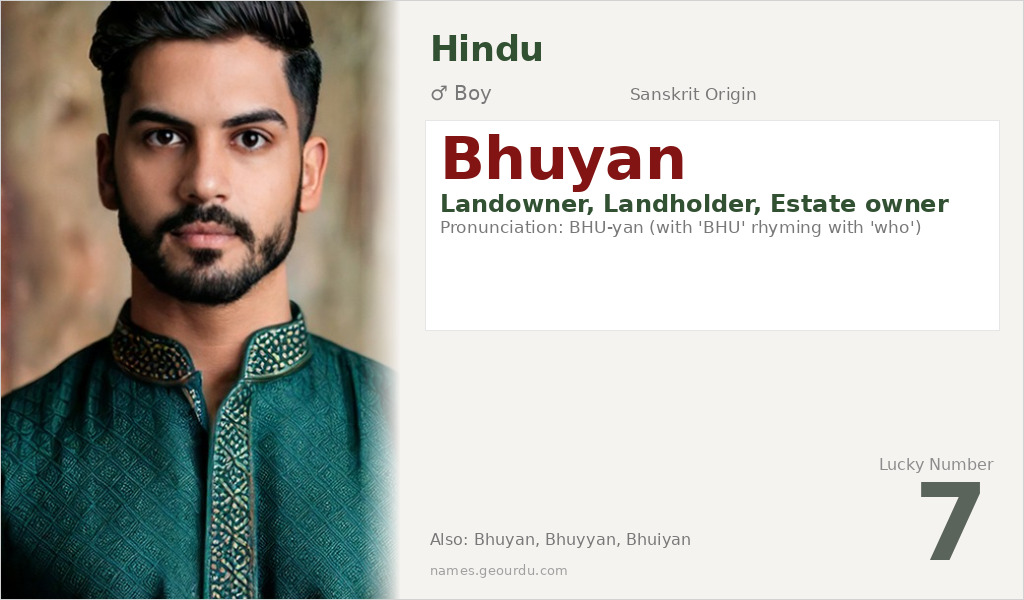
| 📛 Name | Bhuyan |
| 💎 Meaning | Landowner, Landholder, Estate owner |
| 👤 Gender | Boy |
| 🕌 Religion | Hindu |
| 🌍 Origin | Sanskrit |
| 🗣 Pronunciation | BHU-yan (with 'BHU' rhyming with 'who') |
| ✍️ Urdu | بھویان |
| ✍️ Arabic | بويان |
| 🔢 Numerology | 7 |
| ✨ Spellings | Bhuyan, Bhuyyan, Bhuiyan, Bhuian |
Origin & Cultural Significance
Bhuyan has its origins in the Sanskrit language but gained particular cultural significance in specific regional contexts across South Asia. In Assam, the Bhuyans were an important social class during the Ahom kingdom period (1228-1826), serving as landholders who often acted as local administrators and military leaders. Similar landholding classes called Bhuyans existed in Odisha and Bengal regions, where they maintained agricultural estates and local influence. The transition from a title to a personal name occurred as these families began using their status designation as surnames and eventually as given names to honor their heritage. Today, while primarily used in Hindu communities, the name carries historical weight beyond religious boundaries, representing a connection to land, tradition, and regional history.
Personality Traits
Those named Bhuyan are often associated with qualities of stability, responsibility, and practical wisdom. Their connection to the earth element through the name’s meaning suggests they are grounded individuals who value security and tradition. Typically seen as reliable and protective, people with this name may exhibit natural leadership abilities and a strong sense of duty toward their family and community. Their approach to life tends to be methodical and patient, with an appreciation for established systems and long-term planning.
Similar Names
If you like Bhuyan, consider: Bhumika, Bhumij, Bhumit, Bhuwan, Bhuvan
Famous People Named Bhuyan
- Lachit Borphukan — 17th century Ahom general from a Bhuyan family in Assam who defeated Mughal forces
- Chandra Bhuyan — Indian historian and author specializing in Assamese history and culture
Frequently Asked Questions About Bhuyan
What does Bhuyan mean?
Bhuyan means 'landowner,' 'landholder,' or 'estate owner.' It comes from the Sanskrit word 'bhūmi' (land/earth) with the possessive suffix '-yān,' indicating ownership or connection to land.
Is Bhuyan a boy or girl name?
Bhuyan is traditionally a masculine name given to boys, particularly in Hindu communities across South Asia. It originated as a title for male landowners and has maintained this gender association.
What is the origin of Bhuyan?
Bhuyan originates from Sanskrit but gained particular cultural significance in regions like Assam, Odisha, and Bengal in South Asia, where it referred to a class of landowners and feudal chiefs before evolving into a personal name.





