
Table of Contents
Bhavbhooti is a profound Sanskrit name that carries immense philosophical weight in Hindu tradition. Meaning ‘Lord of the Universe’ or ‘Master of Existence’, this name reflects the cosmic consciousness embedded in ancient Indian thought. With roots in classical Sanskrit literature and Hindu philosophy, Bhavbhooti represents more than just a name—it embodies a worldview. This comprehensive guide explores the etymology, cultural significance, and contemporary relevance of this distinctive name.
Meaning of Bhavbhooti
Bhavbhooti derives from two Sanskrit components: ‘Bhav’ (भव) and ‘Bhuti’ (भूति). ‘Bhav’ originates from the root ‘bhū’ meaning ‘to be, to exist, to become’, and in compound names it often signifies ‘world, universe, or existence’. ‘Bhuti’ comes from the same root with the suffix ‘-ti’, creating a meaning of ‘possession, mastery, or lordship’. When combined, Bhavbhooti literally translates to ‘possessor/master of existence’ or ‘lord of the universe’. This construction follows classical Sanskrit compounding rules where the first element specifies what is possessed and the second indicates possession. The name appears in various Hindu philosophical contexts, often referring to divine beings or enlightened souls who have mastered the nature of existence.
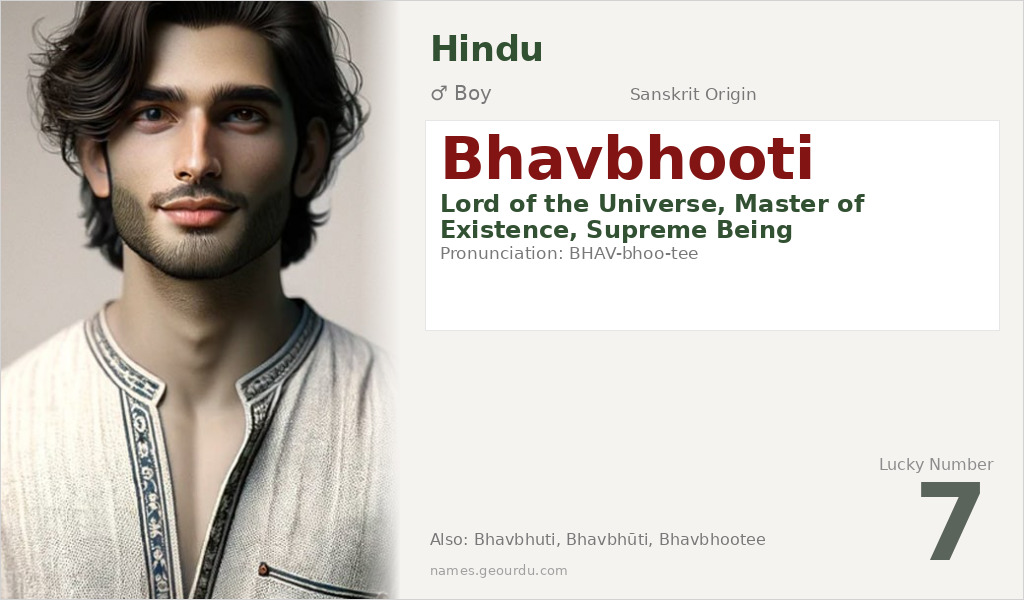
| 📛 Name | Bhavbhooti |
| 💎 Meaning | Lord of the Universe, Master of Existence, Supreme Being |
| 👤 Gender | Boy |
| 🕌 Religion | Hindu |
| 🌍 Origin | Sanskrit |
| 🗣 Pronunciation | BHAV-bhoo-tee |
| ✍️ Urdu | بھوبھوتی |
| ✍️ Arabic | بهافبهوتي |
| 🔢 Numerology | 7 |
| ✨ Spellings | Bhavbhuti, Bhavbhūti, Bhavbhootee |
Origin & Cultural Significance
Bhavbhooti has its origins in classical Sanskrit, the liturgical language of Hinduism, Buddhism, and Jainism. The name emerges from the rich philosophical tradition of ancient India, where compound names with ‘bhuti’ as a suffix were common to denote mastery or lordship. Historically, the most famous bearer of a similar name was the 8th century Sanskrit playwright Bhavabhuti, whose works like ‘Malati-Madhava’ are still studied today. In Hindu naming traditions, such philosophical names are often given to express spiritual aspirations or to honor divine qualities. The name reflects the Vedic concept of cosmic order and the relationship between individual consciousness and universal existence.
Personality Traits
Those named Bhavbhooti are often associated with expansive thinking and spiritual depth. They may exhibit qualities of wisdom, leadership, and cosmic awareness, reflecting the name’s meaning of universal mastery. Their personality tends to blend practical understanding with philosophical insight, making them thoughtful and contemplative individuals. The name suggests someone who approaches life with a broad perspective and seeks to understand their place within the larger scheme of existence.
Similar Names
If you like Bhavbhooti, consider: Bhavdeep, Bhavesh, Bhuvan, Bhuvanesh, Bhupati
Famous People Named Bhavbhooti
- Bhavabhuti — 8th century Sanskrit playwright and poet known for works like 'Malati-Madhava' and 'Uttararamacharita'
- Bhavabhuti Mishra — contemporary Indian classical musician and vocalist
Frequently Asked Questions About Bhavbhooti
What does Bhavbhooti mean?
Bhavbhooti means 'Lord of the Universe' or 'Master of Existence'. It is a Sanskrit compound name combining 'Bhav' (existence/universe) and 'Bhuti' (lord/master).
Is Bhavbhooti a boy or girl name?
Bhavbhooti is traditionally a masculine name in Hindu naming conventions. It follows the grammatical gender patterns of Sanskrit where such philosophical compound names are typically masculine.
What is the origin of Bhavbhooti?
Bhavbhooti originates from Sanskrit, the classical language of ancient India. It comes from Hindu philosophical traditions and appears in classical Sanskrit literature dating back centuries.





