
Table of Contents
Bheema is a powerful and historically rich name deeply rooted in Hindu tradition and Sanskrit language. Most famously associated with the mighty warrior Bhima from the epic Mahabharata, this name carries connotations of strength, courage, and awe-inspiring presence. Choosing Bheema for a child connects them to a legacy of heroism and formidable character. In this guide, we explore the complete meaning, origin, and cultural significance of this timeless name.
Meaning of Bheema
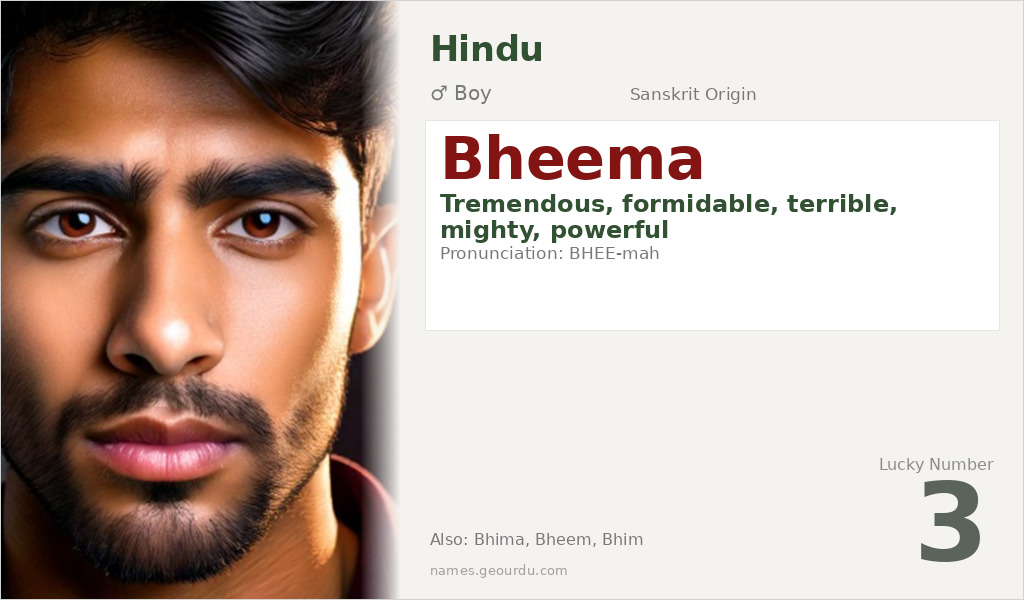
Bheema originates from the Sanskrit word ‘bhīma’ (भीम), derived from the root ‘bhī’ meaning ‘to fear’ or ‘to be terrible’. This gives the name its core meaning of ‘tremendous’, ‘formidable’, ‘mighty’, or ‘powerful’—describing someone who inspires awe or fear due to their immense strength or presence. In Hindu mythology, Bhima, one of the Pandava princes in the Mahabharata, embodies this meaning perfectly as a warrior of extraordinary physical power and courage. The name is not merely about physical largeness but encompasses moral and spiritual fortitude, making it a symbol of resilience and protection. Its usage in ancient texts and continued popularity in Hindu communities underscores its enduring linguistic and cultural relevance.
| 📛 Name | Bheema |
| 💎 Meaning | Tremendous, formidable, terrible, mighty, powerful |
| 👤 Gender | Boy |
| 🕌 Religion | Hindu |
| 🌍 Origin | Sanskrit |
| 🗣 Pronunciation | BHEE-mah |
| ✍️ Urdu | بھیم |
| ✍️ Arabic | بھيما |
| 🔢 Numerology | 3 |
| ✨ Spellings | Bhima, Bheem, Bhim |
Origin & Cultural Significance
Bheema has its origins in ancient Sanskrit, the classical language of India, and is deeply embedded in Hindu culture through the Mahabharata, one of the major Sanskrit epics. The character Bhima is celebrated for his role in the Kurukshetra War and his devotion to dharma (righteousness). Historically, the name has been used in Indian communities for centuries, reflecting values of strength and heroism. It remains a popular choice among Hindu families, especially in India and Nepal, often chosen to honor the legendary warrior or to imbue a child with qualities of courage and power. The name’s cultural significance extends beyond mythology into modern usage, where it symbolizes traditional values and spiritual strength.
Personality Traits
Those named Bheema are often seen as natural leaders with a strong sense of justice and protection. They tend to be assertive, resilient, and unafraid of challenges, mirroring the heroic traits of their namesake from the Mahabharata. Their formidable presence can command respect, and they are usually loyal and dependable in relationships. While they may sometimes come across as intense, their inner strength is balanced by a deep commitment to their loved ones and principles.
Similar Names
If you like Bheema, consider: Arjun, Yudhishthir, Nakul, Sahadev, Karna
Famous People Named Bheema
- Bhima — One of the five Pandava brothers in the Mahabharata, known for his immense strength and role in the Kurukshetra War
- Bhimrao Ramji Ambedkar — Indian jurist, economist, and social reformer who inspired the Indian Constitution (though 'Bhim' is a shortened form)
Frequently Asked Questions About Bheema
What does Bheema mean?
Bheema means 'tremendous', 'formidable', 'mighty', or 'powerful' in Sanskrit, derived from the root 'bhī' meaning 'to fear'.
Is Bheema a boy or girl name?
Bheema is traditionally a boy's name in Hindu culture, associated with male figures like the warrior Bhima from the Mahabharata.
What is the origin of Bheema?
Bheema originates from Sanskrit and Hindu mythology, specifically from the epic Mahabharata where Bhima is a key character.





