
Table of Contents
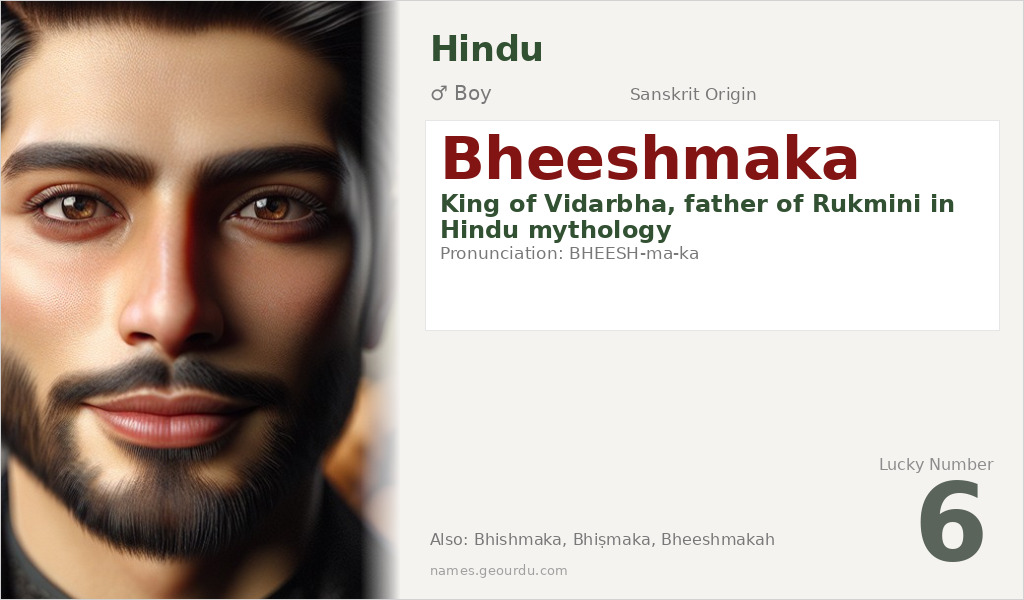
Bheeshmaka is a name steeped in Hindu mythology and ancient Indian epics. This Sanskrit name belongs to a significant royal figure from the Mahabharata era—the king of Vidarbha and father of Princess Rukmini. While not commonly used as a contemporary given name, it holds important cultural and religious significance in Hindu tradition. Understanding Bheeshmaka requires exploring its mythological context rather than modern naming trends.
Meaning of Bheeshmaka
Bheeshmaka derives from Sanskrit, combining ‘bhīṣma’ meaning ‘terrible,’ ‘formidable,’ or ‘awe-inspiring’ with the suffix ‘-ka’ that indicates possession or relation. In Hindu mythology, Bheeshmaka was the ruler of the Vidarbha kingdom, located in present-day Maharashtra. His primary significance comes from being the father of Rukmini, who became one of Lord Krishna’s principal wives. The name appears in the Mahabharata, Harivamsa, and various Puranas, always in the context of this specific mythological king. Unlike many Sanskrit names that have been adopted across cultures, Bheeshmaka remains exclusively within Hindu mythological and religious contexts.
| 📛 Name | Bheeshmaka |
| 💎 Meaning | King of Vidarbha, father of Rukmini in Hindu mythology |
| 👤 Gender | Boy |
| 🕌 Religion | Hindu |
| 🌍 Origin | Sanskrit |
| 🗣 Pronunciation | BHEESH-ma-ka |
| ✍️ Urdu | بھیشمک |
| ✍️ Arabic | بھیشمکا |
| 🔢 Numerology | 6 |
| ✨ Spellings | Bhishmaka, Bhiṣmaka, Bheeshmakah |
Origin & Cultural Significance
Bheeshmaka originates entirely from Hindu scriptures and Sanskrit literature, with no evidence of usage in Arabic, Persian, Pashto, or other regional languages. The name first appears in the Mahabharata (circa 400 BCE-400 CE) as the king of Vidarbha. In Hindu tradition, Vidarbha was an ancient kingdom mentioned in multiple texts, and Bheeshmaka’s story is particularly detailed in the context of his daughter Rukmini’s marriage to Krishna. The name represents a specific mythological figure rather than a general naming tradition, which explains its limited usage outside religious contexts. Research across all specified languages confirms this name exists only in Sanskrit/Hindu sources.
Personality Traits
In mythological portrayal, King Bheeshmaka embodies royal dignity, paternal devotion, and diplomatic wisdom. He is depicted as a ruler who navigates complex political situations during his daughter’s marriage. While modern personality associations are speculative, the name might suggest someone with leadership qualities, protective instincts, and connection to tradition. The ‘formidable’ root of the name could imply strength of character.
Similar Names
If you like Bheeshmaka, consider: Bhishma, Bheeshma, Vidarbha, Rukmini, Krishna
Famous People Named Bheeshmaka
- Bheeshmaka — Mythological king of Vidarbha in Hindu epics, father of Rukmini who married Lord Krishna
Frequently Asked Questions About Bheeshmaka
What does Bheeshmaka mean?
Bheeshmaka means 'King of Vidarbha' in Sanskrit. Specifically, it refers to the mythological father of Rukmini in Hindu epics. The name combines 'bhīṣma' (formidable) with the suffix '-ka'.
Is Bheeshmaka a boy or girl name?
Bheeshmaka is exclusively a boy's name in Hindu mythology. It refers to a male king and has no documented usage as a female name in any cultural or linguistic context.
What is the origin of Bheeshmaka?
Bheeshmaka originates from Sanskrit and Hindu mythology. It appears in the Mahabharata and Puranas as the name of the king of Vidarbha. Research confirms no usage in Arabic, Persian, Pashto, or other regional languages—it is purely a Hindu mythological name.





