Table of Contents
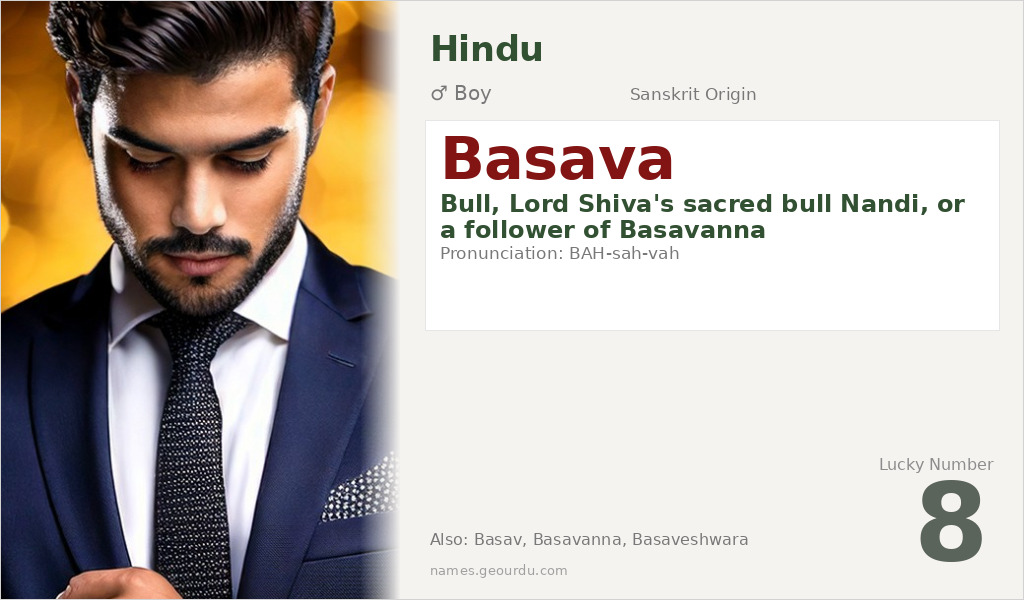
Basava is a powerful and spiritually significant name with deep roots in Hindu tradition. Meaning ‘bull’ in Sanskrit, it connects to both divine mythology and historical social reform. This name carries the strength of Nandi, Lord Shiva’s sacred vehicle, and honors the legacy of the revered saint Basavanna. Discover the rich cultural heritage behind this distinctive name.
Meaning of Basava
Basava derives from the Sanskrit word for ‘bull’ (बसव). In Hindu iconography, it specifically refers to Nandi, the white bull who serves as the vahana (mount) and gatekeeper of Lord Shiva. The name gained additional significance through Basavanna, a 12th-century philosopher-statesman whose teachings emphasized social equality and devotion to Shiva. Followers of his Lingayat tradition sometimes adopt ‘Basava’ as a name, blending the literal meaning with spiritual reverence. Thus, Basava embodies both the physical strength of a bull and the spiritual legacy of a reformer.
| 📛 Name | Basava |
| 💎 Meaning | Bull, Lord Shiva's sacred bull Nandi, or a follower of Basavanna |
| 👤 Gender | Boy |
| 🕌 Religion | Hindu |
| 🌍 Origin | Sanskrit |
| 🗣 Pronunciation | BAH-sah-vah |
| ✍️ Urdu | بسوا |
| ✍️ Arabic | باسافا |
| 🔢 Numerology | 8 |
| ✨ Spellings | Basav, Basavanna, Basaveshwara |
Origin & Cultural Significance
Originating from Sanskrit, Basava is deeply embedded in Hindu culture, particularly in the Kannada-speaking regions of Karnataka, India. Its prominence surged in the 12th century with Basavanna, who used his position as a royal minister to challenge caste hierarchies and promote devotional worship of Shiva. The name reflects the integration of Dravidian and Sanskrit traditions, as bull symbolism appears in both ancient Indus Valley seals and Vedic texts. Today, Basava remains popular among Lingayat communities and those seeking a name with historical and religious resonance.
Personality Traits
Named after the steadfast bull Nandi, individuals called Basava are often perceived as reliable, strong-willed, and spiritually grounded. They may exhibit protective instincts and a calm, determined demeanor, mirroring the bull’s symbolic attributes of loyalty and resilience. Their connection to Basavanna’s legacy can also suggest a progressive, egalitarian outlook, blending traditional values with social consciousness.
Similar Names
If you like Basava, consider: Nandi, Shiva, Vrishabha, Basavaraj, Basavalinga
Famous People Named Basava
- Basavanna — 12th-century Indian philosopher, poet, and social reformer who founded the Lingayat tradition
- Basaveshwara — Another name for Basavanna, honored as a saint in Karnataka
Frequently Asked Questions About Basava
What does Basava mean?
Basava means 'bull' in Sanskrit, specifically referring to Lord Shiva's sacred bull Nandi, and also honors the saint Basavanna.
Is Basava a boy or girl name?
Basava is traditionally a boy's name in Hindu culture, associated with masculine symbolism like the bull and historical male figures.
What is the origin of Basava?
Basava originates from Sanskrit and is deeply rooted in Hindu mythology and the Lingayat tradition of Karnataka, India.