
Table of Contents
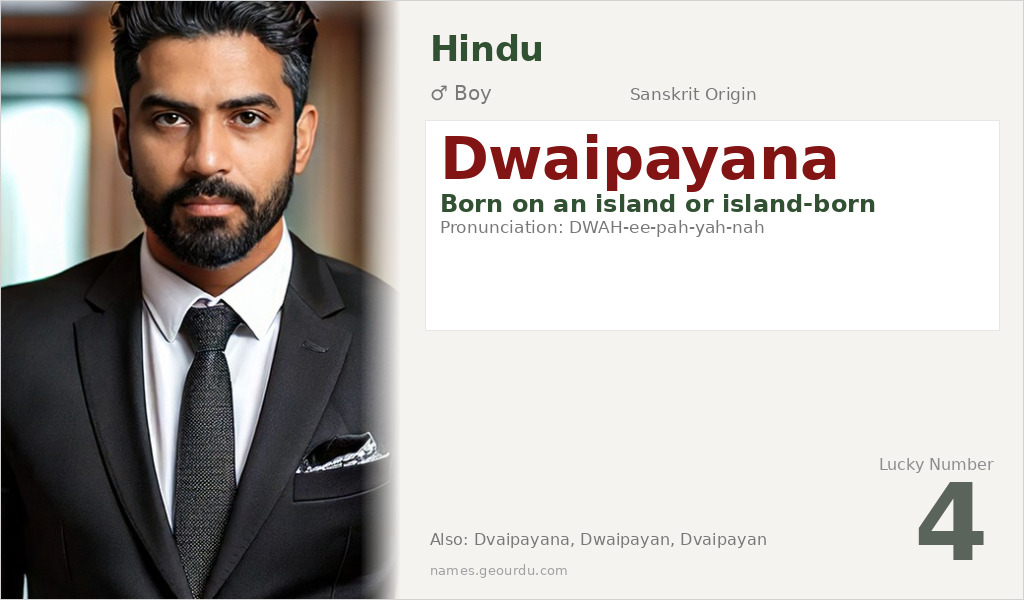
Dwaipayana is a profound Sanskrit name with rich mythological significance in Hindu tradition. Meaning ‘island-born’ or ‘born on an island’, this name is most famously associated with the sage Vyasa, the legendary compiler of the Mahabharata and Puranas. With its deep roots in ancient Indian literature and philosophy, Dwaipayana represents wisdom, spiritual insight, and scholarly achievement. This name carries centuries of cultural heritage and continues to inspire parents seeking names with intellectual and spiritual depth.
Meaning of Dwaipayana
Dwaipayana is a classical Sanskrit compound name with precise etymological roots. The name combines ‘dvīpa’ (द्वीप), meaning ‘island’, with ‘ayana’ (अयन), meaning ‘coming’, ‘birth’, or ‘path’. In Vedic and classical Sanskrit, ‘ayana’ specifically denotes movement toward something or origin, making the complete meaning ‘island-born’ or ‘one who comes from an island’. This is not merely a descriptive term but carries specific mythological significance, referring to the circumstances of Vyasa’s birth on an island in the Yamuna river. The name appears in numerous Hindu texts, including the Mahabharata where it is used as an epithet for Vyasa, emphasizing his unique origin story. Linguistically, it follows standard Sanskrit compound formation rules for descriptive names indicating place of birth or origin.
| 📛 Name | Dwaipayana |
| 💎 Meaning | Born on an island or island-born |
| 👤 Gender | Boy |
| 🕌 Religion | Hindu |
| 🌍 Origin | Sanskrit |
| 🗣 Pronunciation | DWAH-ee-pah-yah-nah |
| ✍️ Urdu | دویپاین |
| ✍️ Arabic | دوايبايانا |
| 🔢 Numerology | 4 |
| ✨ Spellings | Dvaipayana, Dwaipayan, Dvaipayan |
Origin & Cultural Significance
Dwaipayana originates from ancient Sanskrit literature and Hindu mythology, specifically as an epithet for the sage Krishna Dvaipayana Vyasa. According to tradition, Vyasa was born on an island in the Yamuna river to the sage Parashara and Satyavati, hence earning the name Dwaipayana (‘island-born’). This name appears in the Mahabharata, which Vyasa himself is said to have composed, and in various Puranas. The name has been used for centuries in Hindu communities, particularly among Brahmins and those with scholarly or priestly traditions. While primarily associated with Vyasa, the name has also been adopted by others in honor of this great sage. Its usage reflects the deep respect for wisdom, scholarship, and spiritual authority in Hindu culture.
Personality Traits
Those named Dwaipayana are often perceived as possessing intellectual depth, spiritual insight, and organizational abilities. The name’s association with Vyasa, the great compiler and teacher, suggests qualities of wisdom, patience, and the ability to synthesize complex knowledge. Individuals with this name may exhibit contemplative natures, strong analytical skills, and a tendency toward philosophical or scholarly pursuits. The ‘island-born’ aspect of the name symbolism suggests someone who can achieve profound understanding through periods of isolation or focused study.
Similar Names
If you like Dwaipayana, consider: Vyasa, Krishna Dvaipayana, Badarayana, Parashara, Shuka
Famous People Named Dwaipayana
- Vyasa (Krishna Dvaipayana) — The legendary sage and author of the Mahabharata, Puranas, and compiler of the Vedas, traditionally considered the island-born son of Satyavati and Parashara
- Dwaipayan Bhattacharjee — Modern Indian scholar and writer on Hindu philosophy
Frequently Asked Questions About Dwaipayana
What does Dwaipayana mean?
Dwaipayana means 'island-born' or 'born on an island' in Sanskrit. It is a compound name from 'dvīpa' (island) and 'ayana' (coming/birth).
Is Dwaipayana a boy or girl name?
Dwaipayana is exclusively a boy's name in Hindu tradition, as it refers specifically to the male sage Vyasa and follows masculine Sanskrit grammatical forms.
What is the origin of Dwaipayana?
Dwaipayana originates from Sanskrit and Hindu mythology, specifically as an epithet for the sage Vyasa who was born on an island in the Yamuna river according to tradition.





