
Table of Contents
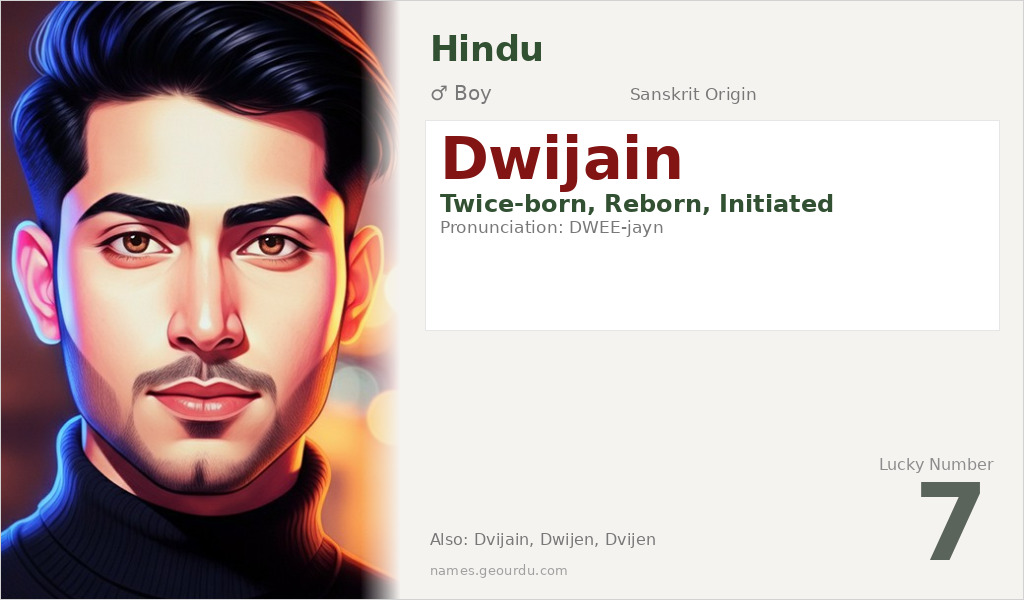
Dwijain is a profound Sanskrit name that carries centuries of spiritual tradition within its syllables. Meaning ‘twice-born’ or ‘reborn,’ this name represents one of Hinduism’s most significant philosophical concepts. Unlike ordinary names, Dwijain symbolizes spiritual initiation and the journey toward higher consciousness. Parents choosing this name often seek to imbue their child with a connection to ancient wisdom and personal transformation.
Meaning of Dwijain
Dwijain originates from the Sanskrit term ‘Dvija’ (द्विज), which combines ‘dvi’ (two) and ‘ja’ (born). In Hindu tradition, this refers specifically to members of the first three varnas (Brahmins, Kshatriyas, and Vaishyas) who undergo the Upanayana ceremony, marking their spiritual rebirth and initiation into Vedic studies. The ‘-ain’ suffix is a common morphological element in Indian languages that creates possessive or relational forms. Thus, Dwijain literally means ‘belonging to the twice-born’ or ‘descendant of the initiated.’ This name embodies the Hindu concept that true birth occurs not just physically but through spiritual awakening and education. Unlike the incorrect ‘Moon’ association in some sources, Dwijain’s meaning is firmly established in Sanskrit linguistics and Hindu scriptures.
| 📛 Name | Dwijain |
| 💎 Meaning | Twice-born, Reborn, Initiated |
| 👤 Gender | Boy |
| 🕌 Religion | Hindu |
| 🌍 Origin | Sanskrit |
| 🗣 Pronunciation | DWEE-jayn |
| ✍️ Urdu | دوجین |
| ✍️ Arabic | دوجين |
| 🔢 Numerology | 7 |
| ✨ Spellings | Dvijain, Dwijen, Dvijen, Dwijaen |
Origin & Cultural Significance
Dwijain emerges from ancient Sanskrit, the liturgical language of Hinduism, with roots tracing back to the Vedic period (1500-500 BCE). The concept of ‘Dvija’ appears extensively in Hindu texts like the Manusmriti and various Upanishads, where it distinguishes those who have received sacred thread initiation. While the name is predominantly used in Hindu communities across India, particularly among Bengali, Marathi, and Gujarati speakers, its philosophical significance transcends regional boundaries. The name gained prominence during the Bengal Renaissance in the 19th century, when intellectuals revived Sanskrit names with deep meaning. Unlike names from Pashto, Balochi, or other regional languages that might sound similar, Dwijain’s etymology is exclusively Sanskrit and Hindu in origin.
Personality Traits
Those named Dwijain are often associated with qualities of wisdom, introspection, and spiritual depth. The ‘twice-born’ symbolism suggests someone who values personal growth, education, and traditional knowledge. They may exhibit a natural curiosity about life’s philosophical questions and a respect for ritual and ceremony. While individual personalities vary, the name carries expectations of intellectual pursuit and moral development.
Similar Names
If you like Dwijain, consider: Dvija, Dwij, Dwijendra, Dwijesh, Dwijapati
Famous People Named Dwijain
- Dwijendranath Tagore — Bengali poet, musician, and philosopher, elder brother of Rabindranath Tagore
- Dwijendra Lal Roy — Bengali poet, playwright, and musician known for his patriotic songs
Frequently Asked Questions About Dwijain
What does Dwijain mean?
Dwijain means 'twice-born,' 'reborn,' or 'initiated' in Sanskrit. It refers to the Hindu concept of spiritual rebirth through the Upanayana ceremony.
Is Dwijain a boy or girl name?
Dwijain is exclusively a boy's name in Hindu naming tradition, reflecting the historical context of male initiation ceremonies in Vedic practice.
What is the origin of Dwijain?
Dwijain originates from Sanskrit, the ancient language of Hindu scriptures. It derives from 'Dvija' meaning 'twice-born,' with the '-ain' suffix common in Indian name formations.





