
Table of Contents
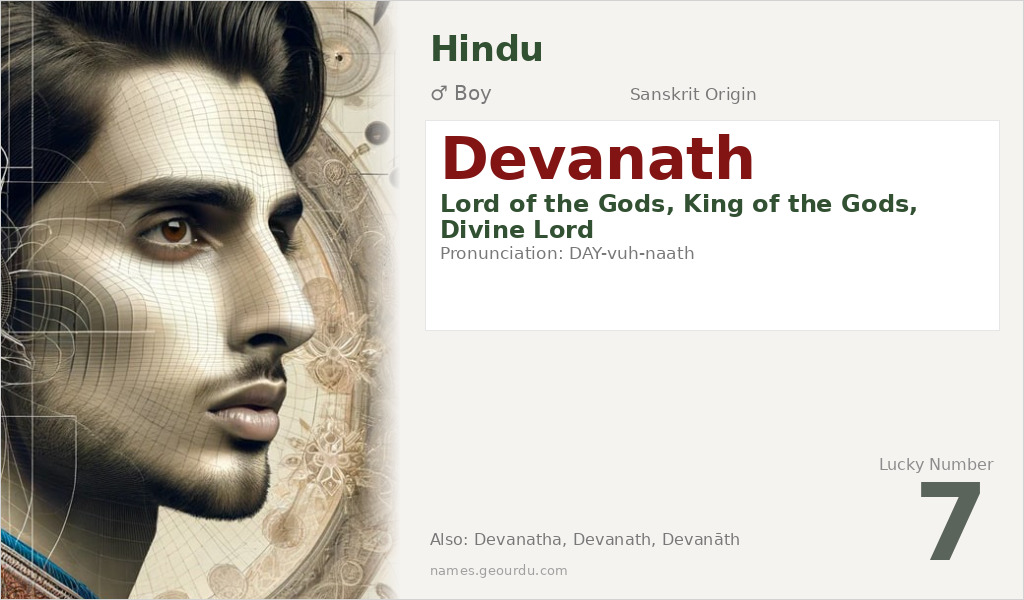
Devanath is a powerful and spiritually significant name of Sanskrit origin, predominantly used in Hindu communities. Meaning ‘Lord of the Gods’ or ‘Divine Ruler’, this name carries deep religious and cultural resonance. It combines two ancient Sanskrit elements that together create a name associated with divinity, protection, and authority. Parents choosing Devanath often seek to bestow qualities of spiritual leadership and divine connection upon their child.
Meaning of Devanath
Devanath derives from classical Sanskrit, combining ‘Deva’ (देव) meaning ‘god’ or ‘divine being’ and ‘Nath’ (नाथ) meaning ‘lord’ or ‘master’. The component ‘Deva’ originates from the Proto-Indo-European root *deiwos, which signifies ‘celestial’ or ‘shining one’, reflecting ancient concepts of divinity. ‘Nath’ comes from the Sanskrit verbal root ‘nāth’ meaning ‘to have power over’ or ‘to protect’, commonly used in names to indicate guardianship or rulership. Together, they form a compound that literally translates to ‘Lord of the Gods’, often serving as an epithet for major Hindu deities. This construction follows traditional Sanskrit naming conventions where meaningful elements combine to create names with specific spiritual connotations. The name’s etymology is well-documented in Sanskrit lexicons and religious texts, making its meaning unambiguous.
| 📛 Name | Devanath |
| 💎 Meaning | Lord of the Gods, King of the Gods, Divine Lord |
| 👤 Gender | Boy |
| 🕌 Religion | Hindu |
| 🌍 Origin | Sanskrit |
| 🗣 Pronunciation | DAY-vuh-naath |
| ✍️ Urdu | دیوناٹھ |
| ✍️ Arabic | ديفاناث |
| 🔢 Numerology | 7 |
| ✨ Spellings | Devanatha, Devanath, Devanāth, Devanatha |
Origin & Cultural Significance
Devanath originates from Sanskrit, the classical language of ancient India that has influenced numerous South Asian languages. As a compound name, it reflects the sophisticated naming traditions of Hindu culture, where names often combine meaningful elements to create specific spiritual associations. The name appears in various Hindu religious contexts, sometimes as an epithet for deities like Shiva or Vishnu in scriptures and devotional literature. Its usage as a personal name likely developed from these religious applications, becoming popular among Hindu families seeking names with divine connotations. The name remains primarily associated with Hindu communities across India and the diaspora, maintaining its religious significance while also being appreciated for its melodic qualities.
Personality Traits
Those named Devanath are often associated with qualities of spiritual leadership, protection, and authority. The name’s meaning suggests someone who may naturally assume guiding roles, whether in family, community, or professional settings. They might exhibit a balanced combination of strength and compassion, reflecting the divine lordship implied by their name. Many believe such names can influence personality development, with Devanath potentially fostering a sense of responsibility and connection to higher principles.
Similar Names
If you like Devanath, consider: Devendra, Devadatta, Devakinandan, Devashish, Devraj
Famous People Named Devanath
- Devanath Tirupati — Indian spiritual leader and head of Tirumala Tirupati Devasthanams
- Devanath S. — Notable Indian academic and researcher in Sanskrit studies
Frequently Asked Questions About Devanath
What does Devanath mean?
Devanath means 'Lord of the Gods' or 'Divine Ruler'. It is a Sanskrit compound name combining 'Deva' (god) and 'Nath' (lord).
Is Devanath a boy or girl name?
Devanath is exclusively a boy's name in Hindu naming traditions. The '-nath' suffix is typically masculine in Sanskrit-derived names.
What is the origin of Devanath?
Devanath originates from Sanskrit, the classical language of ancient India. It is primarily used in Hindu communities and reflects traditional Sanskrit naming patterns.





