
Table of Contents
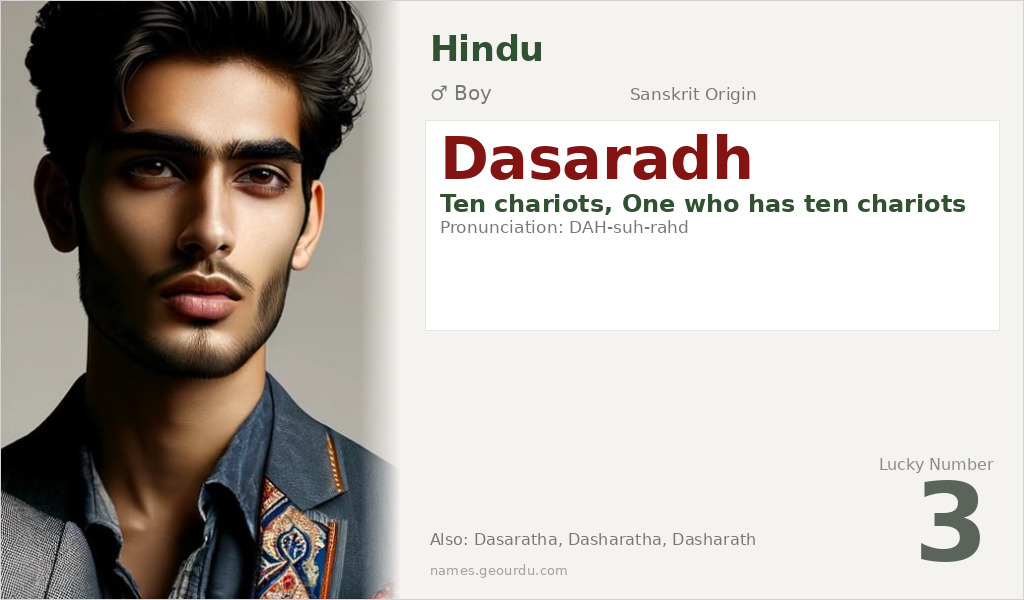
Dasaradh is a powerful Sanskrit name steeped in Hindu mythology and ancient Indian tradition. Most famously borne by King Dasaratha, the father of Lord Rama in the epic Ramayana, this name carries centuries of cultural significance. Meaning ‘ten chariots’ or ‘one who possesses ten chariots’, it symbolizes strength, royalty, and martial prowess. Today, it remains a meaningful choice for parents seeking a name with deep historical roots.
Meaning of Dasaradh
Dasaradh derives from the Sanskrit compound ‘dasaratha’, combining ‘dasa’ (ten) and ‘ratha’ (chariot). In ancient Indian context, chariots were symbols of power, wealth, and military strength, making this name particularly significant for royalty and warriors. The literal translation ‘one who has ten chariots’ suggests prosperity and martial capability. This etymology is well-documented in Sanskrit literature and Hindu scriptures, particularly in reference to King Dasaratha of Ayodhya. The name appears in multiple ancient texts including the Ramayana, Mahabharata, and various Puranas, establishing its classical origins.
| 📛 Name | Dasaradh |
| 💎 Meaning | Ten chariots, One who has ten chariots |
| 👤 Gender | Boy |
| 🕌 Religion | Hindu |
| 🌍 Origin | Sanskrit |
| 🗣 Pronunciation | DAH-suh-rahd |
| ✍️ Urdu | دس رتھ |
| ✍️ Arabic | داساراتا |
| 🔢 Numerology | 3 |
| ✨ Spellings | Dasaratha, Dasharatha, Dasharath, Dasarath |
Origin & Cultural Significance
Dasaradh originates from classical Sanskrit, the ancient liturgical language of Hinduism. Its most prominent appearance is in Valmiki’s Ramayana (circa 5th century BCE to 1st century BCE), where King Dasaratha rules the kingdom of Ayodhya as part of the Suryavansha (Solar dynasty). The name reflects the martial culture of ancient India where chariots were central to warfare and royal processions. Beyond mythology, the name has been used historically in various Indian regions and continues in modern Hindu naming traditions. It represents a connection to India’s epic heritage and the values of duty, family, and righteous rule embodied by King Dasaratha.
Personality Traits
Those named Dasaradh are often associated with leadership qualities, protective instincts, and a strong sense of tradition. The name’s royal and martial connotations suggest someone who takes responsibility seriously and values family heritage. They may exhibit determination and resilience, drawing inspiration from the mythological figure who faced difficult choices with dignity. While individual personalities vary, the name carries expectations of strength, reliability, and connection to cultural roots.
Similar Names
If you like Dasaradh, consider: Rama, Lakshmana, Bharata, Shatrughna, Janaka
Famous People Named Dasaradh
- King Dasaratha — Father of Lord Rama in the Hindu epic Ramayana, King of Ayodhya from the Ikshvaku dynasty
- Dasaratha Sharma — Indian historian and scholar of ancient Indian history
Frequently Asked Questions About Dasaradh
What does Dasaradh mean?
Dasaradh means 'ten chariots' or 'one who possesses ten chariots' in Sanskrit, derived from 'dasa' (ten) and 'ratha' (chariot).
Is Dasaradh a boy or girl name?
Dasaradh is exclusively a boy's name in Hindu naming tradition, associated with male figures in mythology and history.
What is the origin of Dasaradh?
Dasaradh originates from classical Sanskrit and Hindu mythology, most famously as the name of King Dasaratha, father of Lord Rama in the Ramayana.





