
Table of Contents
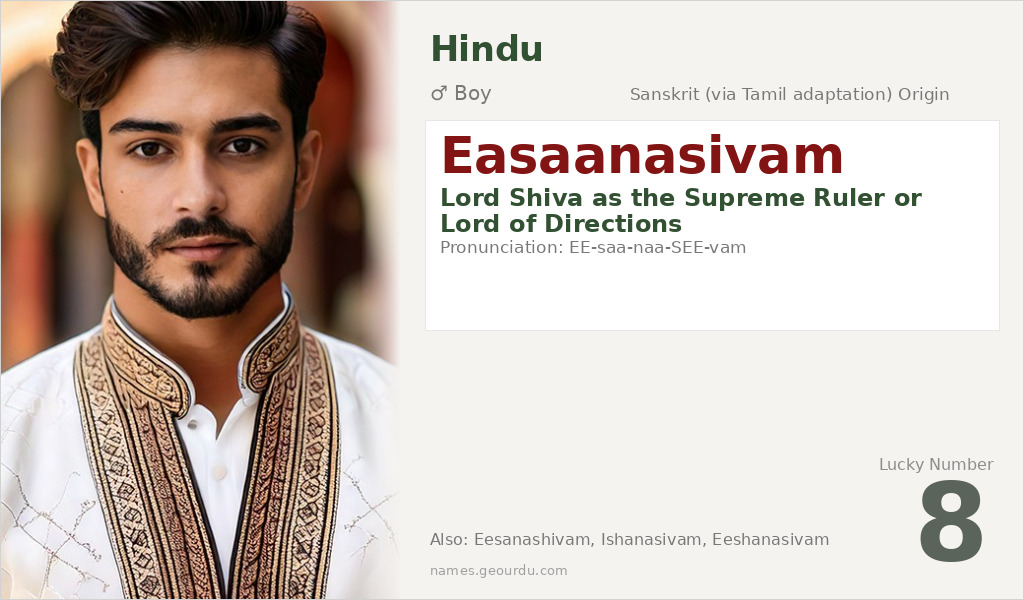
Easaanasivam is a profound Hindu boy name that carries deep spiritual significance within Sanskrit and Tamil traditions. This compound name beautifully merges concepts of divine rulership and auspiciousness, specifically referencing Lord Shiva in his aspect as the cosmic sovereign. With roots in ancient Hindu cosmology, Easaanasivam represents more than just a name—it embodies a connection to spiritual leadership and benevolent authority. Discover the rich layers of meaning and cultural context behind this distinctive name.
Meaning of Easaanasivam
Easaanasivam derives from two Sanskrit elements: ‘Easana’ (ईशान) and ‘Sivam’ (शिवम्). Easana carries multiple meanings including ‘ruler,’ ‘master,’ ‘lord,’ and specifically refers to the northeast direction in Hindu directional symbolism. Sivam means ‘auspicious,’ ‘benevolent,’ or ‘propitious’ and is directly associated with Lord Shiva. When combined, the name translates to ‘Shiva as the Supreme Ruler’ or ‘Auspicious Lord.’ In Hindu tradition, Easana represents one of the five faces of Shiva (Panchamukha Shiva) governing the northeast direction and embodying supreme sovereignty. The name’s linguistic structure follows classical Sanskrit compound formation (samāsa) with Tamil phonetic adaptation, making it particularly prevalent in South Indian Hindu communities.
| 📛 Name | Easaanasivam |
| 💎 Meaning | Lord Shiva as the Supreme Ruler or Lord of Directions |
| 👤 Gender | Boy |
| 🕌 Religion | Hindu |
| 🌍 Origin | Sanskrit (via Tamil adaptation) |
| 🗣 Pronunciation | EE-saa-naa-SEE-vam |
| ✍️ Urdu | ایشان شیوم |
| ✍️ Arabic | إيشان شيفام |
| 🔢 Numerology | 8 |
| ✨ Spellings | Eesanashivam, Ishanasivam, Eeshanasivam, Easanashivam |
Origin & Cultural Significance
Easaanasivam originates from Sanskrit, the ancient liturgical language of Hinduism, with specific adaptation and usage in Tamil-speaking Hindu communities. The name reflects the syncretic linguistic traditions of South India, where Sanskrit names are often adapted to Tamil phonology and orthography. Historically, such compound names referencing Shiva’s aspects became popular during the Bhakti movement in Tamil regions, emphasizing personal devotion to specific divine attributes. The name continues to be used primarily in Tamil Hindu families, particularly those with Shaivite traditions venerating Lord Shiva. Its cultural significance extends beyond mere identification to represent spiritual aspirations toward divine guidance and benevolent leadership.
Personality Traits
Those named Easaanasivam are often associated with leadership qualities, spiritual depth, and a natural authority that commands respect. They tend to exhibit the balanced, protective nature symbolized by Shiva’s Easana aspect—calm yet powerful, guiding yet compassionate. Their personality frequently reflects the name’s meaning through a strong sense of direction, both literally and metaphorically, with an inclination toward creating harmony and order in their surroundings. These individuals often demonstrate the auspicious qualities their name represents, bringing positive influence to their communities.
Similar Names
If you like Easaanasivam, consider: Easwaran, Sivanesan, Sivakumar, Ishwar, Sivanathan
Famous People Named Easaanasivam
- No widely known public figures with this exact name found in records, though it appears in Tamil Hindu communities as a traditional given name
Frequently Asked Questions About Easaanasivam
What does Easaanasivam mean?
Easaanasivam means 'Lord Shiva as the Supreme Ruler' or 'Auspicious Lord.' It combines Sanskrit 'Easana' (ruler/master) and 'Sivam' (auspicious/Shiva), specifically referencing Shiva's aspect as cosmic sovereign.
Is Easaanasivam a boy or girl name?
Easaanasivam is exclusively a boy name in Hindu naming tradition, as it references masculine divine attributes of Lord Shiva and uses grammatical forms typically associated with male names in Sanskrit and Tamil.
What is the origin of Easaanasivam?
Easaanasivam originates from Sanskrit with Tamil adaptation. It's a compound name from classical Hindu tradition, particularly used in Tamil-speaking Shaivite communities who venerate Lord Shiva.





