
Table of Contents
Dasharath is a powerful Sanskrit name with deep roots in Hindu mythology and ancient Indian culture. Most famously borne by King Dasharatha, father of Lord Rama in the epic Ramayana, this name carries centuries of cultural significance. Beyond its mythological associations, Dasharath has a precise etymological meaning that reveals much about ancient Indian values. Today, it remains a meaningful choice for parents seeking a name with historical depth and noble connotations.
Meaning of Dasharath
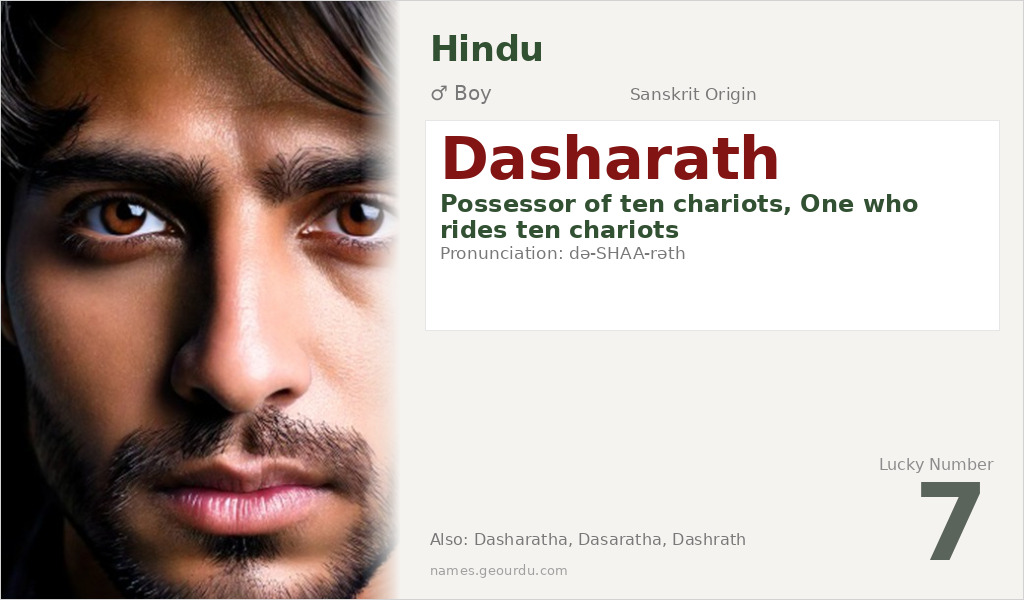
The name Dasharath derives from two Sanskrit components: ‘dasha’ meaning ‘ten’ and ‘ratha’ meaning ‘chariot’. Combined, they create the meaning ‘possessor of ten chariots’ or ‘one who rides ten chariots’. In ancient Indian society, chariots were symbols of power, wealth, and warrior status, making this name indicative of nobility and strength. The name appears in numerous Sanskrit texts beyond just the Ramayana, confirming its established linguistic roots. This literal meaning reflects the martial culture of ancient India where kings and warriors were celebrated for their chariot prowess.
| 📛 Name | Dasharath |
| 💎 Meaning | Possessor of ten chariots, One who rides ten chariots |
| 👤 Gender | Boy |
| 🕌 Religion | Hindu |
| 🌍 Origin | Sanskrit |
| 🗣 Pronunciation | də-SHAA-rəth |
| ✍️ Urdu | دشرتھ |
| ✍️ Arabic | داشاراتا |
| 🔢 Numerology | 7 |
| ✨ Spellings | Dasharatha, Dasaratha, Dashrath, Dasarath |
Origin & Cultural Significance
Dasharath originates from classical Sanskrit, the ancient liturgical language of Hinduism. It gained prominence through the character of King Dasharatha in the Ramayana, one of Hinduism’s two major epics composed between the 7th and 4th centuries BCE. The name represents the kshatriya (warrior) tradition in ancient Indian society, where rulers were expected to be protectors and military leaders. While strongly associated with Hindu tradition, the name’s usage extends to various Indian communities familiar with Sanskrit literature. Its continued use today reflects the enduring influence of India’s epic traditions on naming practices.
Personality Traits
Those named Dasharath often embody qualities of protection, responsibility, and traditional leadership. The name’s association with a devoted father and king in mythology suggests someone who prioritizes family duty and righteous governance. Their connection to ancient warrior culture may manifest as inner strength and resilience in facing challenges. While individual personalities vary, the name’s historical weight often inspires a sense of heritage and purpose.
Similar Names
If you like Dasharath, consider: Rama, Bharata, Lakshmana, Shatrughna, Janaka
Famous People Named Dasharath
- King Dasharatha — Father of Lord Rama in the Hindu epic Ramayana, King of Ayodhya from the Ikshvaku dynasty
- Dasharatha Sharma — Indian historian and epigraphist known for his work on Rajasthan history
Frequently Asked Questions About Dasharath
What does Dasharath mean?
Dasharath means 'possessor of ten chariots' or 'one who rides ten chariots' in Sanskrit, from 'dasha' (ten) and 'ratha' (chariot).
Is Dasharath a boy or girl name?
Dasharath is exclusively a boy's name in Hindu naming tradition, named after the male king and father of Lord Rama in the Ramayana.
What is the origin of Dasharath?
Dasharath originates from Sanskrit, the ancient language of Hindu scriptures, and gained prominence through the character of King Dasharatha in the Hindu epic Ramayana.





