
Table of Contents
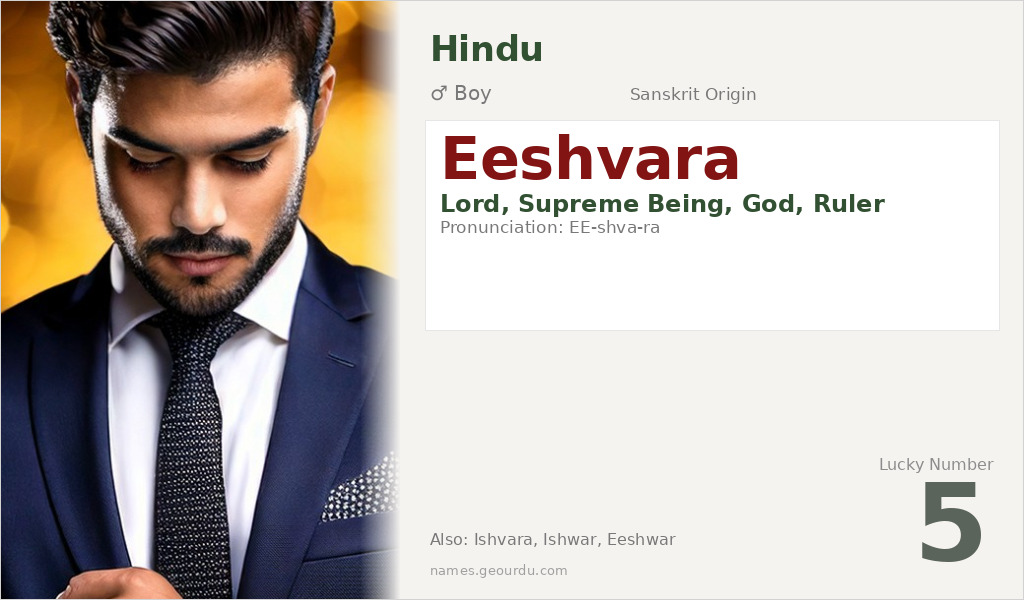
Eeshvara is a profound and ancient Sanskrit name that carries deep spiritual significance in Hindu culture. Meaning ‘Lord,’ ‘Supreme Being,’ or ‘God,’ this name has been used for centuries to denote divine authority and ultimate reality. As a traditional boy’s name, Eeshvara reflects the rich philosophical heritage of India and continues to be chosen by parents seeking a name with powerful spiritual connotations. Its linguistic roots trace back to some of humanity’s oldest scriptures, making it a name steeped in history and reverence.
Meaning of Eeshvara
The name Eeshvara originates from the Sanskrit word ‘ईश्वर’ (īśvara), which is composed of two elements: ‘ईश’ (īśa) meaning ‘lord, master, or ruler’ and the suffix ‘-vara’ that denotes excellence or supremacy. In Hindu philosophy, Īśvara represents the supreme controller, the personal God who governs the universe, and appears in sacred texts like the Vedas, Upanishads, and Puranas. The term is particularly associated with deities such as Shiva (as Maheshvara, meaning ‘Great Lord’) and Vishnu, emphasizing their divine sovereignty. Beyond Hinduism, the concept of Īśvara appears in Jainism and Buddhism, where it refers to enlightened beings or supreme entities. Linguistically, the name has influenced many Indian languages, maintaining its core meaning of ultimate authority and divinity across cultures.
| 📛 Name | Eeshvara |
| 💎 Meaning | Lord, Supreme Being, God, Ruler |
| 👤 Gender | Boy |
| 🕌 Religion | Hindu |
| 🌍 Origin | Sanskrit |
| 🗣 Pronunciation | EE-shva-ra |
| ✍️ Urdu | ایشور |
| ✍️ Arabic | إيشوارا |
| 🔢 Numerology | 5 |
| ✨ Spellings | Ishvara, Ishwar, Eeshwar, Īśvara |
Origin & Cultural Significance
Eeshvara has its roots in ancient Sanskrit, one of the oldest languages in the world, dating back to at least 1500 BCE. The name emerges from Vedic and post-Vedic Hindu traditions, where Īśvara was used to describe the supreme reality or personal deity in philosophical discourses. Historically, it appears in key Hindu scriptures like the Yoga Sutras of Patanjali and the Bhagavad Gita, where it denotes the highest spiritual principle. Culturally, the name is predominantly used in Hindu communities across India, Nepal, and the diaspora, often chosen for boys to invoke divine protection and leadership qualities. While primarily Hindu, the concept has cross-cultural resonance in other Dharmic religions, reflecting the shared linguistic and philosophical heritage of the Indian subcontinent.
Personality Traits
Those named Eeshvara are often seen as natural leaders with a calm, authoritative demeanor. They may exhibit philosophical depth, spiritual awareness, and a strong sense of responsibility toward others. The name’s meaning tends to inspire qualities of wisdom, protection, and guidance, making individuals with this name appear as pillars of strength in their communities.
Similar Names
If you like Eeshvara, consider: Ishaan, Ishant, Eshwar, Mahesh, Vishnu, Shiva, Parameshwar, Narayana, Bhagavan, Devesh
Famous People Named Eeshvara
- Ishvara Chandra Vidyasagar — 19th century Bengali polymath, social reformer, and writer
- Ishwar Chandra — Indian educator and social reformer from the 19th century
Frequently Asked Questions About Eeshvara
What does Eeshvara mean?
Eeshvara means 'Lord,' 'Supreme Being,' or 'God' in Sanskrit, derived from the word 'ईश्वर' (īśvara) which combines 'ईश' (lord) and '-vara' (excellence).
Is Eeshvara a boy or girl name?
Eeshvara is traditionally a boy's name in Hindu culture, reflecting masculine divine attributes, though in philosophical contexts the term Īśvara is gender-neutral as a concept of supreme reality.
What is the origin of Eeshvara?
Eeshvara originates from Sanskrit, an ancient Indo-Aryan language of India, with deep roots in Hindu scriptures and philosophy dating back thousands of years.





