
Table of Contents
Chitrabahu is a distinguished Sanskrit name with deep roots in Hindu mythology and ancient Indian literature. Meaning ‘one with beautiful or variegated arms,’ this name combines strength with aesthetic beauty in its very essence. Found in epic texts like the Mahabharata, Chitrabahu carries centuries of cultural heritage and poetic significance. For parents seeking a name that blends physical capability with artistic grace, Chitrabahu offers a unique and meaningful choice.
Meaning of Chitrabahu
Chitrabahu derives from two Sanskrit words: ‘Chitra’ (चित्र) and ‘Bahu’ (बाहु). ‘Chitra’ carries multiple nuanced meanings including beautiful, variegated, colorful, wonderful, extraordinary, or picture-like. In Vedic and classical Sanskrit literature, this term often describes something remarkable or artistically adorned. ‘Bahu’ specifically refers to the arm or shoulder, symbolizing physical strength, capability, and action. When combined, these elements create a name that poetically suggests someone whose arms are both strong and aesthetically pleasing. This is not merely a literal description but carries metaphorical weight in Hindu tradition, where physical attributes often symbolize deeper qualities. The name appears in ancient texts describing characters with exceptional capabilities or divine beauty.
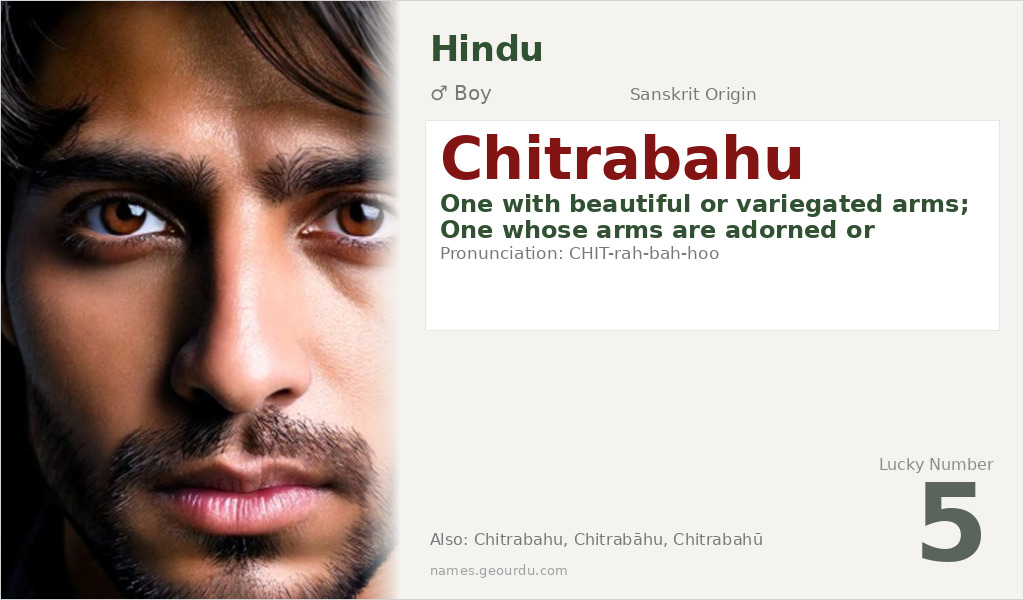
| 📛 Name | Chitrabahu |
| 💎 Meaning | One with beautiful or variegated arms; One whose arms are adorned or decorated |
| 👤 Gender | Boy |
| 🕌 Religion | Hindu |
| 🌍 Origin | Sanskrit |
| 🗣 Pronunciation | CHIT-rah-bah-hoo |
| ✍️ Urdu | چتراباہو |
| ✍️ Arabic | تشيتراباهو |
| 🔢 Numerology | 5 |
| ✨ Spellings | Chitrabahu, Chitrabāhu, Chitrabahū |
Origin & Cultural Significance
Chitrabahu originates from classical Sanskrit, the sacred language of Hindu scriptures and epics. The name appears in the Mahabharata, one of India’s great ancient epics, where Chitrabahu is mentioned as a king of Chedi who participated in the Kurukshetra War. In Hindu mythology, the name is sometimes used as an epithet for divine figures, particularly Vishnu or Krishna, emphasizing their beautiful and powerful forms. Unlike many modern invented names, Chitrabahu has authentic historical usage dating back thousands of years in Indian literature. The name reflects the Sanskrit tradition of creating compound names that describe physical or moral attributes, a practice common in naming royal and divine figures in ancient India.
Personality Traits
The name Chitrabahu suggests a personality that harmoniously blends strength with beauty. Individuals with this name are often perceived as capable and reliable, with the ‘bahu’ (arm) element indicating practical strength and the ability to accomplish tasks. Simultaneously, the ‘chitra’ (beautiful/extraordinary) component suggests artistic sensibility, creativity, and an appreciation for aesthetics. This combination creates a balanced character who can approach challenges with both power and grace. In cultural context, such names were often given to those expected to be both warriors and patrons of arts.
Similar Names
If you like Chitrabahu, consider: Chitragupta, Chitraratha, Bahubali, Chitrasena, Bahuputra
Famous People Named Chitrabahu
- Chitrabahu — A king mentioned in the Mahabharata who ruled the kingdom of Chedi and participated in the Kurukshetra War
- Chitrabahu — A character in Hindu mythology sometimes identified as a form or epithet of Vishnu or Krishna
Frequently Asked Questions About Chitrabahu
What does Chitrabahu mean?
Chitrabahu means 'one with beautiful or variegated arms' in Sanskrit, combining 'chitra' (beautiful/extraordinary) and 'bahu' (arm/strength).
Is Chitrabahu a boy or girl name?
Chitrabahu is exclusively a boy's name in Hindu tradition, derived from masculine Sanskrit grammar and used for male characters in ancient texts.
What is the origin of Chitrabahu?
Chitrabahu originates from classical Sanskrit and appears in Hindu scriptures like the Mahabharata, making it an ancient Indian name with historical and mythological significance.





