
Table of Contents
Chitrang is a name that carries the vibrant legacy of ancient Sanskrit literature and Indian mythology. With roots in one of the world’s oldest languages, this name evokes images of beauty, uniqueness, and warrior spirit. Most famously associated with Princess Chitrangada from the Mahabharata, the name has transcended centuries while maintaining its poetic essence. Today, it represents both cultural heritage and contemporary appeal for parents seeking meaningful names.
Meaning of Chitrang
Chitrang derives from the Sanskrit words ‘chitra’ (चित्र) and ‘anga’ (अङ्ग), creating a compound meaning ‘one with a variegated or multi-colored body.’ In Sanskrit poetic tradition, ‘chitra’ carries multiple connotations including wonderful, bright, extraordinary, and picture-like, while ‘anga’ refers to the physical form. Thus, Chitrang suggests not just literal coloration but metaphorical uniqueness and exceptional beauty. The name appears in classical Sanskrit texts, most significantly in the Mahabharata where it describes Princess Chitrangada’s distinctive beauty and warrior qualities. Linguistically, it follows common Sanskrit naming patterns where descriptive compounds create meaningful personal names.
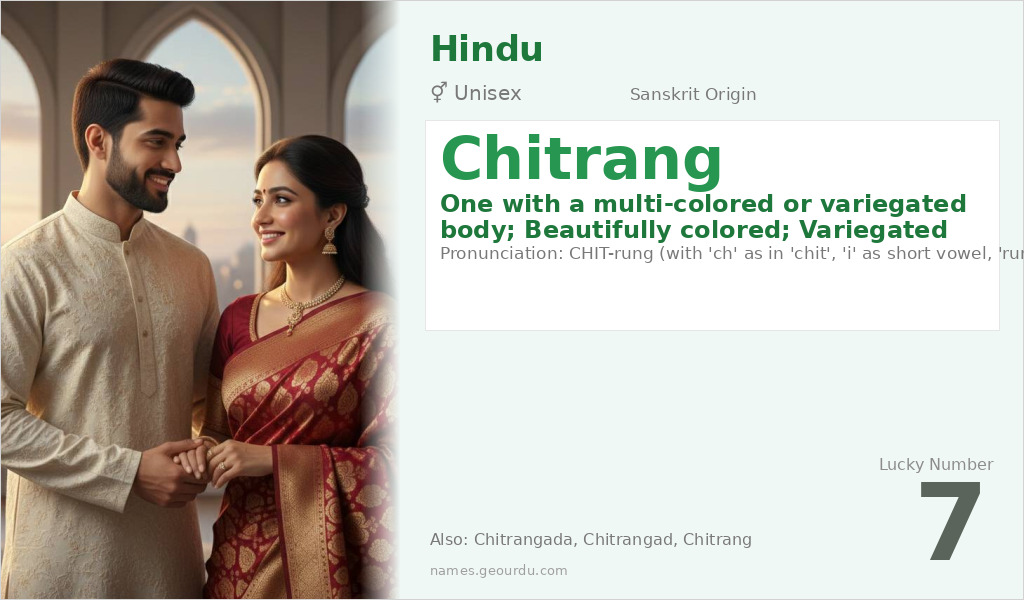
| 📛 Name | Chitrang |
| 💎 Meaning | One with a multi-colored or variegated body; Beautifully colored; Variegated |
| 👤 Gender | Unisex |
| 🕌 Religion | Hindu |
| 🌍 Origin | Sanskrit |
| 🗣 Pronunciation | CHIT-rung (with 'ch' as in 'chit', 'i' as short vowel, 'rung' rhyming with 'sung') |
| ✍️ Urdu | چترنگ |
| ✍️ Arabic | تشترانغ |
| 🔢 Numerology | 7 |
| ✨ Spellings | Chitrangada, Chitrangad, Chitrang, Chitrangadaa |
Origin & Cultural Significance
Chitrang originates from classical Sanskrit literature and Hindu mythology, specifically from the Mahabharata epic composed around 400 BCE-400 CE. The name belongs to Princess Chitrangada, the warrior princess of Manipur who married Arjuna and bore him a son named Babruvahana. In the epic, her name reflects both her physical beauty and her unique qualities as a warrior woman in a patriarchal society. The name has been preserved through centuries of Indian cultural tradition, appearing in regional adaptations of the Mahabharata across South Asia. While historically female, modern usage sometimes extends the name to boys, though its mythological association remains strongly feminine.
Personality Traits
Those named Chitrang often embody the name’s Sanskrit roots through their multifaceted personalities. They tend to be creative individuals who appreciate beauty in various forms, from art to nature. Their ‘variegated’ nature means they can display different strengths in different situations—much like the changing colors the name suggests. Many Chitrangs are introspective and value authenticity, often developing deep spiritual or philosophical perspectives.
Similar Names
If you like Chitrang, consider: Chitra, Chitralekha, Chitramala, Rang, Anga
Famous People Named Chitrang
- Chitrangada Singh — Indian film actress known for her work in Hindi cinema
- Chitrangada — Warrior princess from the Mahabharata, daughter of King Chitravahana of Manipur and wife of Arjuna
Frequently Asked Questions About Chitrang
What does Chitrang mean?
Chitrang means 'one with a multi-colored or variegated body' in Sanskrit. It combines 'chitra' (variegated/wonderful) and 'anga' (body/limb), suggesting unique beauty and distinction.
Is Chitrang a boy or girl name?
Historically and traditionally, Chitrang is a female name from the Mahabharata (Princess Chitrangada). However, modern usage sometimes extends it to boys, making it increasingly unisex in contemporary contexts.
What is the origin of Chitrang?
Chitrang originates from Sanskrit and Hindu mythology, specifically from the Mahabharata epic where it belongs to a warrior princess from Manipur. It's a classical Indian name with literary and cultural significance.