
Table of Contents
Dinapati is a classical Sanskrit name with deep roots in Hindu tradition and mythology. Meaning ‘Lord of the Day’ or ‘Master of the Day’, this name carries the radiant energy and authority associated with the sun. As a compound name from ancient India, Dinapati reflects the poetic language used to describe celestial bodies and natural phenomena. It remains a meaningful choice for parents seeking a name with both linguistic elegance and cultural resonance.
Meaning of Dinapati
Dinapati is derived from two Sanskrit words: ‘dina’ (दिन) meaning ‘day’ and ‘pati’ (पति) meaning ‘lord, master, or ruler’. The combination creates a compound word that literally translates to ‘lord of the day’. In Hindu tradition, this is one of the many poetic epithets for Surya, the sun god, who is believed to govern the daytime and bring light to the world. The name appears in various Hindu texts and classical Sanskrit literature as both a proper name and a descriptive title. The suffix ‘pati’ is common in Sanskrit names, indicating authority or ownership, similar to names like Nagendra (lord of snakes) or Rajpati (lord of kings).
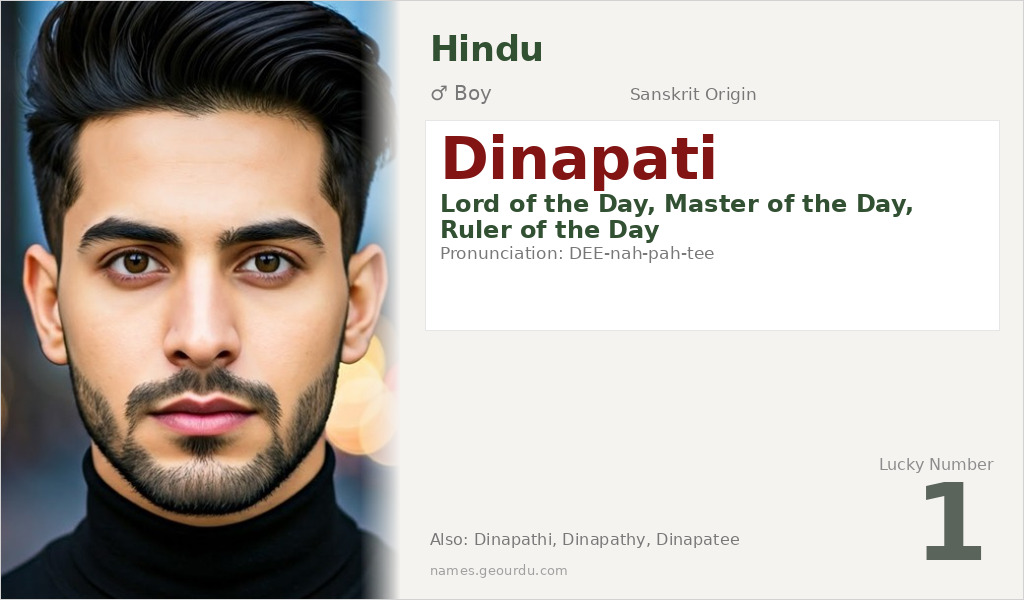
| 📛 Name | Dinapati |
| 💎 Meaning | Lord of the Day, Master of the Day, Ruler of the Day |
| 👤 Gender | Boy |
| 🕌 Religion | Hindu |
| 🌍 Origin | Sanskrit |
| 🗣 Pronunciation | DEE-nah-pah-tee |
| ✍️ Urdu | دنپتی |
| ✍️ Arabic | ديناباتي |
| 🔢 Numerology | 1 |
| ✨ Spellings | Dinapathi, Dinapathy, Dinapatee |
Origin & Cultural Significance
Dinapati originates from Sanskrit, the ancient liturgical language of Hinduism, Buddhism, and Jainism. As a classical Indian name, it reflects the sophisticated compound word formation characteristic of Sanskrit nomenclature. The name has been used for centuries in the Indian subcontinent, particularly within Hindu communities, as both a given name and an honorific title. While primarily associated with Hindu tradition due to its connection with Surya worship, the name’s linguistic roots in Sanskrit give it cultural significance across South Asia. It represents the ancient Indian practice of naming children after natural phenomena with divine associations.
Personality Traits
Those named Dinapati are often associated with qualities of leadership, illumination, and vitality. Like the sun they’re named after, they may exhibit natural authority, warmth, and the ability to guide others. Their personality is frequently described as bright, dependable, and life-giving, with a tendency to bring clarity to complex situations. The name suggests someone who takes responsibility seriously and shines in their chosen endeavors.
Similar Names
If you like Dinapati, consider: Divakar, Bhanu, Ravi, Surya, Arun
Famous People Named Dinapati
- Dinapati — A character in Hindu mythology and literature, often used as an epithet for Surya (the sun god)
- Dinapati Mishra — Contemporary Indian scholar and writer
Frequently Asked Questions About Dinapati
What does Dinapati mean?
Dinapati means 'Lord of the Day' or 'Master of the Day' in Sanskrit. It is a compound name from 'dina' (day) and 'pati' (lord), often used as an epithet for the sun in Hindu tradition.
Is Dinapati a boy or girl name?
Dinapati is exclusively a boy's name in Hindu naming tradition. The masculine suffix 'pati' and its association with the sun god Surya make it traditionally masculine.
What is the origin of Dinapati?
Dinapati originates from Sanskrit, the ancient language of India. It is a classical Hindu name with roots in Hindu mythology and literature, where it appears as both a proper name and descriptive title for the sun.





