
Table of Contents
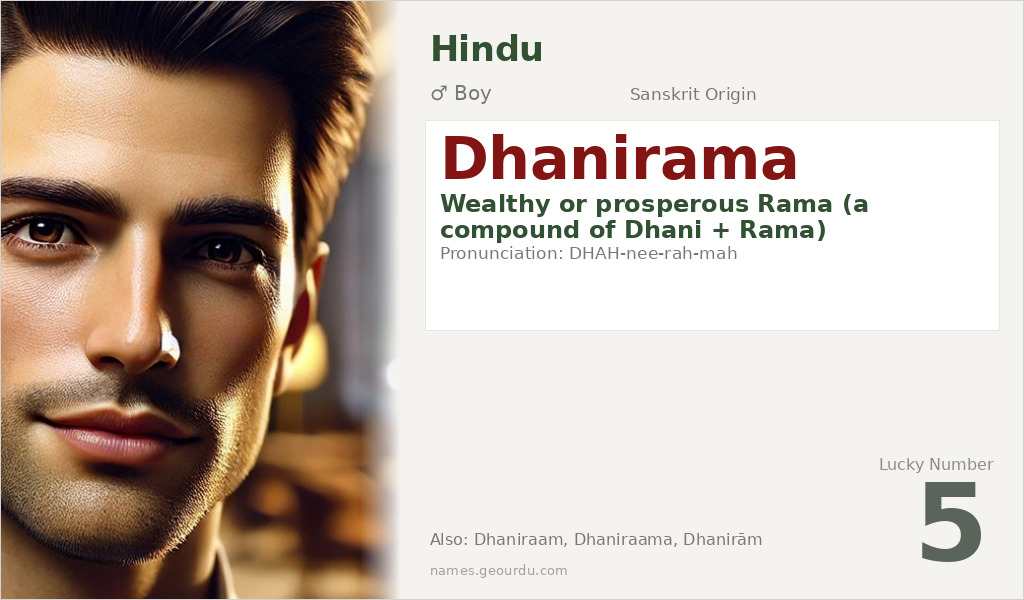
Dhanirama is a distinctive Hindu boy name with deep Sanskrit roots that combines concepts of material prosperity and divine grace. This compound name brings together ‘Dhani’, meaning wealth or prosperity, with ‘Rama’, referring to one of Hinduism’s most revered deities. While not among the most common names, Dhanirama carries significant cultural and linguistic meaning for families seeking a name that balances worldly success with spiritual values. Understanding its etymology reveals why this name holds special appeal in certain Hindu traditions.
Meaning of Dhanirama
Dhanirama is a compound Sanskrit name with clear etymological components. The first element ‘Dhani’ derives from the Sanskrit root ‘dhana’ (धन), which means wealth, treasure, or prosperity. This root appears in numerous Sanskrit words and names related to abundance and resources. The second element ‘Rama’ comes from the name of Lord Rama, the seventh avatar of Vishnu in Hindu tradition, whose name means ‘pleasing’, ‘charming’, or ‘one who delights’. When combined, Dhanirama literally translates to ‘wealthy Rama’ or ‘prosperous Rama’, suggesting someone who embodies both material abundance and the divine qualities associated with Lord Rama. This name follows the common Sanskrit pattern of creating compound names by combining an attribute with a divine reference.
| 📛 Name | Dhanirama |
| 💎 Meaning | Wealthy or prosperous Rama (a compound of Dhani + Rama) |
| 👤 Gender | Boy |
| 🕌 Religion | Hindu |
| 🌍 Origin | Sanskrit |
| 🗣 Pronunciation | DHAH-nee-rah-mah |
| ✍️ Urdu | دھنیراما |
| ✍️ Arabic | دهانيراما |
| 🔢 Numerology | 5 |
| ✨ Spellings | Dhaniraam, Dhaniraama, Dhanirām |
Origin & Cultural Significance
Dhanirama originates from Sanskrit, the classical language of Hinduism, and reflects the common practice in Indian naming traditions of creating compound names. The name combines two meaningful elements: ‘Dhani’ representing worldly prosperity and ‘Rama’ representing spiritual excellence. This type of name construction is particularly prevalent in Hindu communities that value both material success and religious devotion. While not widely documented in ancient texts, names following this pattern emerged in regional Hindu traditions, especially in areas where Sanskrit-derived names remain popular. The name represents a cultural synthesis where earthly virtues are combined with divine associations, reflecting a holistic worldview common in Hindu philosophy.
Personality Traits
Those named Dhanirama are often expected to embody a balance between material success and spiritual values. The ‘Dhani’ component suggests qualities of resourcefulness, practicality, and the ability to create and manage wealth effectively. Meanwhile, the ‘Rama’ element implies characteristics of righteousness, leadership, charm, and moral integrity. This combination creates an archetype of someone who navigates worldly affairs with ethical principles and spiritual awareness. Such individuals are typically perceived as grounded yet principled, capable of achieving prosperity while maintaining their commitment to higher values.
Similar Names
If you like Dhanirama, consider: Dhananjay, Dhanesh, Ramdhani, Dhanpati, Ramkumar
Famous People Named Dhanirama
- No widely known famous individuals with this name found in historical or contemporary records
Frequently Asked Questions About Dhanirama
What does Dhanirama mean?
Dhanirama means 'wealthy Rama' or 'prosperous Rama'. It's a compound Sanskrit name combining 'Dhani' (wealth, prosperity) and 'Rama' (the divine avatar of Vishnu, meaning 'pleasing' or 'charming').
Is Dhanirama a boy or girl name?
Dhanirama is exclusively a boy's name in Hindu naming traditions. The name contains 'Rama', which is a masculine divine figure in Hinduism, and follows masculine grammatical patterns in Sanskrit.
What is the origin of Dhanirama?
Dhanirama originates from Sanskrit, the classical language of Hinduism. It follows the common Indian practice of creating compound names by combining meaningful elements, in this case joining 'Dhani' (wealth) with 'Rama' (the divine avatar).





