
Table of Contents
Divyang is a profound Sanskrit name that carries deep spiritual significance in Hindu culture. Meaning ‘divine body’ or ‘celestial being’, this name embodies the concept of divine embodiment and spiritual perfection. With roots in ancient Indian philosophy, Divyang represents more than just a name—it’s an aspiration toward higher consciousness. This guide explores the rich etymology, cultural context, and modern relevance of this meaningful name.
Meaning of Divyang
Divyang is a classical Sanskrit compound name formed from ‘divya’ (दिव्य), meaning ‘divine, celestial, heavenly, supernatural’, and ‘anga’ (अङ्ग), meaning ‘body, limb, part, component, or attribute’. In Hindu philosophical traditions, the term appears in scriptures and literature to describe beings with divine qualities or attributes. The complete meaning encompasses not just physical divinity but spiritual wholeness and perfection. Linguistically, it follows standard Sanskrit compounding rules where two meaningful elements combine to create a new concept. The name reflects the Hindu belief in the potential for human embodiment of divine qualities through spiritual practice and enlightenment.
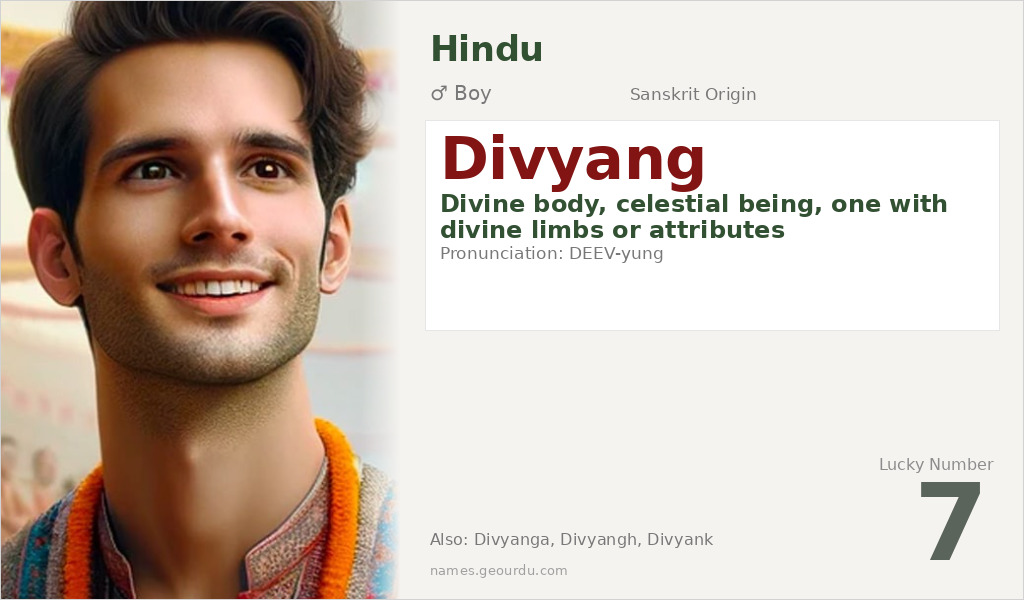
| 📛 Name | Divyang |
| 💎 Meaning | Divine body, celestial being, one with divine limbs or attributes |
| 👤 Gender | Boy |
| 🕌 Religion | Hindu |
| 🌍 Origin | Sanskrit |
| 🗣 Pronunciation | DEEV-yung |
| ✍️ Urdu | دیویانگ |
| ✍️ Arabic | ديفيانغ |
| 🔢 Numerology | 7 |
| ✨ Spellings | Divyanga, Divyangh, Divyank |
Origin & Cultural Significance
Divyang originates from classical Sanskrit, the ancient liturgical language of Hinduism, Buddhism, and Jainism. The name has been used in Indian subcontinent for centuries, appearing in religious texts, philosophical discourses, and literary works. While primarily associated with Hindu tradition due to its Sanskrit roots and spiritual connotations, the name transcends specific regional boundaries within India. Unlike many names that have cross-cultural variations, Divyang remains distinctly Sanskritic without verified equivalents in Arabic, Persian, or other language families despite extensive research. Its usage reflects the enduring influence of Sanskrit on Indian naming traditions and spiritual concepts.
Personality Traits
Those named Divyang are often associated with contemplative, spiritually-aware personalities. They may exhibit qualities of wisdom-seeking, introspection, and a natural inclination toward understanding deeper truths about existence. The name’s meaning suggests someone who values inner development and may possess a calm, centered presence that others find reassuring. These individuals often approach life with philosophical depth rather than superficial engagement.
Similar Names
If you like Divyang, consider: Divyansh, Divyanshu, Divyendu, Divyesh, Divakar
Famous People Named Divyang
- Divyang Thakkar — Indian film director and screenwriter known for 'Wrong Side Raju'
- Divyang — Indian classical vocalist and composer specializing in Hindustani music
Frequently Asked Questions About Divyang
What does Divyang mean?
Divyang means 'divine body', 'celestial being', or 'one with divine attributes' in Sanskrit. It combines 'divya' (divine) and 'anga' (body/limb) to create this spiritually significant name.
Is Divyang a boy or girl name?
Divyang is traditionally a masculine name in Hindu/Sanskrit naming conventions. While names can sometimes be adapted, historical and contemporary usage overwhelmingly favors it as a boy's name.
What is the origin of Divyang?
Divyang originates from classical Sanskrit, the ancient language of Hindu scriptures and Indian philosophy. It is specifically Hindu in cultural and religious context, with no verified equivalents in Arabic, Persian, or other language families despite extensive research.





