
Table of Contents
Dakshinayan is a profound Sanskrit name with deep roots in Hindu astronomy and cosmology. Meaning ‘the southward movement of the sun’, this name connects its bearer to the celestial rhythms that govern time and seasons in Hindu tradition. Unlike ordinary names, Dakshinayan carries specific astronomical significance, representing one of the two major solar movements in the Hindu calendar. This name offers a unique blend of scientific precision and spiritual symbolism for parents seeking a meaningful choice.
Meaning of Dakshinayan
Dakshinayan derives from the Sanskrit words ‘dakshina’ (दक्षिण), meaning ‘south’ or ‘southern’, and ‘ayana’ (अयन), meaning ‘movement’, ‘path’, or ‘course’. Together, they form a compound term that literally translates to ‘southward movement’ or ‘southern course’. In Hindu astronomy, Dakshinayan specifically refers to the sun’s apparent movement south of the equator during the six months from the summer solstice (around June 21) to the winter solstice (around December 21). This period is considered significant in Hindu cosmology, often associated with the night of the gods and various spiritual practices. The term appears in ancient texts like the Vedas and Puranas, establishing its long-standing cultural and religious importance.
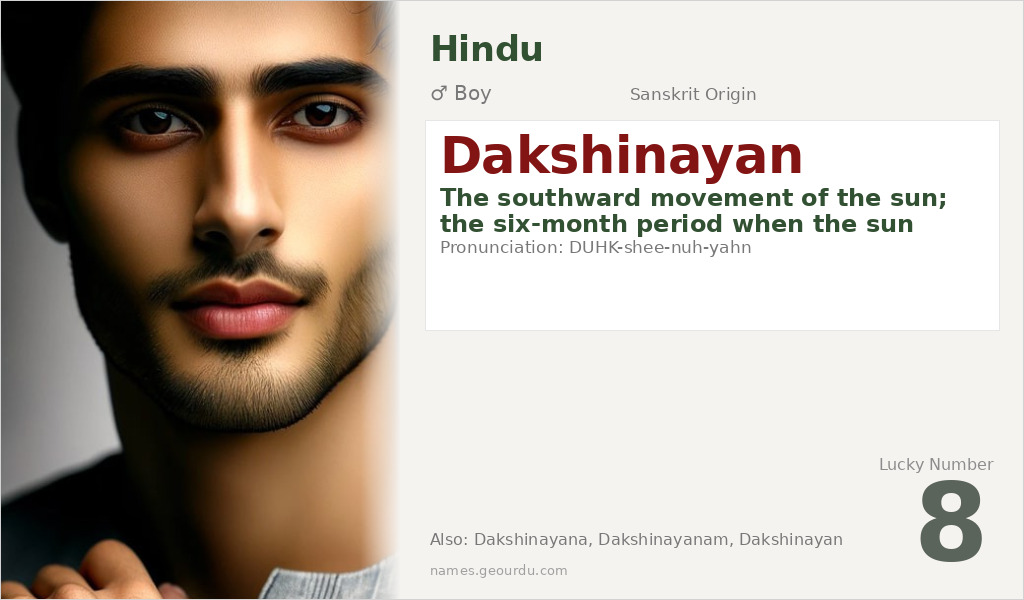
| 📛 Name | Dakshinayan |
| 💎 Meaning | The southward movement of the sun; the six-month period when the sun moves south of the equator |
| 👤 Gender | Boy |
| 🕌 Religion | Hindu |
| 🌍 Origin | Sanskrit |
| 🗣 Pronunciation | DUHK-shee-nuh-yahn |
| ✍️ Urdu | دکشنائن |
| ✍️ Arabic | داكشينايان |
| 🔢 Numerology | 8 |
| ✨ Spellings | Dakshinayana, Dakshinayanam, Dakshinayan |
Origin & Cultural Significance
Dakshinayan originates from classical Sanskrit, the liturgical language of Hinduism, and has been used for millennia in Indian astronomical and calendrical systems. The concept divides the solar year into two halves: Uttarayan (northward movement) and Dakshinayan (southward movement), creating a fundamental framework for Hindu timekeeping. This terminology reflects the sophisticated astronomical knowledge of ancient Indian civilization, which carefully observed and documented celestial movements. The name carries cultural weight as it connects to seasonal cycles, agricultural practices, and religious observances tied to solar positions. While primarily a Hindu concept, the astronomical phenomenon it describes is universal, though the specific terminology and cultural interpretations are distinctly Indian.
Personality Traits
Those named Dakshinayan are often associated with qualities of rhythm, timing, and natural cycles. The name suggests an individual who understands life’s ebbs and flows, possessing patience and awareness of larger patterns. There may be an inclination toward observation, analysis, and appreciating the interconnectedness of cosmic and earthly phenomena. The solar association can imply warmth, vitality, and a guiding presence in their relationships and endeavors.
Similar Names
If you like Dakshinayan, consider: Uttarayan, Dakshina, Daksh, Ayan, Surya, Ravi, Bhanu, Arun, Mitra, Pushan
Famous People Named Dakshinayan
- No widely known contemporary figures with this first name found in public records
- The term appears in Hindu scriptures and astronomical texts referring to the solar cycle
Frequently Asked Questions About Dakshinayan
What does Dakshinayan mean?
Dakshinayan means 'the southward movement of the sun' in Sanskrit. It specifically refers to the six-month period when the sun appears to move south of the equator in Hindu astronomy and calendar systems.
Is Dakshinayan a boy or girl name?
Dakshinayan is traditionally a masculine name in Hindu naming conventions. It follows the pattern of Sanskrit compound words typically used for boys, though naming practices can vary regionally.
What is the origin of Dakshinayan?
Dakshinayan originates from Sanskrit, the classical language of Hinduism. It comes from Hindu astronomical terminology describing solar movements and has been used in Vedic texts and Hindu calendrical systems for thousands of years.





