
Table of Contents
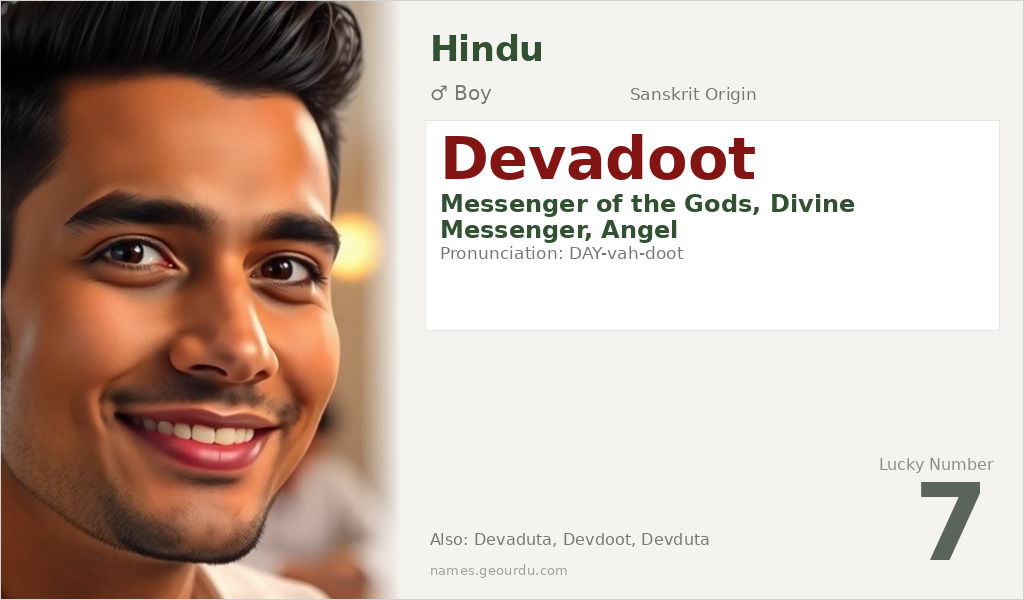
Devadoot is a profound Sanskrit name that carries centuries of spiritual significance in Hindu culture. Meaning ‘Messenger of the Gods’ or ‘Divine Messenger’, this name represents a sacred connection between heavenly realms and earthly existence. Traditionally given to boys, Devadoot embodies the concept of celestial intermediaries who bridge the divine and human worlds. Its rich etymology and cultural resonance make it a meaningful choice for parents seeking a name with deep religious roots.
Meaning of Devadoot
Devadoot derives from classical Sanskrit, combining ‘Deva’ (देव), meaning ‘god’ or ‘divine being’, with ‘Doot’ (दूत), meaning ‘messenger’ or ‘envoy’. This compound formation follows standard Sanskrit naming conventions where two meaningful elements combine to create a new concept. In Hindu scriptures, Devadoots are celestial beings who serve as intermediaries between gods and humans, often delivering important messages or performing divine tasks. The term appears in ancient texts like the Mahabharata, where Devadoots are described as heavenly messengers. Linguistically, the name maintains its original meaning across various Indian languages that have borrowed from Sanskrit, though pronunciation may vary regionally. The concept of divine messengers exists in multiple religious traditions, but ‘Devadoot’ specifically originates from Hindu cosmology and Sanskrit literature.
| 📛 Name | Devadoot |
| 💎 Meaning | Messenger of the Gods, Divine Messenger, Angel |
| 👤 Gender | Boy |
| 🕌 Religion | Hindu |
| 🌍 Origin | Sanskrit |
| 🗣 Pronunciation | DAY-vah-doot |
| ✍️ Urdu | دیودوت |
| ✍️ Arabic | ديفادوت |
| 🔢 Numerology | 7 |
| ✨ Spellings | Devaduta, Devdoot, Devduta |
Origin & Cultural Significance
Devadoot originates from ancient Sanskrit, the classical language of Hindu scriptures, philosophy, and literature. The name has been used for centuries within Hindu communities across the Indian subcontinent, particularly among those with strong connections to Sanskrit traditions and Vedic culture. Historically, names containing ‘Deva’ elements were often given to signify divine qualities or blessings, while ‘Doot’ elements indicated roles of communication and mediation. In Hindu mythology, Devadoots appear as celestial beings who traverse between different realms, making the name particularly significant in religious contexts. While primarily used in India and among Hindu diaspora communities, the name’s Sanskrit roots give it pan-Indian recognition among those familiar with classical Hindu texts and traditions.
Personality Traits
Those named Devadoot are often associated with qualities of communication, spirituality, and mediation. The name’s meaning suggests someone who bridges different perspectives or serves as a conduit for important messages. In cultural context, individuals with this name might be expected to demonstrate diplomatic skills, clarity in expression, and perhaps a sense of spiritual awareness. While personality traits vary individually, the name’s etymology often influences how others perceive the bearer and what qualities they might aspire to embody.
Similar Names
If you like Devadoot, consider: Devansh, Devendra, Devang, Devashish, Devraj
Famous People Named Devadoot
- Devadoot — Indian classical musician and composer known for his work in devotional music
- Devadoot Patil — Indian scholar and author specializing in Sanskrit literature and Hindu philosophy
Frequently Asked Questions About Devadoot
What does Devadoot mean?
Devadoot means 'Messenger of the Gods' or 'Divine Messenger'. It comes from Sanskrit, combining 'Deva' (god) and 'Doot' (messenger).
Is Devadoot a boy or girl name?
Devadoot is traditionally a masculine name given to boys in Hindu culture. The name follows Sanskrit grammatical conventions for masculine nouns.
What is the origin of Devadoot?
Devadoot originates from Sanskrit, the classical language of Hindu scriptures. It has been used for centuries within Hindu communities across India and among diaspora populations.





