
Table of Contents
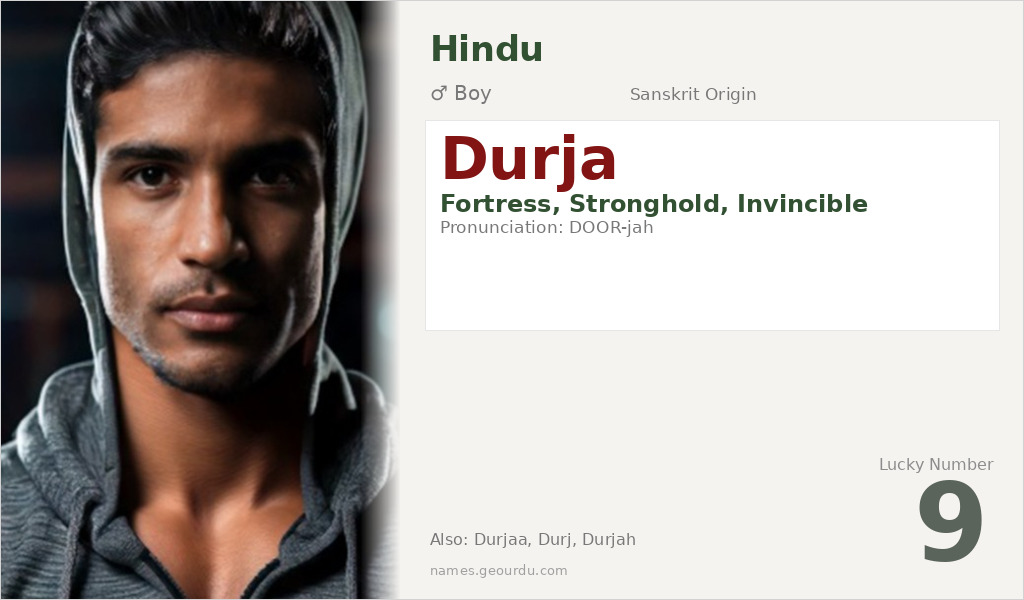
Durja is a distinctive and powerful name of Sanskrit origin, primarily used for boys in Hindu communities. Meaning ‘Fortress’ or ‘Stronghold’, it evokes images of strength, protection, and invincibility. This name carries deep cultural and linguistic roots, offering a unique choice for parents seeking a name with historical resonance and robust meaning. In this guide, we explore the etymology, significance, and personality traits associated with Durja.
Meaning of Durja
Durja originates from the Sanskrit word ‘durga’ (दुर्ग), which directly translates to ‘fortress’, ‘stronghold’, or ‘impregnable place’. The Sanskrit root ‘dur-‘ conveys difficulty or strength, while the suffix relates to creation or movement, forming a term that signifies something formidable and hard to breach. Linguistically, it is part of a family of words in Indo-Aryan languages that describe fortified structures and, by extension, metaphorical strength. This meaning is well-documented in ancient Sanskrit texts, where ‘durga’ refers to both physical fortifications and abstract concepts of invincibility. The name Durja, while less common than the feminine Durga, retains this core meaning in masculine contexts, emphasizing protection and resilience.
| 📛 Name | Durja |
| 💎 Meaning | Fortress, Stronghold, Invincible |
| 👤 Gender | Boy |
| 🕌 Religion | Hindu |
| 🌍 Origin | Sanskrit |
| 🗣 Pronunciation | DOOR-jah |
| ✍️ Urdu | درجا |
| ✍️ Arabic | دورجا |
| 🔢 Numerology | 9 |
| ✨ Spellings | Durjaa, Durj, Durjah |
Origin & Cultural Significance
Durja has its origins in Sanskrit, an ancient Indo-European language that is the liturgical language of Hinduism and a cornerstone of Indian culture. It emerged from the classical Sanskrit vocabulary used in religious, philosophical, and literary texts, where terms like ‘durga’ described fortified cities or defensive structures. Over time, this word evolved into a personal name, particularly in Hindu traditions across India and Nepal, symbolizing strength and security. The name is more prevalent in certain regional dialects and communities, reflecting its roots in Sanskrit’s widespread influence. While not as globally common as some Sanskrit-derived names, Durja holds cultural significance in contexts valuing traditional and meaningful nomenclature.
Personality Traits
People named Durja are often associated with traits of strength, reliability, and protectiveness, mirroring the name’s meaning of ‘fortress’. They may exhibit a calm and steadfast demeanor, with a natural ability to provide support and stability to those around them. These individuals might be drawn to roles that require resilience and leadership, embodying the invincible spirit suggested by their name.
Similar Names
If you like Durja, consider: Durga, Durgadas, Durgaprasad, Durgesh, Durlabh
Famous People Named Durja
- Durja Prasad — historical figure in some regional Indian records, though not widely known nationally
- Durja — occasional surname or given name in parts of North India and Nepal
Frequently Asked Questions About Durja
What does Durja mean?
Durja means 'Fortress', 'Stronghold', or 'Invincible' in Sanskrit, derived from the word 'durga'.
Is Durja a boy or girl name?
Durja is primarily a boy's name in Hindu tradition, though it is linguistically related to the feminine name Durga.
What is the origin of Durja?
Durja originates from Sanskrit, an ancient Indian language, and is used in Hindu cultures, particularly in regions of India and Nepal.





