
Table of Contents
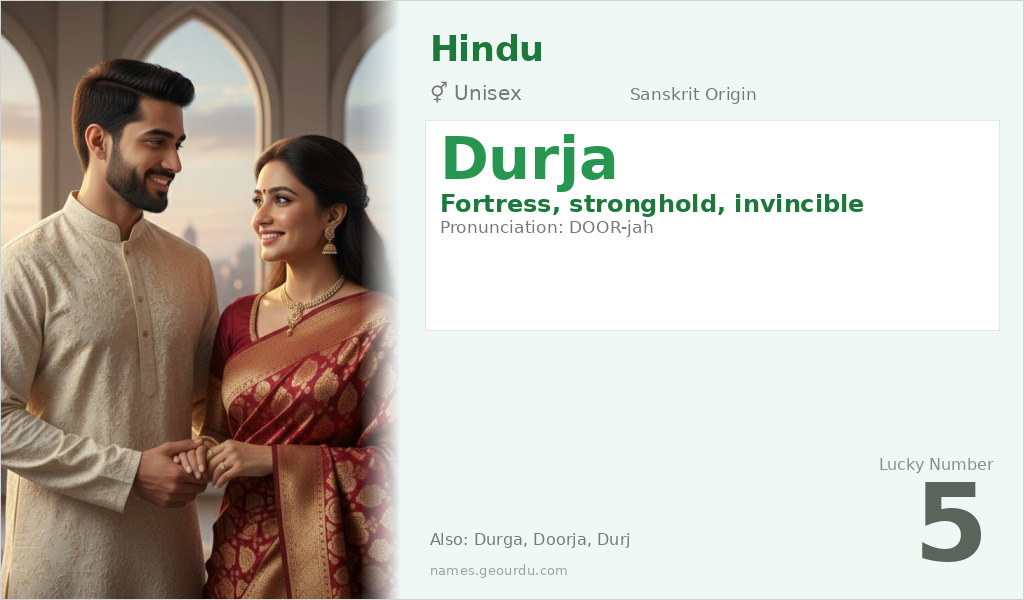
Durja is a meaningful name with deep roots in Sanskrit language and Hindu culture. Derived from the word ‘durga’, it carries connotations of strength, protection, and resilience. While often associated with the feminine divine in Hinduism, the name itself is used for both boys and girls across various Indian communities. Its powerful meaning makes it a compelling choice for parents seeking a name with historical and linguistic significance.
Meaning of Durja
Durja originates from the Sanskrit term ‘durga’ (दुर्ग), which literally translates to ‘fortress’, ‘stronghold’, or ‘impregnable place’. The word is composed of ‘dur’ (difficult) and ‘ga’ (to go or approach), essentially meaning ‘difficult to approach or conquer’. This concrete meaning naturally extends to metaphorical interpretations of ‘invincible’, ‘unconquerable’, or ‘protected’. In linguistic context, ‘durga’ appears in ancient Sanskrit texts including the Vedas and epics like the Mahabharata, where it describes fortified cities and defensive structures. The name’s etymology is firmly established in classical Indian linguistic tradition, with clear documentation in Sanskrit lexicons and grammatical works.
| 📛 Name | Durja |
| 💎 Meaning | Fortress, stronghold, invincible |
| 👤 Gender | Unisex |
| 🕌 Religion | Hindu |
| 🌍 Origin | Sanskrit |
| 🗣 Pronunciation | DOOR-jah |
| ✍️ Urdu | درجا |
| ✍️ Arabic | دورجا |
| 🔢 Numerology | 5 |
| ✨ Spellings | Durga, Doorja, Durj, Durjah |
Origin & Cultural Significance
Durja has its origins in Sanskrit, the classical language of ancient India that has influenced numerous modern South Asian languages. While the name is used within Hindu communities, its linguistic roots predate specific religious associations. The concept of ‘durga’ as fortress appears in early Vedic literature, and the term evolved to refer to the goddess Durga in later Hindu tradition. As a personal name, Durja is found across various Indian regions, particularly in states where Sanskrit-derived names are common. The name’s usage reflects the enduring influence of Sanskrit vocabulary in Indian naming traditions, transcending specific regional boundaries while maintaining its core meaning.
Personality Traits
Those named Durja often embody the protective and resilient qualities suggested by their name’s meaning. They tend to be perceived as strong-willed individuals who provide stability and security to their communities. While potentially reserved initially, they demonstrate loyalty and steadfastness in relationships. The fortress symbolism suggests someone who can withstand challenges while offering shelter to others, creating a balance between strength and nurturing care.
Similar Names
If you like Durja, consider: Durgesh, Durgadas, Durgaprasad, Durgavati, Durgendra
Famous People Named Durja
- Durga Puja — Major Hindu festival celebrating the goddess Durga, particularly prominent in Bengal and Eastern India
- Durga Khote — Pioneering Indian actress in Hindi and Marathi cinema (1905-1991)
Frequently Asked Questions About Durja
What does Durja mean?
Durja means 'fortress', 'stronghold', or 'invincible' in Sanskrit. The name is derived from the Sanskrit word 'durga', which literally refers to a fortified place that is difficult to conquer.
Is Durja a boy or girl name?
Durja is a unisex name, though it is more commonly associated with feminine usage due to its connection with the goddess Durga. In practice, it can be given to both boys and girls in Hindu communities.
What is the origin of Durja?
Durja originates from Sanskrit, the classical language of ancient India. The name comes from the Sanskrit word 'durga' meaning fortress, and it has been used in Indian naming traditions for centuries, particularly within Hindu cultural contexts.