
Table of Contents
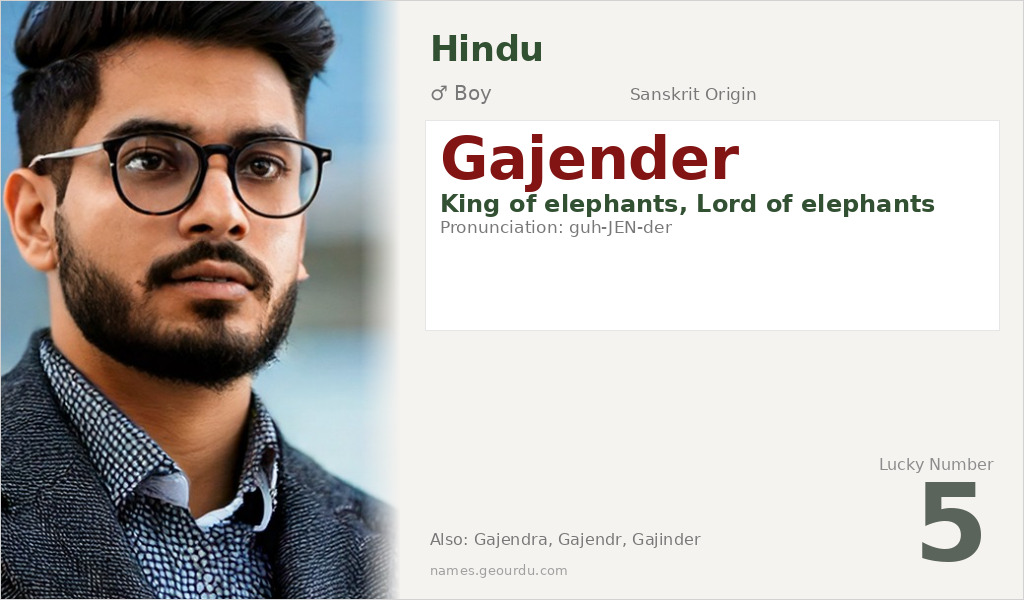
Gajender is a powerful Sanskrit name that carries deep cultural and mythological significance in Hindu tradition. Meaning ‘king of elephants’ or ‘lord of elephants’, this name evokes images of strength, wisdom, and divine protection. Often associated with Lord Ganesha and the celestial elephant Airavata, Gajender represents both earthly majesty and spiritual elevation. This name continues to be cherished by Hindu families seeking a meaningful name with royal connotations.
Meaning of Gajender
The name Gajender originates from classical Sanskrit, combining two significant elements: ‘gaja’ (गज) meaning ‘elephant’ and ‘indra’ (इन्द्र) meaning ‘king’, ‘lord’, or ‘chief’. In Hindu cosmology, Indra is the king of the devas (gods) and ruler of Svarga (heaven), making this compound name particularly majestic. The elephant in Hindu tradition symbolizes wisdom, strength, memory, and royal authority, while the ‘indra’ component elevates it to divine status. This name appears in Hindu scriptures and mythology, most notably in references to Airavata, the white elephant who serves as Indra’s mount and is considered the king of all elephants. The name can also be connected to Lord Ganesha, who is sometimes called ‘Gajendra’ in certain traditions, emphasizing his elephant-headed form and divine wisdom.
| 📛 Name | Gajender |
| 💎 Meaning | King of elephants, Lord of elephants |
| 👤 Gender | Boy |
| 🕌 Religion | Hindu |
| 🌍 Origin | Sanskrit |
| 🗣 Pronunciation | guh-JEN-der |
| ✍️ Urdu | گجندر |
| ✍️ Arabic | غاجيندر |
| 🔢 Numerology | 5 |
| ✨ Spellings | Gajendra, Gajendr, Gajinder, Gajendar |
Origin & Cultural Significance
Gajender has its roots firmly in ancient Sanskrit language and Hindu religious tradition. The name emerges from India’s rich mythological heritage, where elephants hold sacred status as symbols of royalty, wisdom, and divine power. In Hindu epics like the Mahabharata and Puranas, elephants play significant roles, with Airavata being born during the churning of the ocean of milk and becoming Indra’s celestial vehicle. The name Gajender reflects this cultural reverence for elephants as creatures of both earthly and heavenly realms. While primarily used in Hindu communities across India and the diaspora, the name maintains its classical Sanskrit form without significant adaptation in other languages or religious traditions.
Personality Traits
Those named Gajender are often associated with qualities of leadership, protection, and steadfastness. Like the elephant they’re named after, they may demonstrate remarkable memory, patience, and emotional intelligence. Their strength is typically balanced with gentleness, making them protective figures in their families and communities. The ‘indra’ element suggests they may naturally assume leadership roles with dignity and authority.
Similar Names
If you like Gajender, consider: Ganesh, Gajanan, Indrajit, Gajadhar, Airavata
Famous People Named Gajender
- Gajendra Moksha — A legendary king in Hindu mythology who was saved by Lord Vishnu after being caught by a crocodile, representing devotion and salvation
- Gajendra Singh — Indian television producer and director known for creating popular reality shows like Indian Idol
Frequently Asked Questions About Gajender
What does Gajender mean?
Gajender means 'King of elephants' or 'Lord of elephants' in Sanskrit, combining 'gaja' (elephant) and 'indra' (king/lord).
Is Gajender a boy or girl name?
Gajender is exclusively a boy's name in Hindu naming tradition, reflecting masculine qualities of strength and leadership.
What is the origin of Gajender?
Gajender originates from Sanskrit language and Hindu mythology, with roots in ancient Indian culture where elephants symbolize wisdom and royal authority.





