
Table of Contents
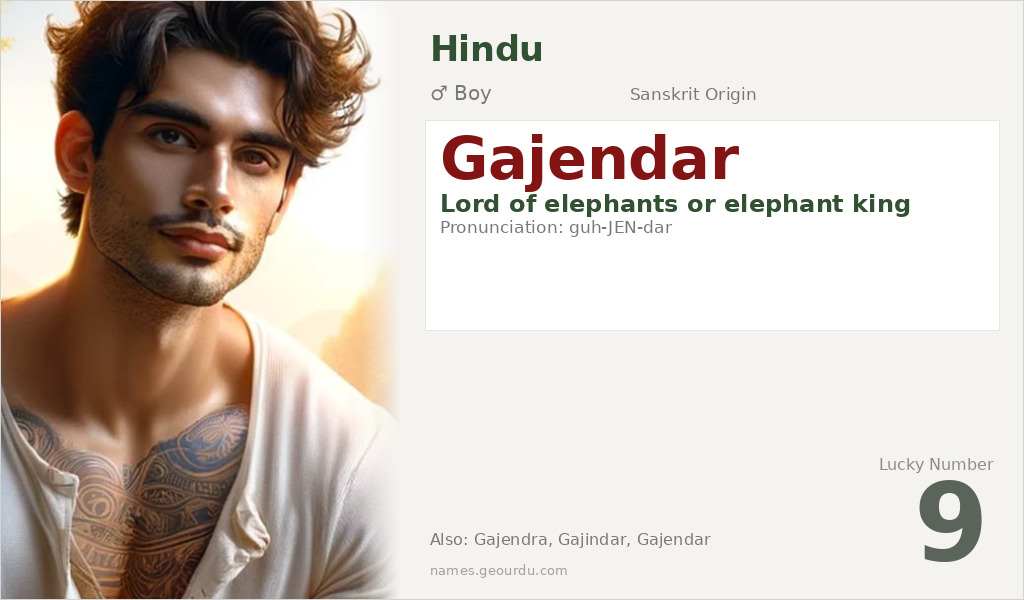
Gajendar is a powerful Sanskrit name that carries deep cultural and religious significance in Hindu tradition. Meaning ‘lord of elephants’ or ‘elephant king’, this name evokes images of strength, wisdom, and divine protection. Often associated with Lord Ganesha, the beloved elephant-headed deity, Gajendar represents both physical might and spiritual intelligence. Parents choosing this name bestow upon their child qualities of leadership, patience, and the ability to overcome life’s obstacles.
Meaning of Gajendar
The name Gajendar has clear Sanskrit origins, combining ‘gaja’ (elephant) with ‘indra’ (lord or king). This compound formation follows classical Sanskrit naming conventions where animal attributes are combined with divine or royal titles. In Hindu mythology, elephants symbolize wisdom, strength, and royal power, while Indra is the king of the gods in Vedic tradition. The name therefore carries dual significance: both the earthly power of the elephant and the celestial authority of Indra. Linguistically, it belongs to the Indo-European language family and shares roots with other Sanskrit names featuring ‘gaja’ or ‘indra’ elements. The name’s meaning is well-documented in Sanskrit dictionaries and Hindu religious texts.
| 📛 Name | Gajendar |
| 💎 Meaning | Lord of elephants or elephant king |
| 👤 Gender | Boy |
| 🕌 Religion | Hindu |
| 🌍 Origin | Sanskrit |
| 🗣 Pronunciation | guh-JEN-dar |
| ✍️ Urdu | گجندر |
| ✍️ Arabic | غاجيندار |
| 🔢 Numerology | 9 |
| ✨ Spellings | Gajendra, Gajindar, Gajendar |
Origin & Cultural Significance
Gajendar originates from ancient Sanskrit, the classical language of Hinduism, Buddhism, and Jainism. It emerged from the rich tradition of compound names in Indian culture, where meaningful elements are combined to create names with specific attributes. The name reflects the importance of elephants in South Asian history, where they served as symbols of royal power, military strength, and religious significance. In Hindu tradition, elephants are associated with Lord Ganesha, Lakshmi (goddess of wealth), and Airavata (Indra’s white elephant). The name has been used for centuries in India and among Hindu communities worldwide, maintaining its cultural relevance through religious texts, literature, and contemporary usage.
Personality Traits
Those named Gajendar are often seen as natural leaders with a calm, commanding presence. Like the elephant they’re named after, they tend to be strong yet gentle, intelligent yet patient. They approach challenges with methodical determination and are known for their loyalty to family and community. Their wisdom often makes them sought-after advisors, while their protective nature endears them to those in their care.
Similar Names
If you like Gajendar, consider: Ganesh, Gajanan, Indra, Gajadhar, Hastin
Famous People Named Gajendar
- Gajendra Singh Shekhawat — Indian politician and current Union Minister of Jal Shakti
- Gajendra Chauhan — Indian actor and former chairman of FTII
Frequently Asked Questions About Gajendar
What does Gajendar mean?
Gajendar means 'lord of elephants' or 'elephant king' in Sanskrit, combining 'gaja' (elephant) and 'indra' (lord/king).
Is Gajendar a boy or girl name?
Gajendar is exclusively a boy's name in Hindu naming tradition, reflecting masculine qualities of strength and leadership.
What is the origin of Gajendar?
Gajendar originates from Sanskrit, the classical language of ancient India, and is deeply rooted in Hindu culture and mythology.





