
Table of Contents
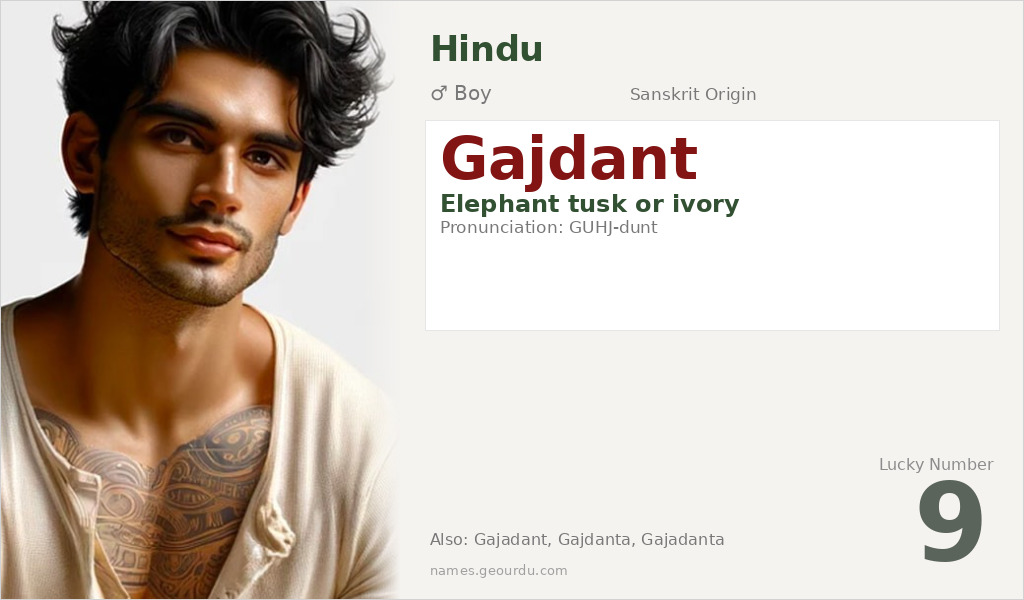
Gajdant is a distinctive Sanskrit name that carries the powerful imagery of elephant tusks—symbols of strength, purity, and divine connection in Hindu culture. Primarily used for boys, this name has deep roots in classical Indian literature and mythology. Its compound structure reveals a beautiful linguistic heritage that continues to resonate with parents seeking meaningful names. Discover the rich etymology and cultural significance behind this unique name.
Meaning of Gajdant
Gajdant is a Sanskrit compound name formed from two distinct elements: ‘gaja’ (गज) meaning ‘elephant’ and ‘danta’ (दन्त) meaning ‘tooth’ or ‘tusk’. When combined, they create ‘gajadanta’ which specifically refers to elephant tusks or ivory. In Hindu mythology, this term holds special significance as Lord Ganesha—the elephant-headed deity—is often called ‘Gajadanta’ or depicted with a broken tusk. The name symbolizes strength, wisdom, and purity, as ivory has traditionally been associated with these qualities. Linguistically, it follows standard Sanskrit compounding rules where the final ‘a’ in ‘gaja’ often drops in pronunciation and informal spelling.
| 📛 Name | Gajdant |
| 💎 Meaning | Elephant tusk or ivory |
| 👤 Gender | Boy |
| 🕌 Religion | Hindu |
| 🌍 Origin | Sanskrit |
| 🗣 Pronunciation | GUHJ-dunt |
| ✍️ Urdu | گجدنت |
| ✍️ Arabic | غجدانت |
| 🔢 Numerology | 9 |
| ✨ Spellings | Gajadant, Gajdanta, Gajadanta, Gajdant |
Origin & Cultural Significance
Gajdant originates from classical Sanskrit, the ancient liturgical language of Hinduism. It appears in various Sanskrit texts as both a descriptive term and occasionally as a proper name. The name is deeply embedded in Hindu culture where elephants symbolize royalty, wisdom, and divine power. In regional Indian languages, variations of this name exist, though it remains most authentic in its Sanskrit form. While primarily used in Hindu communities, the name’s linguistic roots make it accessible across Indian subcontinent cultures that share Sanskrit heritage.
Personality Traits
Those named Gajdant are often associated with elephant-like qualities: strength, loyalty, and intelligence. They tend to be protective of their loved ones and exhibit calm determination in challenging situations. Their personality often combines gentle wisdom with formidable presence, making them natural leaders who inspire confidence in others.
Similar Names
If you like Gajdant, consider: Gajanan, Gajendra, Dantin, Gajadhar, Gajapati
Famous People Named Gajdant
- No widely known contemporary figures with this name found in records
- Historical references to 'Gajadanta' appear in Sanskrit literature as descriptive terms
Frequently Asked Questions About Gajdant
What does Gajdant mean?
Gajdant means 'elephant tusk' or 'ivory' in Sanskrit. It's a compound name from 'gaja' (elephant) and 'danta' (tooth/tusk).
Is Gajdant a boy or girl name?
Gajdant is traditionally a masculine name in Hindu naming conventions, though names are becoming more flexible in modern usage.
What is the origin of Gajdant?
Gajdant originates from Sanskrit, the classical language of ancient India, and is deeply rooted in Hindu culture and mythology.





