
Table of Contents
Gajavaktra is a distinctive Sanskrit name with deep roots in Hindu tradition and mythology. Meaning ‘elephant-faced’, this name carries powerful symbolism associated with wisdom, strength, and divine protection. Primarily used for boys, Gajavaktra connects its bearer to ancient cultural heritage while offering a unique and meaningful identity.
Meaning of Gajavaktra
Gajavaktra derives from classical Sanskrit, combining ‘gaja’ (elephant) and ‘vaktra’ (face or mouth) to create a compound meaning ‘elephant-faced’. This is a bahuvrihi compound in Sanskrit grammar, indicating possession of the described characteristic. The name appears prominently in Hindu scriptures as an epithet for Ganesha, the elephant-headed deity revered as the remover of obstacles and patron of arts and sciences. The elephant symbolizes wisdom, memory, strength, and royal power in Indian tradition, making this name particularly auspicious. Linguistically, it follows standard Sanskrit compounding rules and maintains its original meaning across Hindu communities.
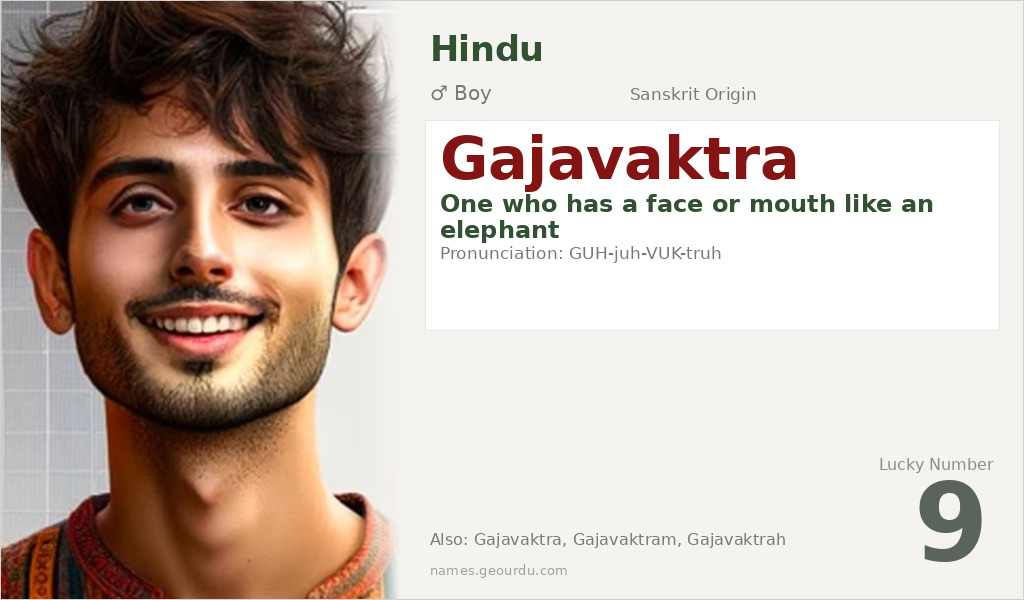
| 📛 Name | Gajavaktra |
| 💎 Meaning | One who has a face or mouth like an elephant |
| 👤 Gender | Boy |
| 🕌 Religion | Hindu |
| 🌍 Origin | Sanskrit |
| 🗣 Pronunciation | GUH-juh-VUK-truh |
| ✍️ Urdu | گیج وکٹرا |
| ✍️ Arabic | جاجافاكترا |
| 🔢 Numerology | 9 |
| ✨ Spellings | Gajavaktra, Gajavaktram, Gajavaktrah |
Origin & Cultural Significance
Gajavaktra originates from Sanskrit, the classical language of ancient India and Hindu scriptures. The name has been used for centuries within Hindu communities, particularly in India, Nepal, and among diaspora populations. Its most famous association is with Lord Ganesha, one of the most widely worshipped deities in Hinduism, who is often addressed as Gajavaktra in prayers and hymns. While not among the most common given names today, it continues to be used by families seeking names with strong mythological connections and auspicious meanings. The name reflects the enduring influence of Sanskrit and Hindu mythology on naming traditions across South Asia.
Personality Traits
Those named Gajavaktra are often thought to embody qualities associated with elephants in Hindu symbolism: intelligence, loyalty, strength, and calm authority. They may demonstrate good memory, practical wisdom, and the ability to overcome obstacles in their path. The name suggests someone who approaches life with thoughtful consideration and steady determination, much like the deliberate, powerful movements of an elephant.
Similar Names
If you like Gajavaktra, consider: Gajanan, Gajendra, Gajadhar, Vaktrashuddhi, Ganesha
Famous People Named Gajavaktra
- Gajavaktra — Epithet of Lord Ganesha in Hindu mythology, the elephant-headed deity of wisdom and remover of obstacles
- Gajavaktra — A name occasionally used in Hindu communities, particularly in India and Nepal, though not commonly associated with specific historical figures
Frequently Asked Questions About Gajavaktra
What does Gajavaktra mean?
Gajavaktra means 'elephant-faced' or 'having an elephant's mouth' in Sanskrit. It is a compound of 'gaja' (elephant) and 'vaktra' (face/mouth).
Is Gajavaktra a boy or girl name?
Gajavaktra is traditionally a masculine name used for boys in Hindu communities, reflecting its association with the male deity Ganesha.
What is the origin of Gajavaktra?
Gajavaktra originates from Sanskrit, the classical language of ancient India, and has strong connections to Hindu mythology, particularly as an epithet of Lord Ganesha.





