
Table of Contents
Havan is a profound name deeply rooted in ancient Hindu tradition, carrying the weight of spiritual practice and cultural heritage. Unlike many modern names, Havan directly references one of Hinduism’s most sacred rituals—the offering ceremony performed in consecrated fire. This name connects the bearer to thousands of years of Vedic tradition while offering a distinctive, meaningful choice for parents seeking spiritual significance. Whether used for boys or girls, Havan evokes images of purification, transformation, and divine connection.
Meaning of Havan
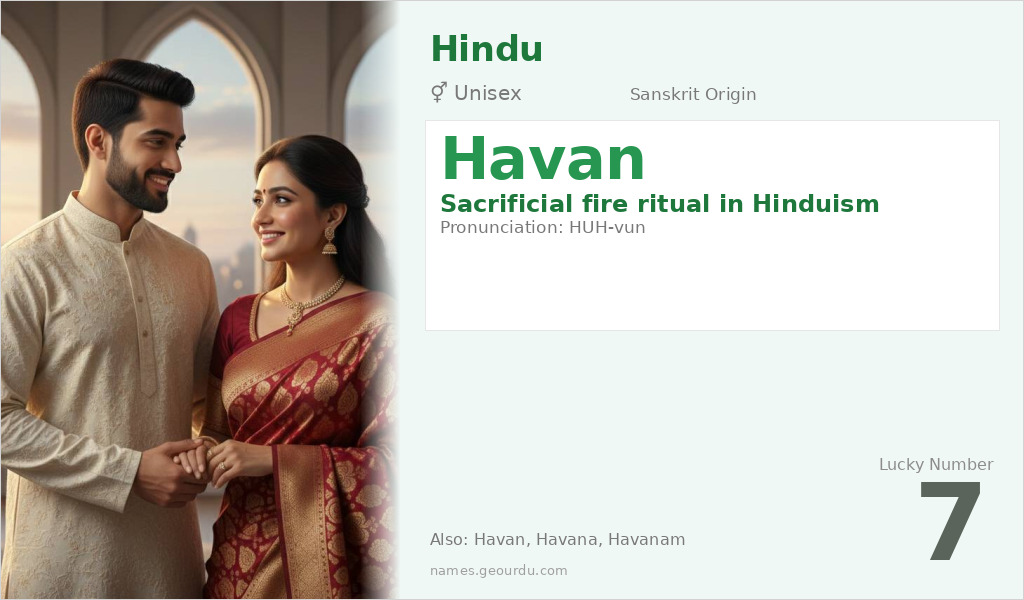
Havan derives from the Sanskrit word ‘havana’ (हवन), which comes from the verbal root ‘hu’ meaning ‘to offer, to sacrifice, to pour into the fire’. In Hindu practice, a havan specifically refers to the ritual where offerings like ghee, grains, herbs, and wood are placed into a sacred fire while chanting Vedic mantras. This ritual is considered a means of purification, communication with deities, and transformation of material substances into spiritual energy. The term appears extensively in ancient texts including the Rigveda, where it describes the central act of Vedic worship. As a personal name, Havan carries this rich ceremonial meaning, symbolizing someone who brings offerings, creates sacred connections, or embodies transformative fire.
| 📛 Name | Havan |
| 💎 Meaning | Sacrificial fire ritual in Hinduism |
| 👤 Gender | Unisex |
| 🕌 Religion | Hindu |
| 🌍 Origin | Sanskrit |
| 🗣 Pronunciation | HUH-vun |
| ✍️ Urdu | ہون |
| ✍️ Arabic | هافان |
| 🔢 Numerology | 7 |
| ✨ Spellings | Havan, Havana, Havanam |
Origin & Cultural Significance
Havan originates from the Sanskrit language and Vedic culture of ancient India, dating back over 3,000 years. It emerged from the ritual practices described in the earliest Hindu scriptures, where fire sacrifices (yajna) were central to religious life. The havan ritual was performed by priests (hotṛ) to invoke deities like Agni (fire god) and seek blessings for prosperity, health, and spiritual growth. While traditionally a ritual term, its use as a personal name represents a modern adaptation where parents choose meaningful words from their religious tradition. The name appears across Hindu communities in India and the diaspora, though it remains relatively uncommon compared to more traditional personal names.
Personality Traits
Those named Havan often carry an aura of spiritual depth and traditional values. They may be drawn to ritual, ceremony, and practices that connect them to something greater than themselves. Like the sacred fire they’re named after, they can be both warming and transformative—bringing light to situations and helping facilitate change. Their personality often balances reverence for tradition with the dynamic energy of transformation, making them both grounded and inspiring to others.
Similar Names
If you like Havan, consider: Yajna, Homa, Agni, Vedic, Ritvik
Famous People Named Havan
- Havan Flores — American actress and social media personality
- Havan Liberty — Fictional character in literature
Frequently Asked Questions About Havan
What does Havan mean?
Havan means 'sacrificial fire ritual' in Sanskrit, referring to the Hindu practice of making offerings into consecrated fire while chanting mantras.
Is Havan a boy or girl name?
Havan is a unisex name, though it's more commonly used for boys in Hindu communities. Its usage for girls is increasing as parents seek meaningful gender-neutral names.
What is the origin of Havan?
Havan originates from the Sanskrit language and Vedic Hindu tradition of ancient India, where it described the central fire-offering ritual in religious ceremonies.