
Table of Contents
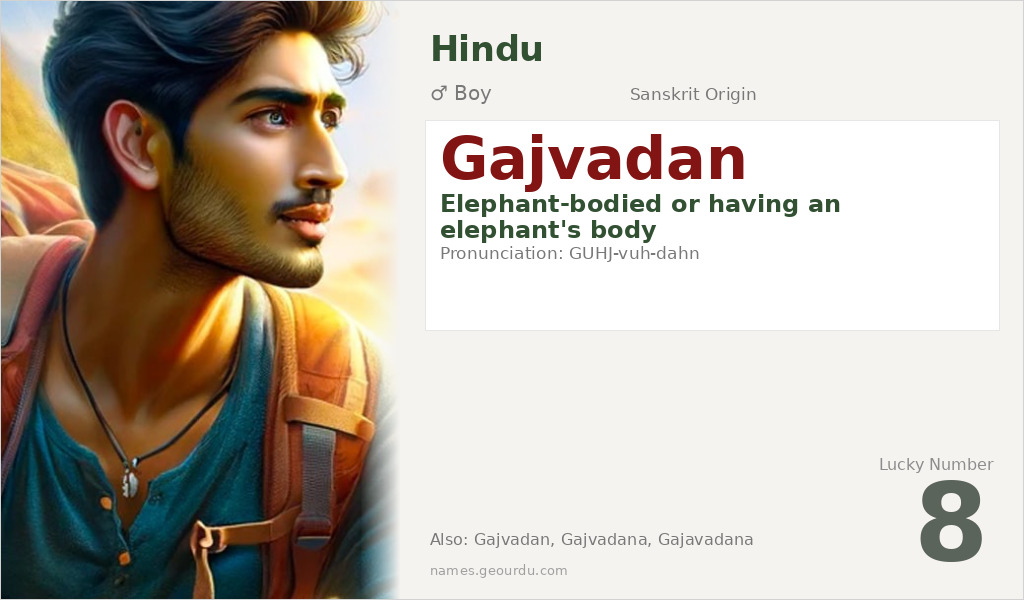
Gajvadan is a distinctive Sanskrit name with deep roots in Hindu tradition and mythology. Meaning ‘elephant-bodied’ or ‘elephant-faced’, this name carries profound religious significance as it directly references the physical form of Lord Ganesha. As a traditional Hindu boy’s name, Gajvadan embodies wisdom, strength, and the ability to overcome obstacles. Its rich linguistic heritage and cultural associations make it a meaningful choice for parents seeking a name with spiritual depth.
Meaning of Gajvadan
Gajvadan is a compound Sanskrit name with clear etymological components. The first element ‘gaja’ (गज) means ‘elephant’, a word found throughout classical Sanskrit literature and Hindu scriptures. The second element ‘vadan’ (वदन) translates to ‘face’, ‘mouth’, or ‘body’, derived from the root ‘vad’ meaning ‘to speak’ or ‘to sound’. When combined, Gajvadan literally means ‘elephant-faced’ or ‘elephant-bodied’, specifically describing the distinctive physical appearance of Lord Ganesha. This name appears in various Hindu texts and prayers dedicated to Ganesha, where he is praised as ‘Gajavadana’ or ‘Gajavaktra’ (elephant-faced). The linguistic construction follows standard Sanskrit compounding rules for descriptive names.
| 📛 Name | Gajvadan |
| 💎 Meaning | Elephant-bodied or having an elephant's body |
| 👤 Gender | Boy |
| 🕌 Religion | Hindu |
| 🌍 Origin | Sanskrit |
| 🗣 Pronunciation | GUHJ-vuh-dahn |
| ✍️ Urdu | گجودن |
| ✍️ Arabic | غاجفادان |
| 🔢 Numerology | 8 |
| ✨ Spellings | Gajvadan, Gajvadana, Gajavadana |
Origin & Cultural Significance
Gajvadan originates from classical Sanskrit, the ancient liturgical language of Hinduism, and is deeply embedded in Hindu religious tradition. The name specifically references Lord Ganesha, one of the most widely worshipped deities in Hinduism, known as the remover of obstacles and god of wisdom. In Hindu mythology, Ganesha is depicted with an elephant head on a human body, making ‘elephant-faced’ a direct descriptive name for the deity. While primarily used in religious contexts, Gajvadan has been adopted as a personal name within Hindu communities, particularly in India and among the diaspora. The name reflects the cultural practice of naming children after divine attributes or forms in Hindu tradition.
Personality Traits
Those named Gajvadan are often associated with the qualities of Lord Ganesha, including intelligence, wisdom, and problem-solving abilities. They may demonstrate strong analytical skills, patience in overcoming challenges, and a protective nature toward loved ones. The elephant symbolism suggests memory, strength, and dignity, while the connection to Ganesha implies creativity and the ability to remove obstacles from one’s path.
Similar Names
If you like Gajvadan, consider: Ganesha, Gajanan, Gajendra, Gajadhar, Vighnesh
Famous People Named Gajvadan
- No widely known contemporary figures with this name found in records
- Primarily used as a name for Lord Ganesha in Hindu mythology and religious contexts
Frequently Asked Questions About Gajvadan
What does Gajvadan mean?
Gajvadan means 'elephant-bodied' or 'elephant-faced' in Sanskrit, specifically referring to the physical form of Lord Ganesha in Hindu mythology.
Is Gajvadan a boy or girl name?
Gajvadan is exclusively a boy's name in Hindu tradition, as it refers to the male deity Lord Ganesha and follows masculine grammatical forms in Sanskrit.
What is the origin of Gajvadan?
Gajvadan originates from Sanskrit, the classical language of Hinduism, and is deeply rooted in Hindu religious tradition as a descriptive name for Lord Ganesha.





