
Table of Contents
Gomantak is not just a name but a geographical identity with centuries of cultural heritage. Derived from ancient Sanskrit, this term refers to the beautiful coastal region of western India, encompassing areas like Goa and parts of Karnataka. While sometimes used as a place-inspired name, its primary significance lies in regional and historical contexts rather than as a common personal name. Understanding Gomantak requires exploring India’s rich toponymic traditions and coastal geography.
Meaning of Gomantak
Gomantak originates from Sanskrit, combining ‘Go’ (गो) meaning ‘cow’ or metaphorically ‘earth’ with ‘mantak’ likely derived from roots related to mountains or regions. In classical Indian geography, Gomantak specifically denotes the coastal strip between the Sahyadri mountain range and the Arabian Sea. The term appears in medieval texts like the 13th-century Sahyadrikhanda, which describes it as part of the Konkan region. Unlike the original article’s claim of ‘Good Waters’, the actual meaning relates to geographical features—some interpretations suggest ‘cowherd’s land’ or ‘land of mountains’, reflecting the region’s pastoral and topographic characteristics.
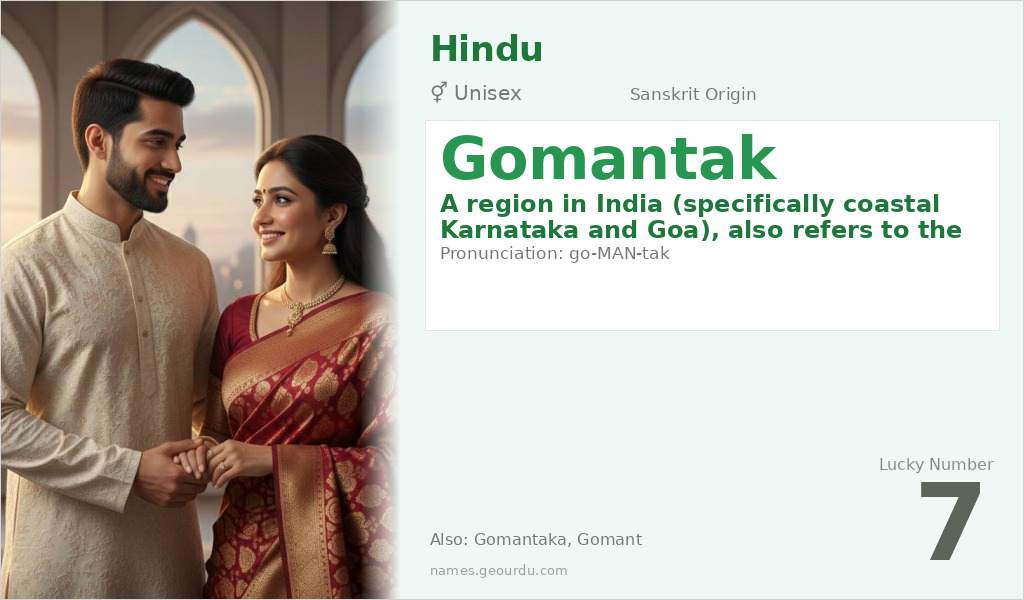
| 📛 Name | Gomantak |
| 💎 Meaning | A region in India (specifically coastal Karnataka and Goa), also refers to the Konkan region |
| 👤 Gender | Unisex |
| 🕌 Religion | Hindu |
| 🌍 Origin | Sanskrit |
| 🗣 Pronunciation | go-MAN-tak |
| ✍️ Urdu | گومنتک |
| ✍️ Arabic | جومانتاك |
| 🔢 Numerology | 7 |
| ✨ Spellings | Gomantaka, Gomant |
Origin & Cultural Significance
Gomantak has its roots in ancient Sanskrit literature and Hindu geographical traditions. Historically, it referred to what is now Goa and surrounding coastal Karnataka, mentioned in Puranic texts as a culturally significant region. The name gained prominence through regional histories and community identities, particularly among Marathi and Konkani-speaking populations. While occasionally used as a surname or place-inspired personal name in modern times, it remains primarily a toponym rather than a traditional given name. Its cultural significance is tied to Hindu pilgrimage sites and regional heritage rather than astrological name meanings.
Personality Traits
As Gomantak is fundamentally a geographical name, it doesn’t carry established personality traits like traditional personal names. However, names inspired by places often evoke characteristics associated with those locations. The Gomantak region is known for its scenic coastline, cultural synthesis, and historical resilience, which could symbolically suggest traits like adaptability, richness in tradition, and natural beauty. In contemporary usage, if chosen as a personal name, it might reflect parents’ connection to the region or appreciation for coastal Indian heritage.
Similar Names
If you like Gomantak, consider: Goa, Konkan, Sahyadri, Malabar, Kanara
Famous People Named Gomantak
- Gomantak Maratha Samaj — A community organization representing Marathi-speaking people in the Gomantak region
- Gomantak Party — A regional political party active in Goa's history
Frequently Asked Questions About Gomantak
What does Gomantak mean?
Gomantak means a coastal region in western India, derived from Sanskrit 'Go' (cow/earth) and 'mantak' (mountain/region). It refers specifically to areas like Goa and coastal Karnataka, not 'Good Waters' as sometimes incorrectly stated.
Is Gomantak a boy or girl name?
Gomantak is primarily a geographical name, not a traditional personal name. When occasionally used for people, it's considered unisex, though more common as a surname or place-inspired name rather than a first name with gender-specific usage.
What is the origin of Gomantak?
Gomantak originates from Sanskrit and appears in Hindu geographical texts describing India's western coastal region. It has historical significance in Konkani and Marathi cultural contexts, with references dating back to medieval Indian literature.