
Table of Contents
Gananath is a profound Sanskrit name with deep roots in Hindu mythology and tradition. As a compound name meaning ‘Lord of the Ganas’, it directly references Lord Ganesha’s role as commander of Shiva’s divine attendants. This name carries both spiritual significance and cultural heritage, making it a meaningful choice within Hindu naming traditions. Its classical origins and specific mythological connections distinguish it from more common Ganesha-related names.
Meaning of Gananath
Gananath derives from two Sanskrit elements: ‘Gana’ (गण) and ‘Nath’ (नाथ). ‘Gana’ specifically refers to the groups of divine beings who serve as Shiva’s attendants in Hindu mythology, while ‘Nath’ means lord, master, or protector. The combined meaning ‘Lord of the Ganas’ is a direct epithet for Ganesha, who is traditionally considered the leader of these celestial hosts. This name appears in various Hindu scriptures and texts, including the Ganesha Purana and other devotional literature. The linguistic construction follows classical Sanskrit compounding rules, creating a name that is both grammatically precise and rich in mythological significance. Unlike more general names for Ganesha, Gananath specifically highlights his leadership role among divine beings.
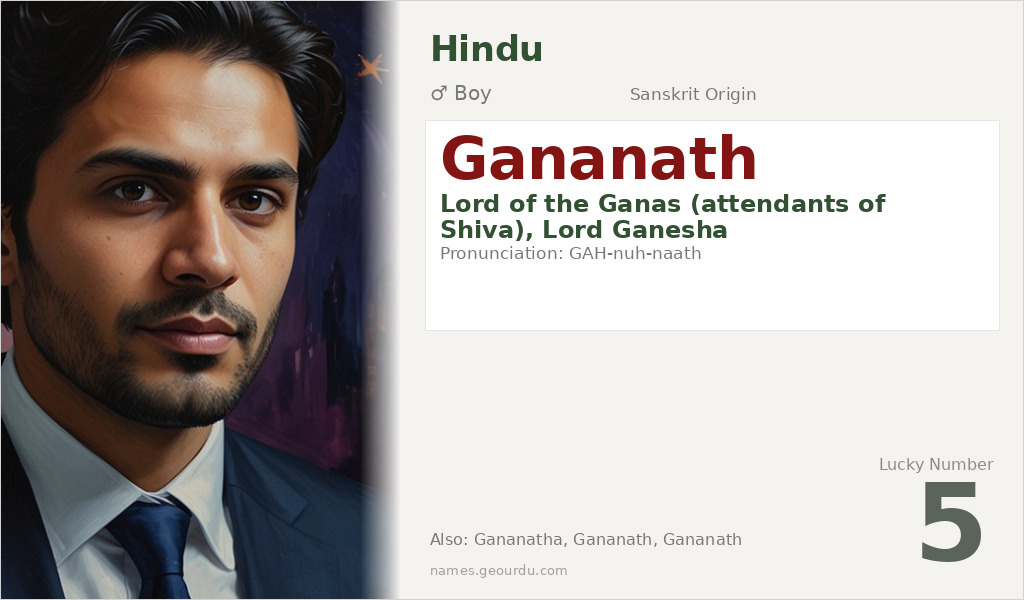
| 📛 Name | Gananath |
| 💎 Meaning | Lord of the Ganas (attendants of Shiva), Lord Ganesha |
| 👤 Gender | Boy |
| 🕌 Religion | Hindu |
| 🌍 Origin | Sanskrit |
| 🗣 Pronunciation | GAH-nuh-naath |
| ✍️ Urdu | گاناناتھ |
| ✍️ Arabic | غاناناث |
| 🔢 Numerology | 5 |
| ✨ Spellings | Gananatha, Gananath, Gananath |
Origin & Cultural Significance
Gananath originates from classical Sanskrit, the ancient liturgical language of Hinduism. The name has been used for centuries within Hindu communities, particularly in India, Nepal, and Sri Lanka. It reflects the deep integration of mythological concepts into personal naming traditions, where divine attributes and roles are bestowed upon children. The name’s usage spans various Hindu traditions that venerate Ganesha as the remover of obstacles and lord of beginnings. While less common than names like Ganesh or Ganapati, Gananath maintains a presence in regions with strong Sanskrit scholarly traditions and among families seeking names with specific mythological precision. Its continued use demonstrates the living connection between ancient Sanskrit literature and contemporary naming practices.
Personality Traits
Those named Gananath are often perceived as having leadership qualities combined with protective instincts, mirroring the name’s meaning of ‘lord of attendants’. They may exhibit organizational skills and a natural ability to bring people together toward common goals. The name’s association with Ganesha suggests qualities of wisdom, intelligence, and the ability to overcome obstacles, which may influence how individuals with this name are viewed within their communities and families.
Similar Names
If you like Gananath, consider: Ganesh, Ganapati, Vinayak, Gajanan, Ganaraj
Famous People Named Gananath
- Gananath Obeyesekere — Sri Lankan anthropologist and professor emeritus at Princeton University
- Gananath Das — Indian classical vocalist and composer
Frequently Asked Questions About Gananath
What does Gananath mean?
Gananath means 'Lord of the Ganas' in Sanskrit, specifically referring to Lord Ganesha's role as commander of Shiva's divine attendants.
Is Gananath a boy or girl name?
Gananath is exclusively a boy's name in Hindu naming traditions, as it refers to the male deity Ganesha.
What is the origin of Gananath?
Gananath originates from classical Sanskrit, the ancient language of Hindu scriptures, and is composed of 'Gana' (attendants) and 'Nath' (lord).





