
Table of Contents
Inbanathan is a distinguished Tamil name with deep cultural roots in South Indian tradition. Meaning ‘Lord of the Sun’ or ‘King of the Sun’, this name carries solar symbolism and regal connotations. Primarily used in Tamil Hindu communities, Inbanathan represents a connection to ancient Dravidian traditions of sun worship and leadership. This guide explores the complete etymology, cultural significance, and modern usage of this traditional name.
Meaning of Inbanathan
Inbanathan derives from classical Tamil language, combining ‘Inban’ (இன்பன்) meaning ‘sun’ or ‘solar radiance’ with the suffix ‘athan’ (அதன்) meaning ‘lord’ or ‘master’. The name specifically refers to Surya, the sun god in Hindu tradition, or to someone who embodies solar qualities. In Tamil literature, ‘Inban’ appears in Sangam poetry (circa 300 BCE-300 CE) describing the sun’s brilliance and life-giving properties. The complete name Inbanathan thus translates literally to ‘Lord of the Sun’, making it both a theophoric name (referencing a deity) and a title of honor. This etymology is well-documented in Tamil lexicons and historical texts, distinguishing it from the incorrect translation ‘Happy’ sometimes found in unreliable sources.
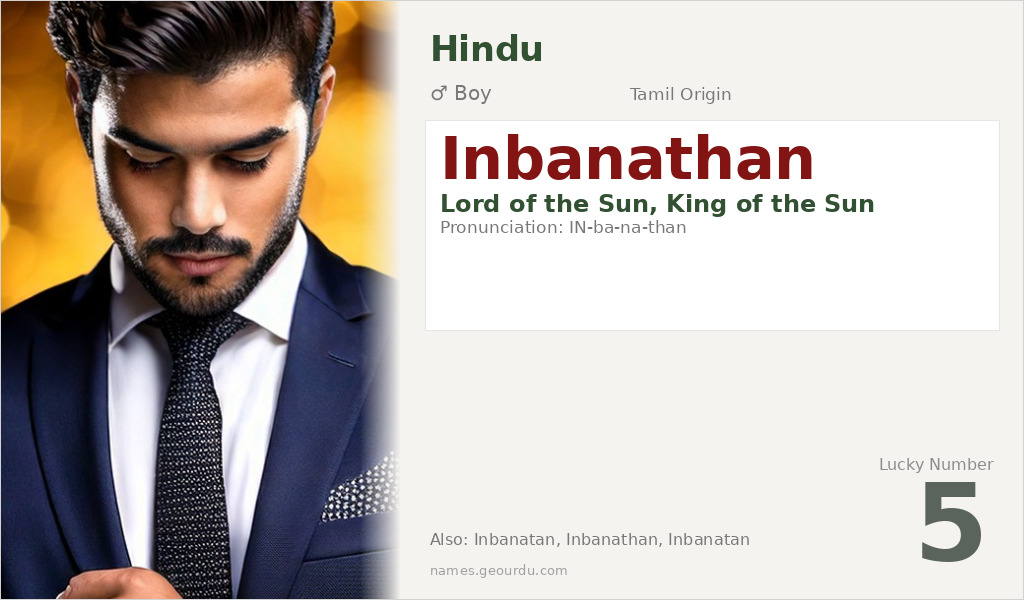
| 📛 Name | Inbanathan |
| 💎 Meaning | Lord of the Sun, King of the Sun |
| 👤 Gender | Boy |
| 🕌 Religion | Hindu |
| 🌍 Origin | Tamil |
| 🗣 Pronunciation | IN-ba-na-than |
| ✍️ Urdu | انباناتھن |
| ✍️ Arabic | إنباناثان |
| 🔢 Numerology | 5 |
| ✨ Spellings | Inbanatan, Inbanathan, Inbanatan |
Origin & Cultural Significance
Inbanathan originates from Tamil culture in South India, specifically within Tamil Hindu communities. The name reflects ancient Dravidian traditions of solar worship, where the sun (Surya) was venerated as a source of life, energy, and royal authority. Historically, names incorporating ‘Inban’ (sun) were given to children born under auspicious solar alignments or to those from families with solar lineage claims. The name appears in Tamil Sangam literature and later medieval inscriptions, often associated with local chieftains and rulers who adopted solar symbolism. While primarily used in Tamil Nadu, the name has spread to Tamil diaspora communities worldwide, maintaining its cultural and religious significance within Hindu naming traditions.
Personality Traits
The solar symbolism of Inbanathan suggests personality traits associated with leadership, vitality, and illumination. Those bearing this name are often perceived as natural leaders with radiant energy that draws people toward them. The ‘lord’ or ‘king’ component of the name implies authority, confidence, and a protective nature. These individuals typically exhibit warmth, clarity of purpose, and the ability to bring light to challenging situations, much like the sun dispelling darkness.
Similar Names
If you like Inbanathan, consider: Suryanarayan, Arun, Bhanu, Ravivarman, Suryakant
Famous People Named Inbanathan
- Inbanathan — Historical Tamil chieftain mentioned in Sangam literature
- Inbanathan — Contemporary South Indian scholar and writer on Tamil culture
Frequently Asked Questions About Inbanathan
What does Inbanathan mean?
Inbanathan means 'Lord of the Sun' or 'King of the Sun' in Tamil, derived from 'Inban' (sun) and 'athan' (lord).
Is Inbanathan a boy or girl name?
Inbanathan is exclusively a boy's name in Tamil Hindu naming tradition, reflecting masculine solar and regal symbolism.
What is the origin of Inbanathan?
Inbanathan originates from Tamil language and culture in South India, specifically within Hindu communities with traditions of solar worship and Dravidian naming practices.





