
Table of Contents
Ganapathi is a profound Sanskrit name with deep roots in Hindu tradition and mythology. As one of the primary names for Lord Ganesha, it carries centuries of religious and cultural significance. This name represents leadership, wisdom, and the ability to overcome obstacles, making it a powerful choice for parents seeking a name with spiritual depth. Beyond its religious context, Ganapathi has maintained popularity across South Asian communities for generations.
Meaning of Ganapathi
The name Ganapathi originates from classical Sanskrit, combining two meaningful elements: ‘gana’ (गण) meaning ‘multitude, group, or celestial hosts’ and ‘pati’ (पति) meaning ‘lord, master, or leader’. Literally translated, it means ‘Lord of the multitudes’ or ‘Leader of the celestial hosts’. In Hindu scriptures, this term initially described various deities who commanded groups of divine beings before becoming specifically associated with Lord Ganesha. The name appears in ancient texts including the Rigveda (where it refers to deities like Brihaspati) and later in the Puranas where it becomes an established epithet for Ganesha. This etymological construction highlights Ganesha’s role as the commander of Shiva’s ganas (attendant deities) and his position as a remover of obstacles.
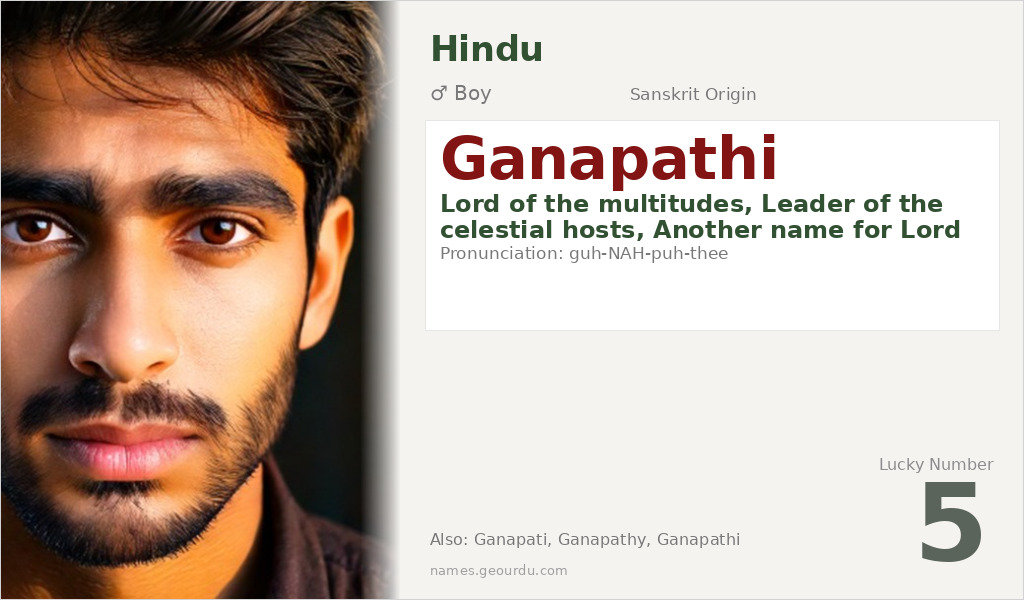
| 📛 Name | Ganapathi |
| 💎 Meaning | Lord of the multitudes, Leader of the celestial hosts, Another name for Lord Ganesha |
| 👤 Gender | Boy |
| 🕌 Religion | Hindu |
| 🌍 Origin | Sanskrit |
| 🗣 Pronunciation | guh-NAH-puh-thee |
| ✍️ Urdu | گنپتی |
| ✍️ Arabic | غاناباتي |
| 🔢 Numerology | 5 |
| ✨ Spellings | Ganapati, Ganapathy, Ganapathi |
Origin & Cultural Significance
Ganapathi has its origins in ancient Indian civilization, specifically within the Sanskrit linguistic and Hindu religious traditions. The name gained prominence through Hindu scriptures where it evolved from a general term for leaders of divine groups to a specific title for Lord Ganesha. Culturally, the name is most prevalent in India, Nepal, Sri Lanka, and among Hindu diaspora communities worldwide. Historically, the worship of Ganapathi as a distinct deity became widespread around the 4th-5th centuries CE, with the name appearing in numerous devotional texts and inscriptions. The name maintains particular significance in South Indian traditions where Ganapathi is often the preferred term for Ganesha, especially in Tamil, Telugu, and Kannada-speaking regions.
Personality Traits
Those named Ganapathi are often associated with leadership qualities, intelligence, and protective instincts. Drawing from the attributes of their namesake deity, they may exhibit strong problem-solving abilities and a talent for organizing groups or communities. The name suggests someone who can navigate challenges effectively while maintaining a calm, wise demeanor that inspires confidence in others.
Similar Names
If you like Ganapathi, consider: Ganesha, Vinayaka, Vighneshvara, Gajanana, Heramba
Famous People Named Ganapathi
- Ganapathi Sachchidananda Swamiji — Hindu spiritual leader and founder of the Datta Peetham in Mysore, India
- Ganapathi Bhat — Renowned Yakshagana artist and performer from Karnataka, India
Frequently Asked Questions About Ganapathi
What does Ganapathi mean?
Ganapathi means 'Lord of the multitudes' or 'Leader of the celestial hosts' in Sanskrit. It is a compound name from 'gana' (multitude) and 'pati' (lord), specifically referring to Lord Ganesha in Hindu tradition.
Is Ganapathi a boy or girl name?
Ganapathi is exclusively a boy's name in Hindu naming traditions, as it refers to the male deity Lord Ganesha. There are no documented instances of it being used for girls in any cultural context.
What is the origin of Ganapathi?
Ganapathi originates from Sanskrit, the classical language of ancient India. It has been used in Hindu religious texts for centuries and is deeply rooted in Indian cultural and spiritual traditions.





